Disney’s Aladdin (1993) Super Famicom / SNES
🧭 Prologue – Echoes of Agrabah
In 1993, Capcom released Disney’s Aladdin for the Super Famicom, a dazzling action platformer that transported players into the magical world of Agrabah. Unlike many adaptations, this title emphasized fluid character animation, rhythmic stage design, and cinematic storytelling. Today, Aladdin (Super Famicom, 1993) is remembered not only as a Capcom classic but also as a milestone in licensed game design, blending spectacle, challenge, and narrative into a single unforgettable experience.
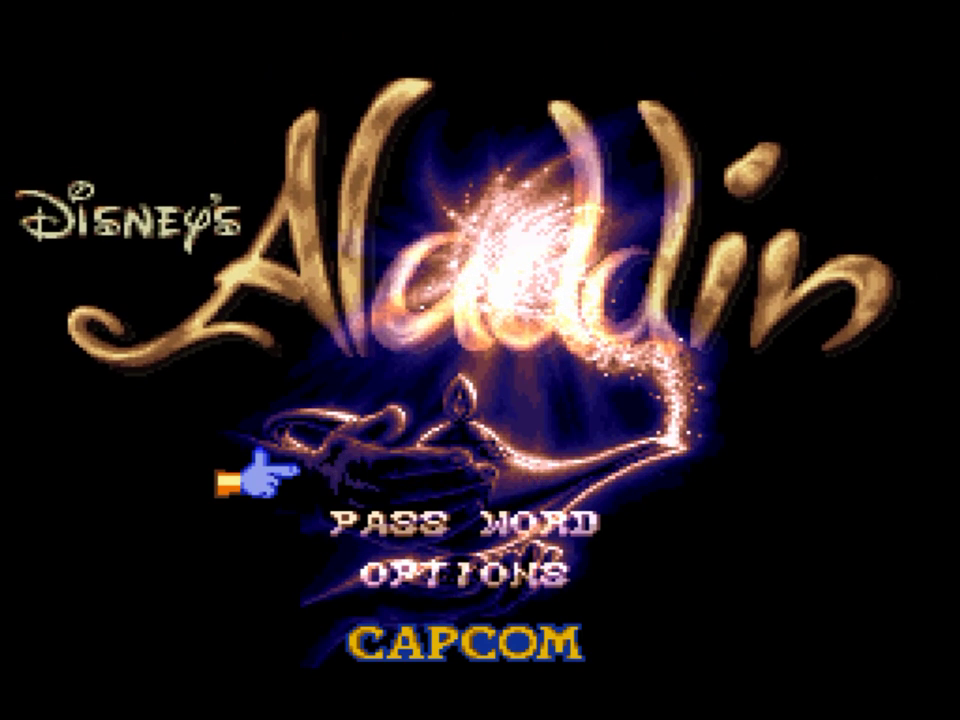
🎮 Game Information
Title:Disney’s Aladdin
Year: 1993
Platform: Super Famicom (SNES)
Genre: Action Platformer
Developer / Publisher: Capcom / Disney
Format: Cartridge
Players: 1
🖼️ Exhibit I – Stage Design & Rhythm
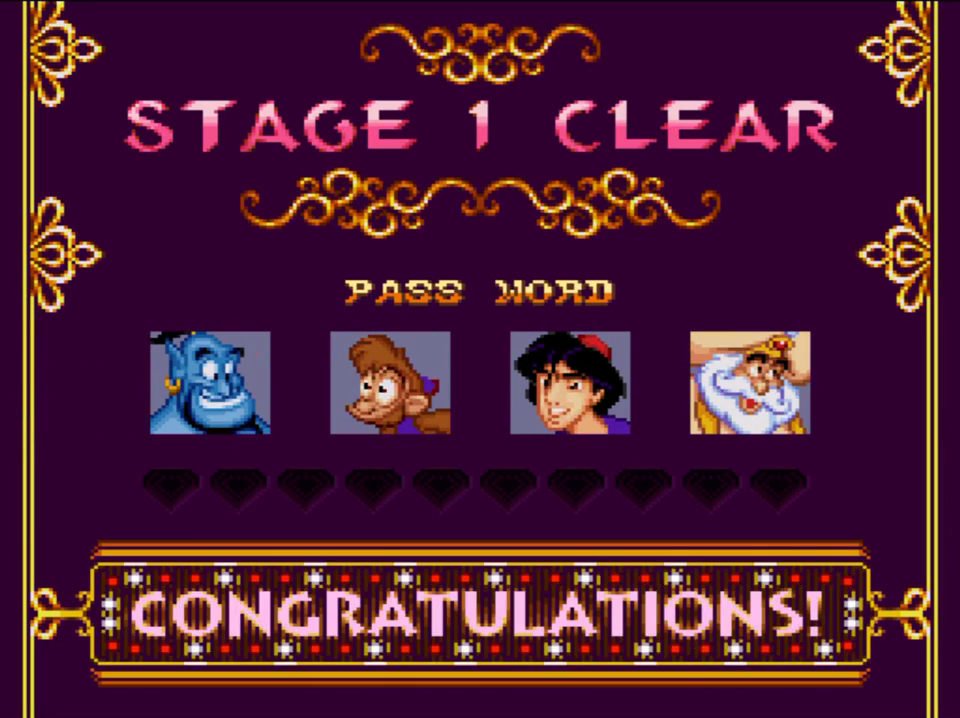
- 🌟 Multiple themed stages: marketplace, palace, desert, and final showdown
- 🎯 Each stage introduces unique mechanics and pacing shifts
- ⏳ Rhythm alternates between exploration, combat, and cinematic interludes
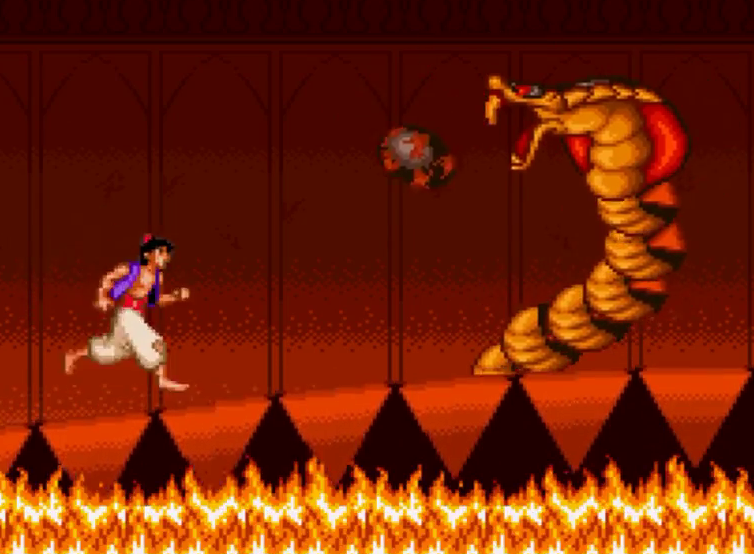
The brilliance of Aladdin lies in its stage rhythm. The game unfolds across diverse environments, each demanding a different skill set. The bustling marketplace tests agility as Aladdin leaps over guards and obstacles, while palace corridors emphasize combat precision. Desert stages escalate tension with environmental hazards, and the final battle against Jafar’s cobra form delivers a climactic test of endurance.
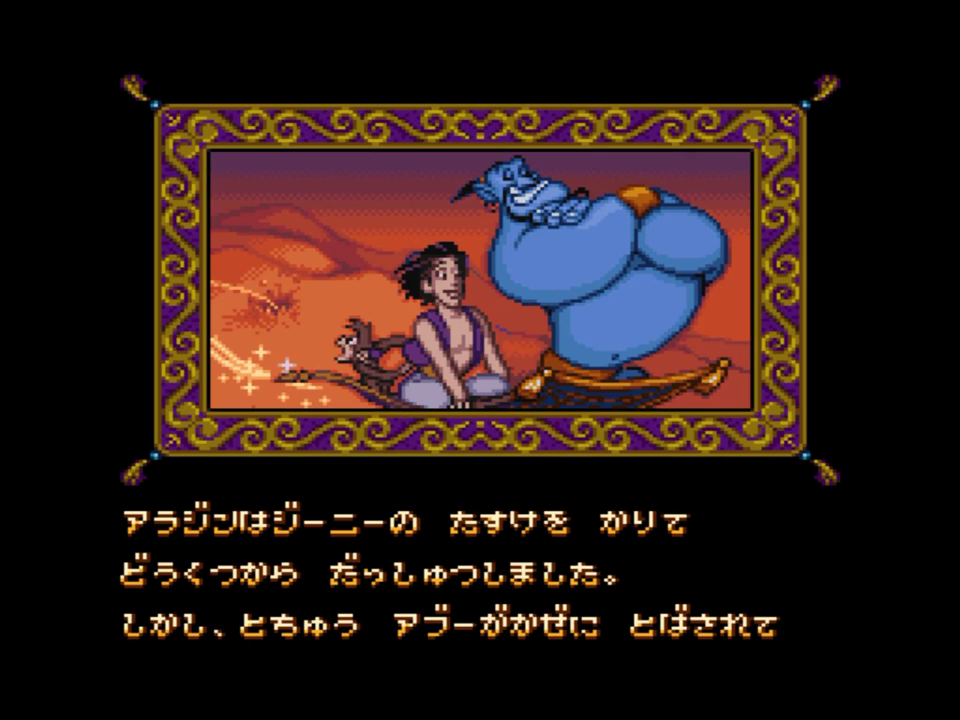
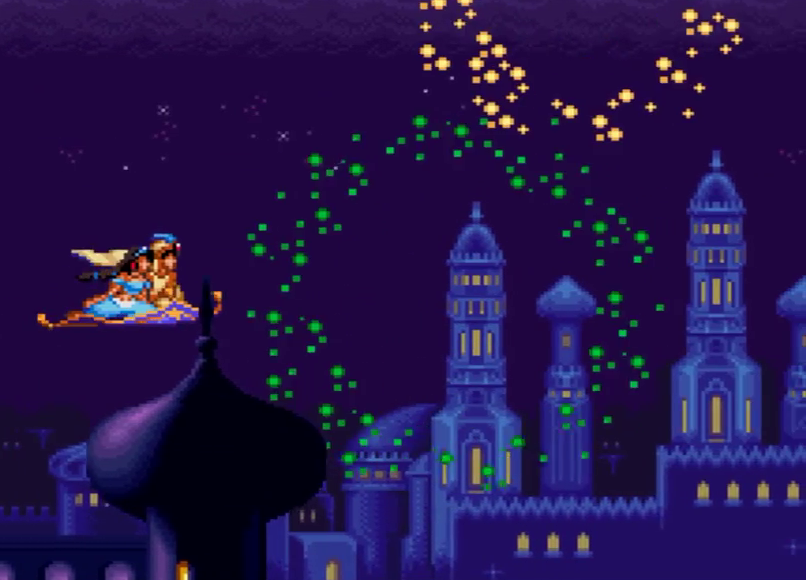
Between stages, interludes presented on the magic carpet frame the adventure as a continuous narrative, reinforcing the cinematic quality of the game. This deliberate alternation of mechanics and storytelling keeps the player engaged, ensuring that each stage feels like a new chapter in Agrabah’s tale. The design philosophy emphasizes variety and escalation, making Aladdin more than just a licensed adaptation—it becomes a journey through shifting tempos of danger and wonder.
⚙️ Exhibit II – Character Control & Challenge
- 🕹️ Simple controls: jump, attack, and directional movement
- 🐒 Context-specific actions: vaulting over guards, interacting with allies
- 🔥 Split-second timing determines success or failure
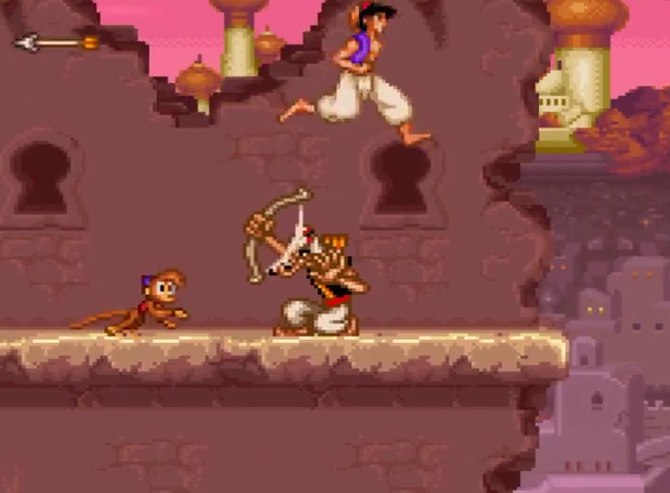
Aladdin thrives on simplicity. The player’s toolkit is limited to basic movement and attacks, yet the game transforms these minimal inputs into diverse challenges. Vaulting over palace guards requires exact timing, while navigating traps demands careful positioning. Bonus stages, such as the magic carpet ride with Jasmine, shift the focus toward spectacle and rhythm.
This design philosophy highlights how minimal mechanics can yield maximum tension. Every mistake is punished instantly, but every success feels exhilarating. The game’s difficulty curve is steep yet fair, rewarding persistence and mastery. By stripping gameplay down to its essentials, Capcom created a title where the player’s focus is sharpened, and every decision carries weight. The challenge is not in complexity, but in execution, making Aladdin a timeless study in platformer design.
🎼 Exhibit III – Sound & Presentation
- 🔊 Distinct audio cues for each stage
- 🎶 Musical motifs from the film heighten atmosphere
- 🌌 Visual layering creates tension and immersion
Sound and presentation in Aladdin are inseparable from its identity. The orchestral cues adapted from Disney’s film set the tone, echoing through the console as players begin their adventure. Each stage carries its own audio signature: the marketplace emphasizes urgency with lively rhythms, palace stages layer dramatic effects, and the final battle builds tension with ominous crescendos.
Visually, Capcom employed sprite layering to simulate depth and motion. Guards, allies, and environmental hazards animate fluidly, while bonus stages with fireworks and night skies evoke cinematic spectacle. The combination of audio and visual cues ensures that players are not only reacting to obstacles but also immersed in Agrabah’s atmosphere. This synergy between sound and sight was a hallmark of Capcom’s design philosophy, and Aladdin remains a prime example of how presentation can elevate gameplay.
🧪 Exhibit IV – Technical Background & Cultural Impact
- 🖥️ Early 1990s console hardware pushed to deliver fluid animation
- 🌍 Cultural echoes of Arabian Nights and Disney’s adaptation
- 🎮 Influence on later licensed platformers and cinematic games
Technically, Aladdin was ambitious for its time. Capcom’s cartridge had limited memory and processing power, yet the game managed to deliver fluid character animation and multiple gameplay modes seamlessly. Rope vaults, enemy encounters, and cinematic interludes were all integrated without loading breaks, maintaining immersion.
Culturally, the game drew inspiration from Disney’s adaptation of Arabian Nights, presenting a narrative of survival, romance, and triumph that resonated with audiences. The imagery of palaces, deserts, and magical encounters reflected popular adventure tropes of the era.
Despite being a licensed title, the game’s influence is undeniable. Many later platformers adopted the idea of cinematic interludes and multi-phase challenges. Aladdin stands as both a technical showcase and a cultural artifact, illustrating how console design both entertained and reflected its time.
🏛️ Epilogue – Memories in Agrabah
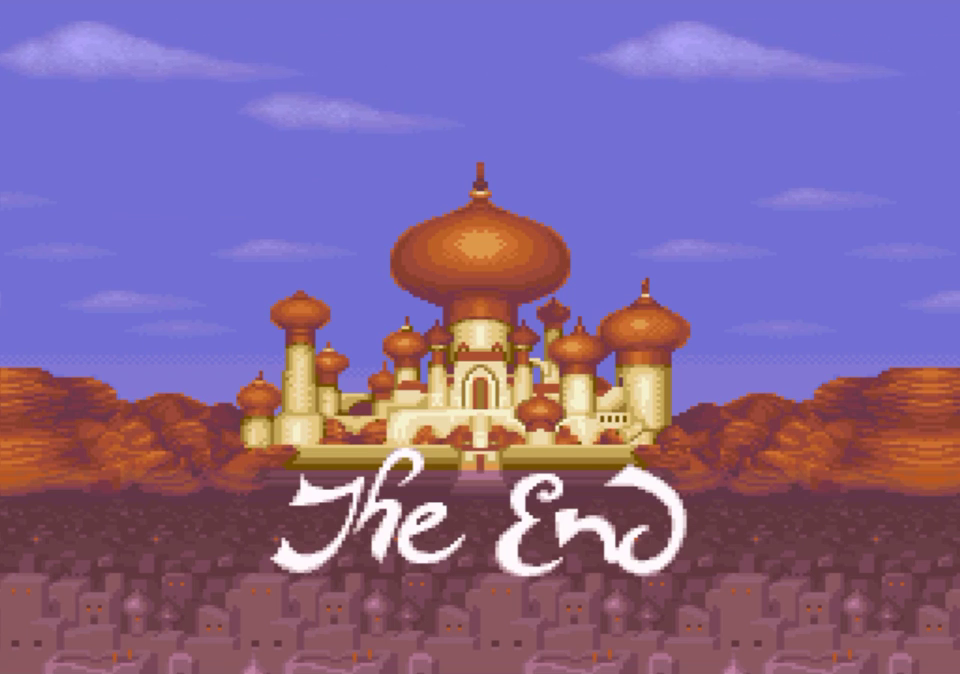
As the final battle concludes, the cobra falls, and the words “The End” appear against the backdrop of a palace inspired by Islamic architecture. It is a simple ending, yet profoundly symbolic of the console era: victory is not measured in narrative depth, but in survival and triumph.
For players in 1993, Aladdin was more than a game—it was a test of reflexes, patience, and persistence. Agrabah became a metaphor for the console itself: unpredictable, dazzling, but rewarding for those who dared to master it.
Decades later, the memory of leaping over guards, soaring on the magic carpet, and battling Jafar’s cobra continues to echo in retro gaming culture. Aladdin reminds us that even licensed adaptations can create timeless experiences, and that the palace of pixels still holds its secrets for those willing to return.
🎥 Video Exhibit – Aladdin (1993, Super Famicom)
© 2025 Japanstyle-RetroPlayScreenshots © Capcom / Disney 1993
This article is intended for personal documentation and cultural appreciation.
All rights to game footage, music, and characters belong to their respective copyright holders.
🔗 Home | About Us | Site Policy


Comments
Post a Comment