Ikari Warriors (1986) Arcade
Released in 1986 by SNK, Ikari (怒) was a landmark arcade shooter that fused cinematic flair with mechanical innovation. This article explores its explosive opening, rotary control system, and relentless pacing—tracing how it helped define the run-and-gun genre in the golden age of arcades.
From its jungle crash landing to its surreal final boss, Ikari remains a testament to the raw energy and experimentation of 1980s game design.
🎮 Game Information
Title: Ikari Warriors (怒)
Year: 1986
Platform: Arcade (SNK custom hardware)
Genre: Run-and-Gun / Multi-directional Shooter
Developer / Publisher: SNK
Format: Dedicated arcade PCB
Players: 1–2 simultaneous (co-op)
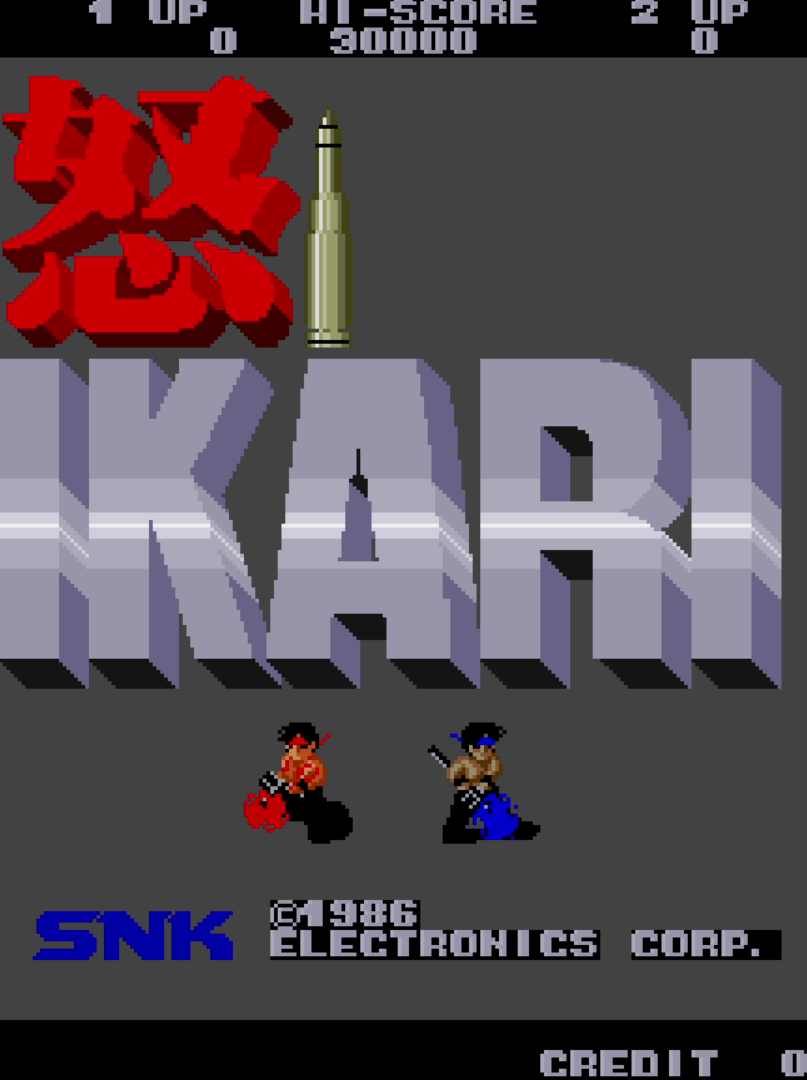
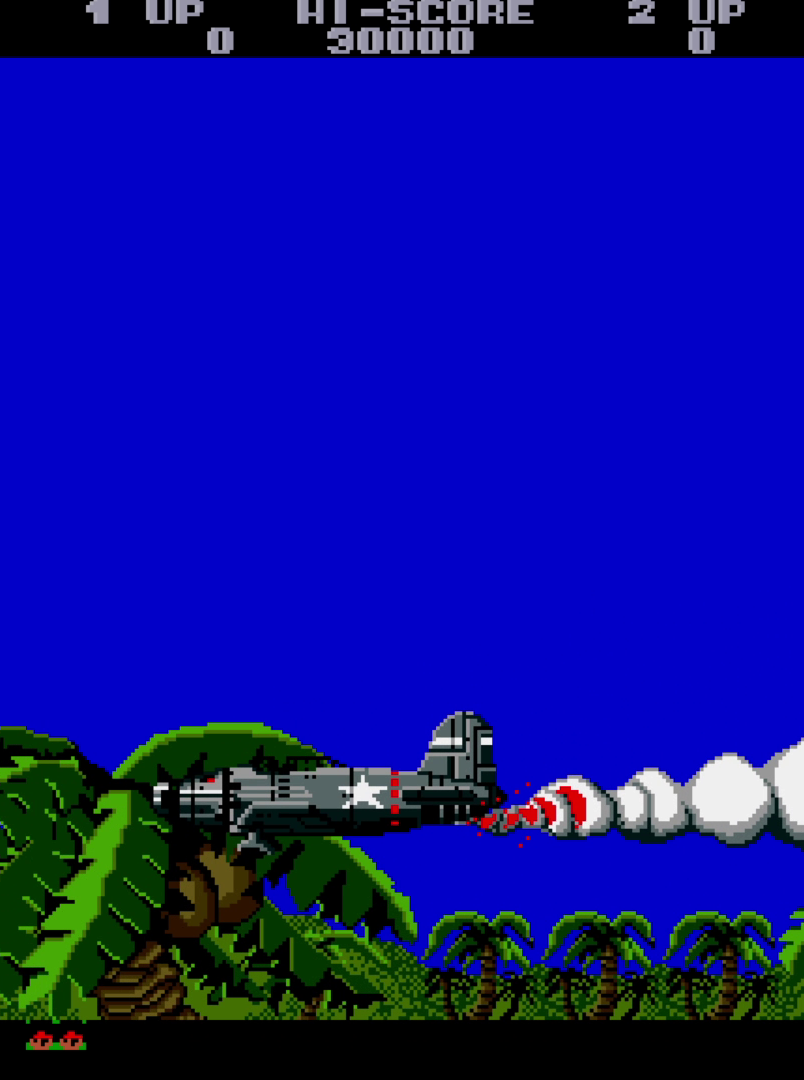
🧭 Prologue – Crash in the Jungle
The jungle is silent, save for the hiss of smoke and the distant echo of rotor blades. A fighter plane, marked with a white star, lies wrecked in the underbrush—its mission aborted, its crew scattered. This is how Ikari begins: not with a briefing, but with a crash. No words, no mercy. Just two soldiers, shirtless and bandana-clad, rising from the wreckage with machine guns in hand.
In an era when arcade games often opened with a title screen and a coin prompt, Ikari dared to stage a cinematic cold open. The downed aircraft, the dense foliage, the implied urgency—it all unfolds in seconds, yet sets the tone for a game that never lets up. This was not just a shooter. It was a war movie you played with your whole body.
🧨 Exhibit I – Rotary Combat and the Birth of 360° Fire
- 🔄 Rotary joystick allowed movement and independent aiming
- 👥 Two-player co-op with distinct red and blue bandana characters
- 💣 Grenade button enabled arcing attacks over obstacles
Ikari’s most radical innovation wasn’t its setting—it was its controls. Using SNK’s custom rotary joystick, players could move in one direction while aiming in another, rotating their aim with a twist of the wrist. This allowed for a fluidity of combat that felt closer to twin-stick shooters decades later than to its contemporaries.
The grenade button added a vertical axis to the battlefield, letting players arc explosives over cover or into trenches. Combined with the ability to play cooperatively—red and blue bandanas blazing—Ikari created a kinetic, improvisational rhythm. It wasn’t just about shooting; it was about dancing through chaos.
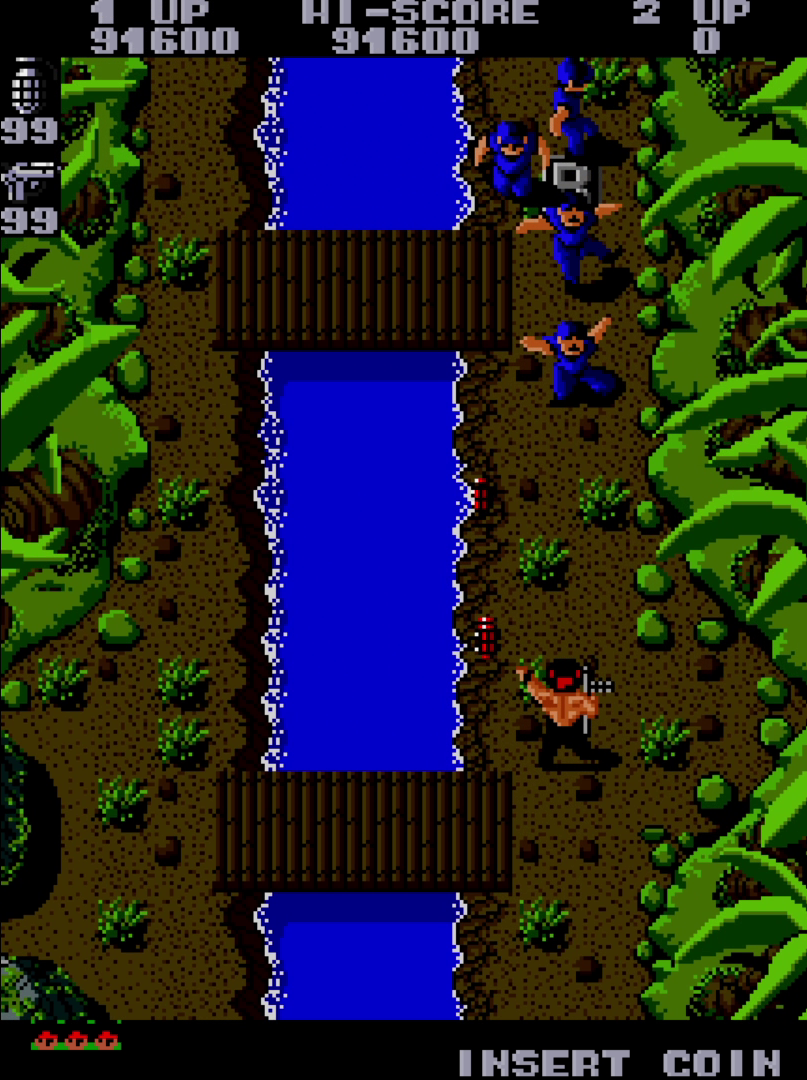
🛡️ Exhibit II – Terrain, Tension, and Tactical Flow
- 🌊 Varied terrain: rivers, cliffs, bunkers, and bridges
- 🚜 Vehicle segments with tanks added pacing shifts
- 🧠 Enemy placement encouraged flanking and grenade use
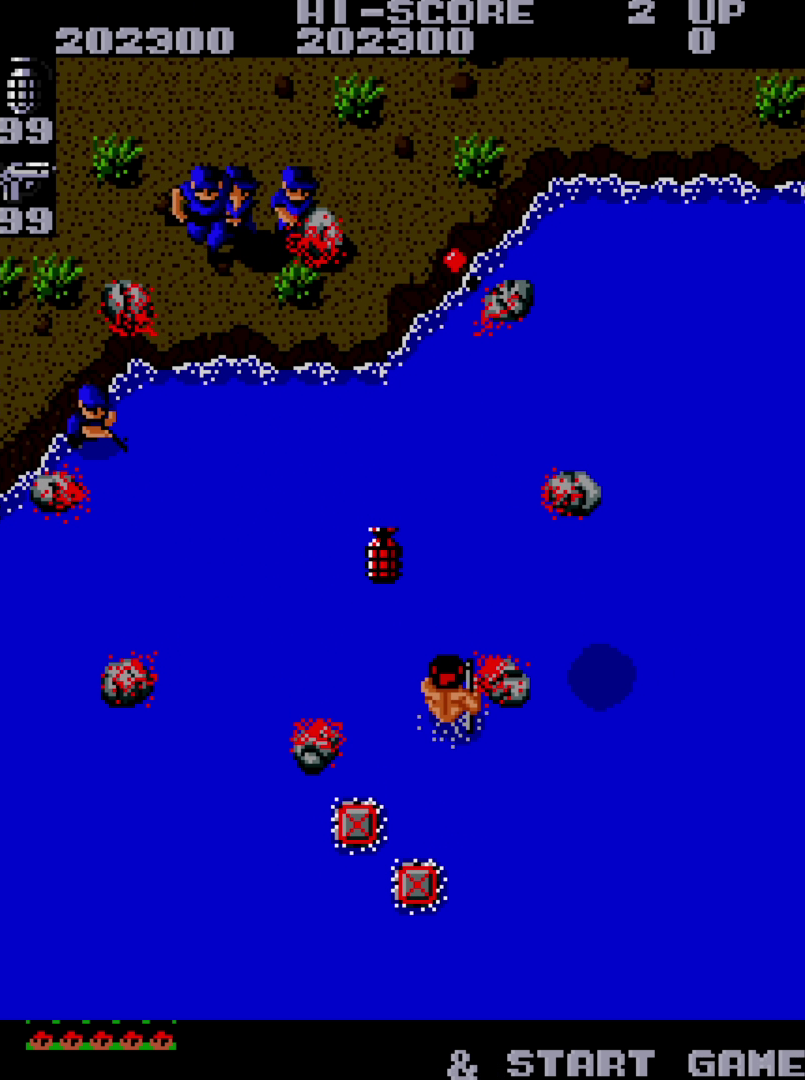
The battlefield in Ikari is not a flat plane—it’s a layered gauntlet. Players wade through rivers, scale cliffs, and storm bunkers. Each segment introduces new spatial logic: narrow bridges demand precision, open fields invite ambushes, and water slows movement but not danger.
Tanks, when acquired, shift the tempo. Suddenly, the player becomes a juggernaut—until the fuel runs out. These moments of empowerment are fleeting, but unforgettable. The terrain isn’t just backdrop; it’s a living obstacle course that demands adaptation and rewards aggression.
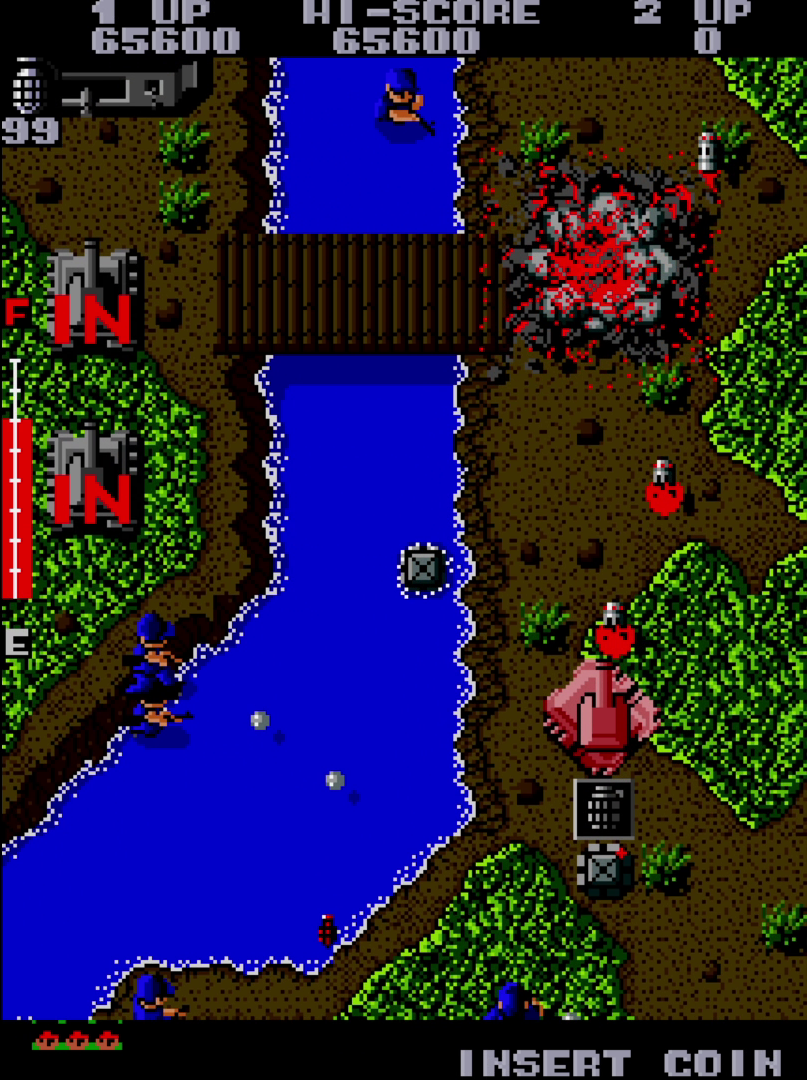
🧩 Exhibit III – Flow, Rhythm, and the Art of Assault
- 🧱 Level design emphasizes forward momentum and improvisation
- 🧨 Grenade arcs and enemy waves create rhythmic tension
- 🧍♂️ Water traversal and verticality add tactical variety
Ikari is not a game of cover—it’s a game of motion. The level design encourages players to push forward, reacting to enemy waves with instinct rather than calculation. Grenades arc over barricades, enemies emerge from bunkers, and the terrain itself becomes a metronome of violence.
Water segments slow movement but heighten vulnerability. Throwing grenades while wading through rivers feels desperate, cinematic. These moments of verticality and exposure create a rhythm: advance, react, recover. It’s not just run-and-gun—it’s choreography under fire.
🎭 Exhibit IV – Symbolism, Spectacle, and the Final Confrontation
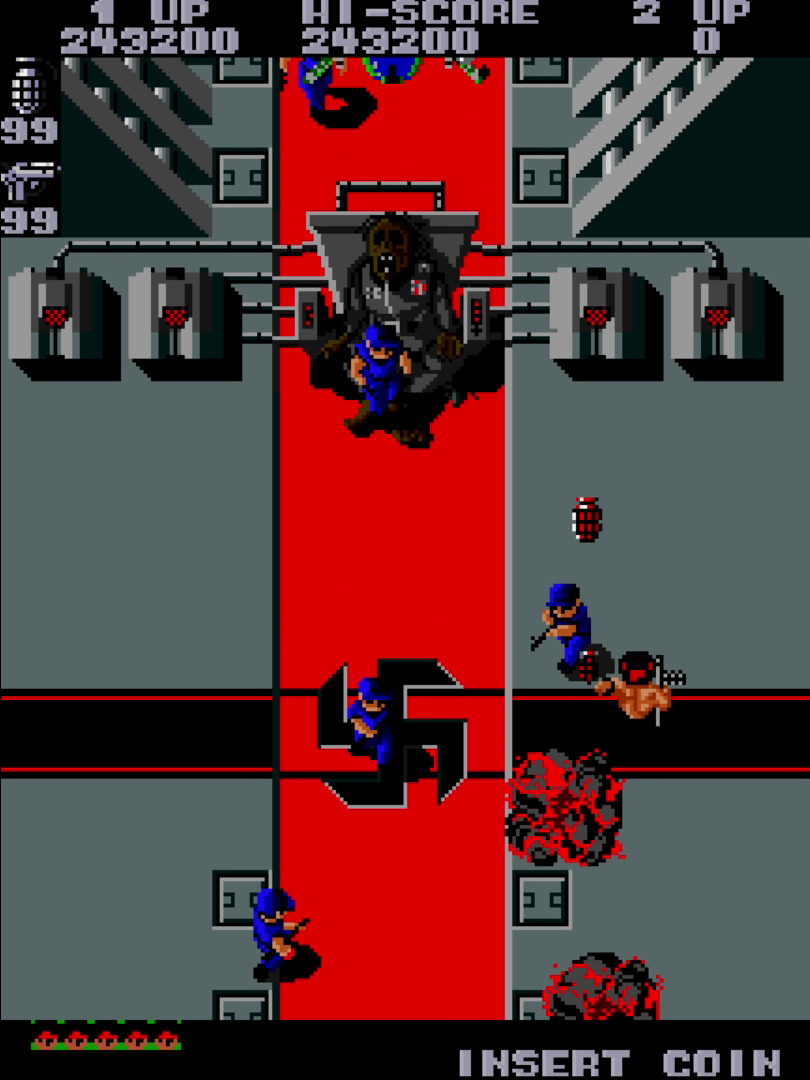
- 🧟♂️ Final boss resembles a mummified dictator in military regalia
- 🕍 Nazi iconography used as visual shorthand for evil
- 🎯 No dialogue—only imagery and score-based reward
The final stage of Ikari is surreal. The player enters a chamber adorned with Nazi iconography, facing a figure that resembles a mummified dictator—possibly modeled after Hitler. He sits motionless, medals gleaming, awaiting destruction. There is no speech, no cutscene. Just bullets and silence.
This confrontation is symbolic, not narrative. It evokes the arcade era’s fascination with visual shorthand—evil as iconography, victory as score. The absence of dialogue forces players to project meaning. Is this revenge? Justice? Catharsis? Ikari doesn’t answer. It just lets you shoot.
🏅 Exhibit V – Resolution and Reward
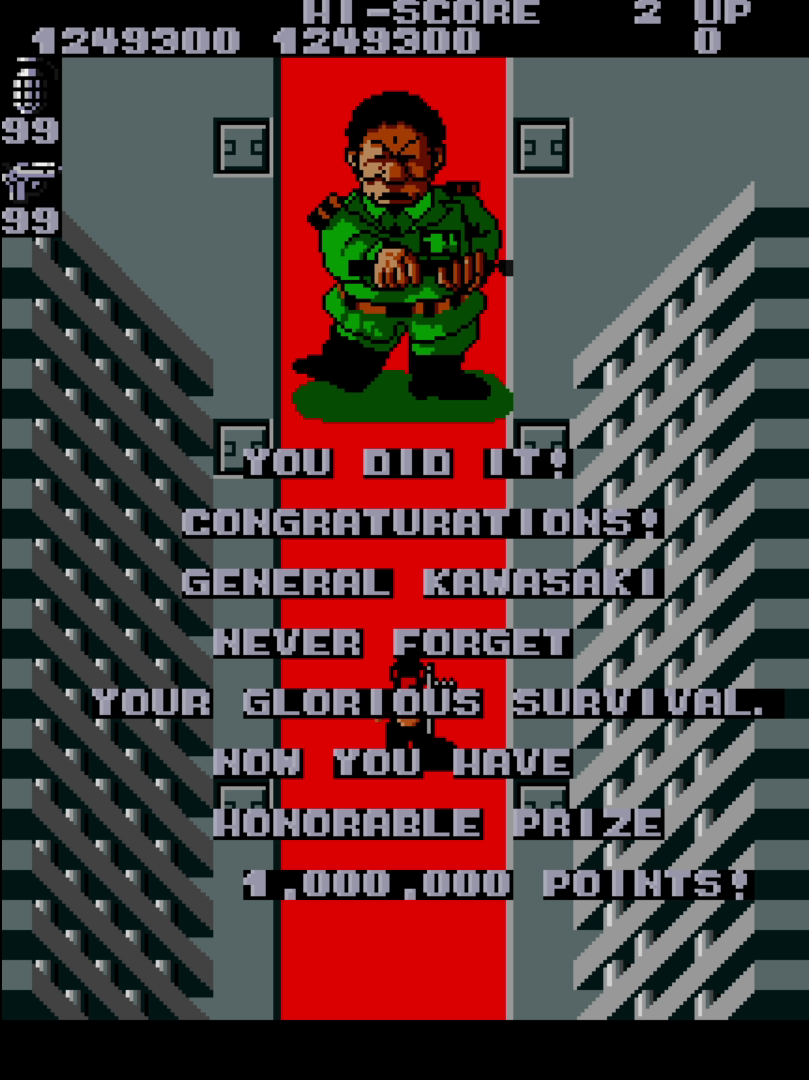
- 🎖️ Post-game scene features a general praising the player
- 💯 Score reward of 1,000,000 points given
- 🧵 No ending text—just gesture and tone
After the final battle, Ikari offers no cinematic ending—only a general in green uniform, standing on a red carpet, praising the player and awarding a million points. The soldiers stand at attention. The war is over. The screen fades.
This ending is pure arcade logic: reward through score, closure through gesture. There’s no epilogue, no reflection. Just a nod, a number, and the knowledge that you survived. In its restraint, Ikari says everything it needs to.
🏛️ Epilogue – Echoes of Ikari
Ikari is not just a relic—it’s a rhythm. A game that taught players to move, aim, and react in real time. Its rotary controls prefigured twin-stick shooters. Its co-op design fostered camaraderie. Its imagery—bold, strange, and unflinching—left a mark on arcade culture.
In the years that followed, SNK would refine its craft, but Ikari remained a primal scream. A jungle crash, a march through rivers, a final shot in a chamber of symbols. For those who played it in smoky arcades, and those rediscovering it now, Ikari is not just a game. It’s a memory of motion, a war fought in pixels, and a legacy carved in red.
🎥 Video Exhibit – Ikari (1986, Arcade)
© 2025 Japanstyle-RetroPlay
Screenshots © SNK 1986
This article is intended for personal documentation and cultural appreciation.
All rights to game footage, music, and characters belong to their respective copyright holders.
🔗 Home | About Us | Site Policy


Comments
Post a Comment