Ken Sei Mogura: Street Fighter II (1994) Arcade
Released in 1994 by Capcom, Ken Sei Mogura: Street Fighter II (ストリートファイターⅡ 拳聖土竜) reimagined the arcade experience with a whack-a-mole twist. This article explores its theatrical pacing, character-driven spectacle, and how it transformed familiar faces into kinetic icons.
From its explosive intros to its rhythm-based duels and surreal boss transitions, Ken Sei Mogura stands as a playful yet intense reinterpretation of the Street Fighter legacy.
🎮 Game Information
Title: Ken Sei Mogura: Street Fighter II (ストリートファイターⅡ 拳聖土竜)
Year: 1994
Platform: Arcade (Custom Cabinet)
Genre: Whack-a-Mole Action / Street Fighter Spin-off
Developer / Publisher: Capcom, Sigma, Togo / © Capcom
Format: Proprietary Mallet-Control Cabinet
Players: 1–2 (Simultaneous)
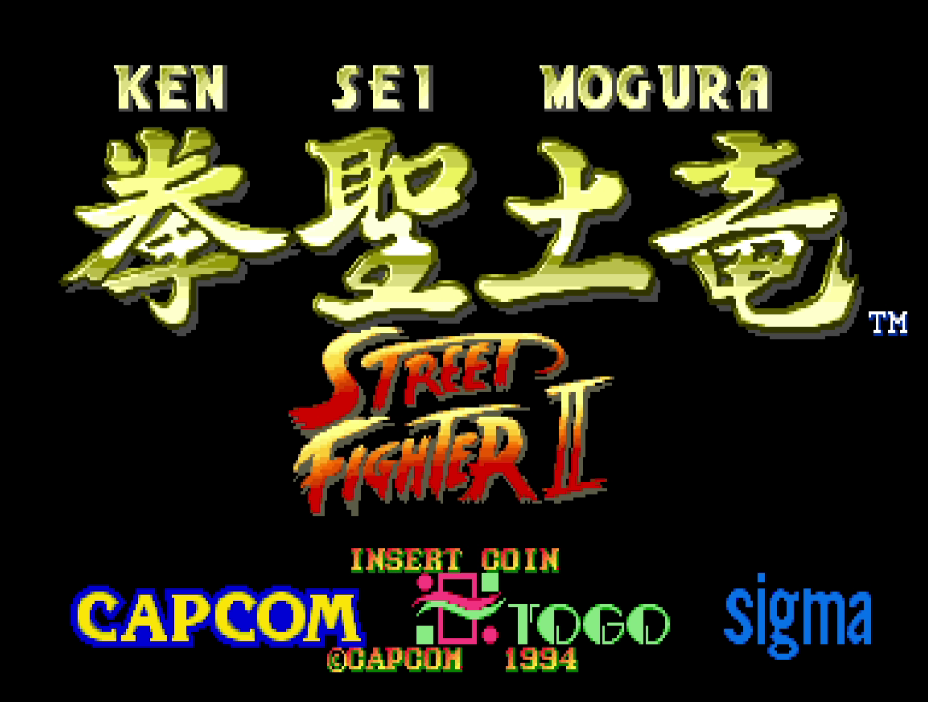
🧭 Prologue – Beneath the Surface, a Duel Begins
In the dim glow of an arcade corner, something unexpected stirred beneath the familiar Street Fighter logo. Ken Sei Mogura didn’t ask players to fight—it asked them to strike. With mallets in hand, players faced a surreal battlefield where reflex met rhythm.
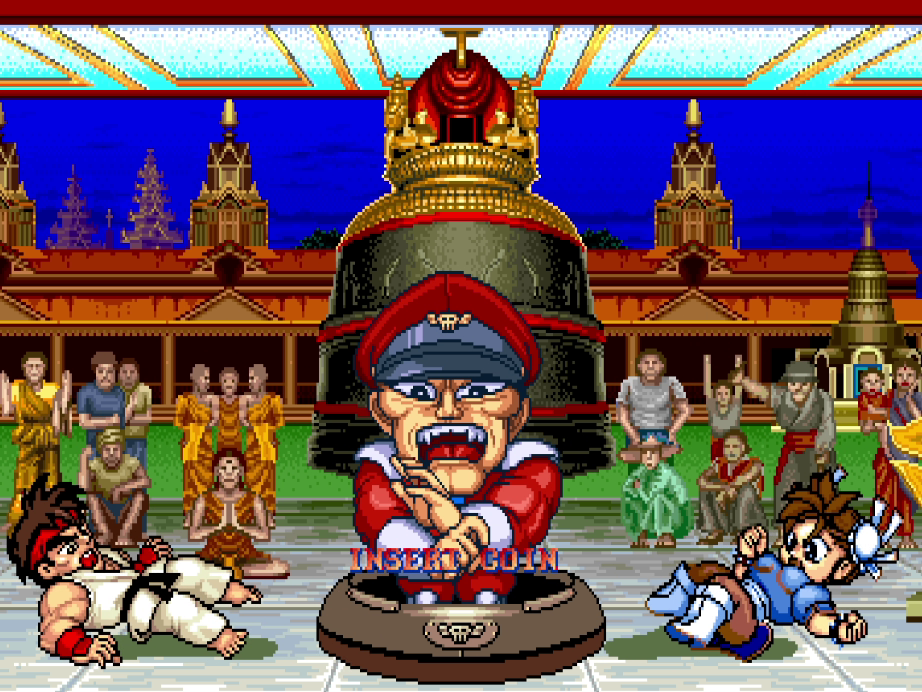
The game opens with Chun-Li and Ryu recoiling in shock as M. Bison erupts from a central pit. Their bodies fly backward, limbs flailing, caught off guard by the sudden violence. It’s a moment of theatrical absurdity, yet unmistakably Street Fighter: dramatic, stylized, and immediate.
🎯 Exhibit I – Score Combat & Cabinet Interface
- 🔨 12 pop-up holes arranged for mirrored two-player play
- 🖐️ Dual mallets enable simultaneous left-right striking
- 📺 Rear monitor displays score, cutscenes, and character animations
- 🎨 Cabinet artwork features Ryu and Chun-Li in dynamic poses
Ken Sei Mogura’s cabinet is a kinetic stage. Each player faces six mole holes, mirrored across the centerline. Two mallets rest at the ready, inviting rapid, rhythmic strikes. The layout encourages ambidextrous play and competitive symmetry.
Behind the action, a monitor displays score updates, character animations, and dramatic transitions. Above it, the game’s title glows in stylized kanji. The cabinet’s body features bold illustrations of Ryu and Chun-Li, anchoring the experience in Street Fighter’s visual legacy.
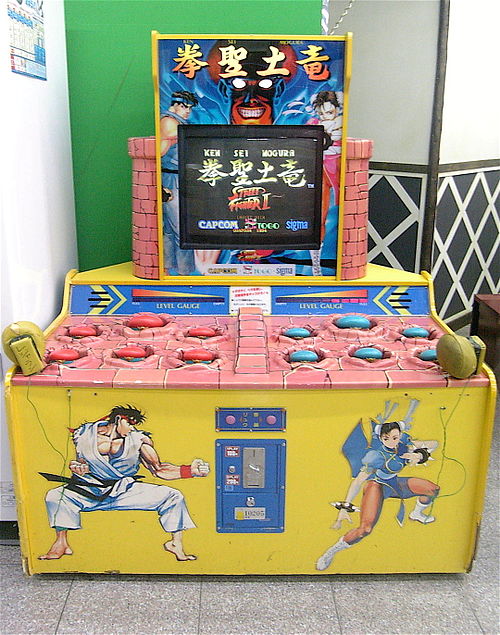
Image: Rare odditity (2060587599).jpg / Author: hawken king / License: CC BY 2.0 / Source: Flickr → Wikimedia Commons → Wikipedia
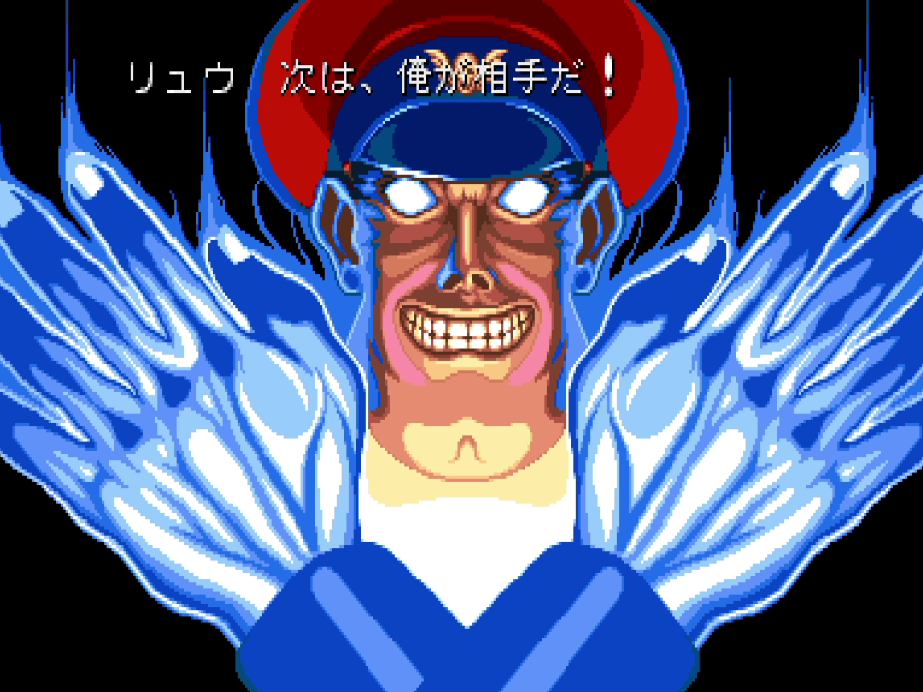
⚔️ Exhibit II – Rivalry & Mid-Stage Transitions
- 🧠 Mid-stage cutscenes build narrative tension and character presence
- 🧍 Bison’s appearances escalate the stakes between rounds
- 🌀 Visual effects and voice lines deepen immersion
Between stages, the game shifts gears. A close-up of Bison appears, his hands crossed ominously, eyes glowing white. “Ryu, next… I’m your opponent!” flashes across the screen. It’s a moment of theatrical bravado, bridging gameplay with narrative.
These transitions aren’t just filler—they’re emotional punctuation. They remind players that beneath the whack-a-mole mechanics lies a story of rivalry, escalation, and arcade drama.
💥 Exhibit III – Victory Poses & Character Resolution
- 🎉 Win screens highlight individual triumphs with stylized portraits
- 🖼️ Art direction blends anime aesthetics with arcade urgency
- 🎮 Score-based outcomes reinforce player performance
When a player wins a round, the game pauses to celebrate. A close-up bust shot of Ryu appears, fist raised in triumph, framed by radiant blue and white light. It’s not just a win—it’s a moment of identity.
These victory screens serve as punctuation marks. They reward precision, reinforce character, and give players a visual payoff that transcends mere score tallies. The anime-style rendering adds emotional weight, making each round feel personal.
🧮 Exhibit IV – Competitive Rhythm & Score Dynamics
- 🔢 Scoreboards drive tension and pacing
- 🧍 Character matchups mirror classic Street Fighter duels
- 🎮 Each round escalates in speed and complexity
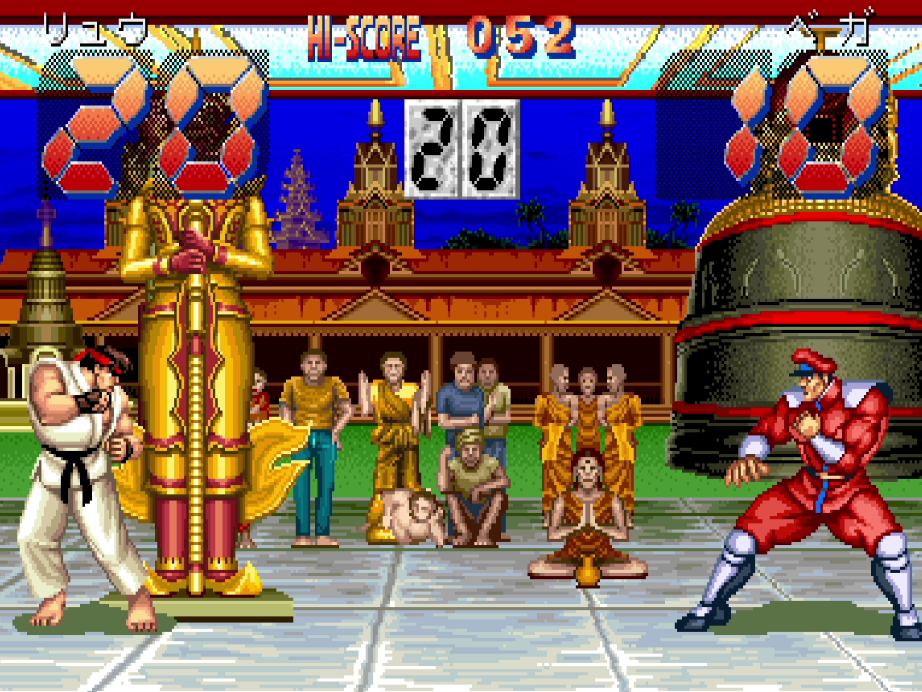
In later stages, players face off in increasingly intense matchups. Ryu and Bison stand in mirrored poses, while a digital scoreboard looms above, updating with each successful strike. The numbers aren’t fixed—they’re dynamic, reflecting the rhythm and urgency of the duel.
The visual language borrows from fighting games, but the mechanics are pure arcade reflex. Players must anticipate, react, and dominate. The score becomes a narrative, telling the story of each duel in digits and motion.
🏛️ Epilogue – Echoes Beneath the Arena
As the final mole is struck and the scoreboard fades, Ken Sei Mogura leaves behind more than reflexes—it leaves rhythm. Beneath the surface of its comedic premise lies a game of tension, timing, and theatricality.
Ryu and Chun-Li may not throw fireballs here, but they leap, react, and express. Bison doesn’t hover ominously—he erupts, challenges, and taunts. The battlefield is a pit, the weapon a mallet, but the spirit is unmistakably Street Fighter.
In 1994, this wasn’t just a novelty cabinet. It was a reinterpretation of arcade drama, a kinetic parody, and a celebration of character. Ken Sei Mogura reminds us that even in the absurd, there is artistry. And sometimes, the deepest duels happen just beneath the surface.

|

|
🎥 Video Exhibit – Ken Sei Mogura (1994, Arcade)
© 2025 Japanstyle-RetroPlay
Screenshots © Capcom 1994
This article is intended for personal documentation and cultural appreciation.
All rights to game footage, music, and characters belong to their respective copyright holders.
🔗 Home | About Us | Site Policy


Comments
Post a Comment