SPARK MAN (1989) SunA Electronics
🧭 Prologue – Sparks from the Forgotten Circuit
In 1989, SunA Electronics—a South Korean arcade developer—released SPARK MAN, a surreal action platformer that fused mechanical chaos with electric rhythm. Though lesser known outside Korea, the game carved a niche among arcade enthusiasts for its cryptic visuals, unpredictable stage transitions, and electrically charged combat.
Today, SPARK MAN arcade 1989 stands as a rare artifact of Korean arcade history, blending bold sprite design with a fragmented narrative of resistance and survival. The game’s protagonist, Spark Man, channels electricity through his fingertips, confronting robotic beasts and grotesque bosses in a world that feels both industrial and mythic.
This exhibit revisits SPARK MAN not just as a game, but as a cultural echo—an electrified relic from the margins of arcade memory.
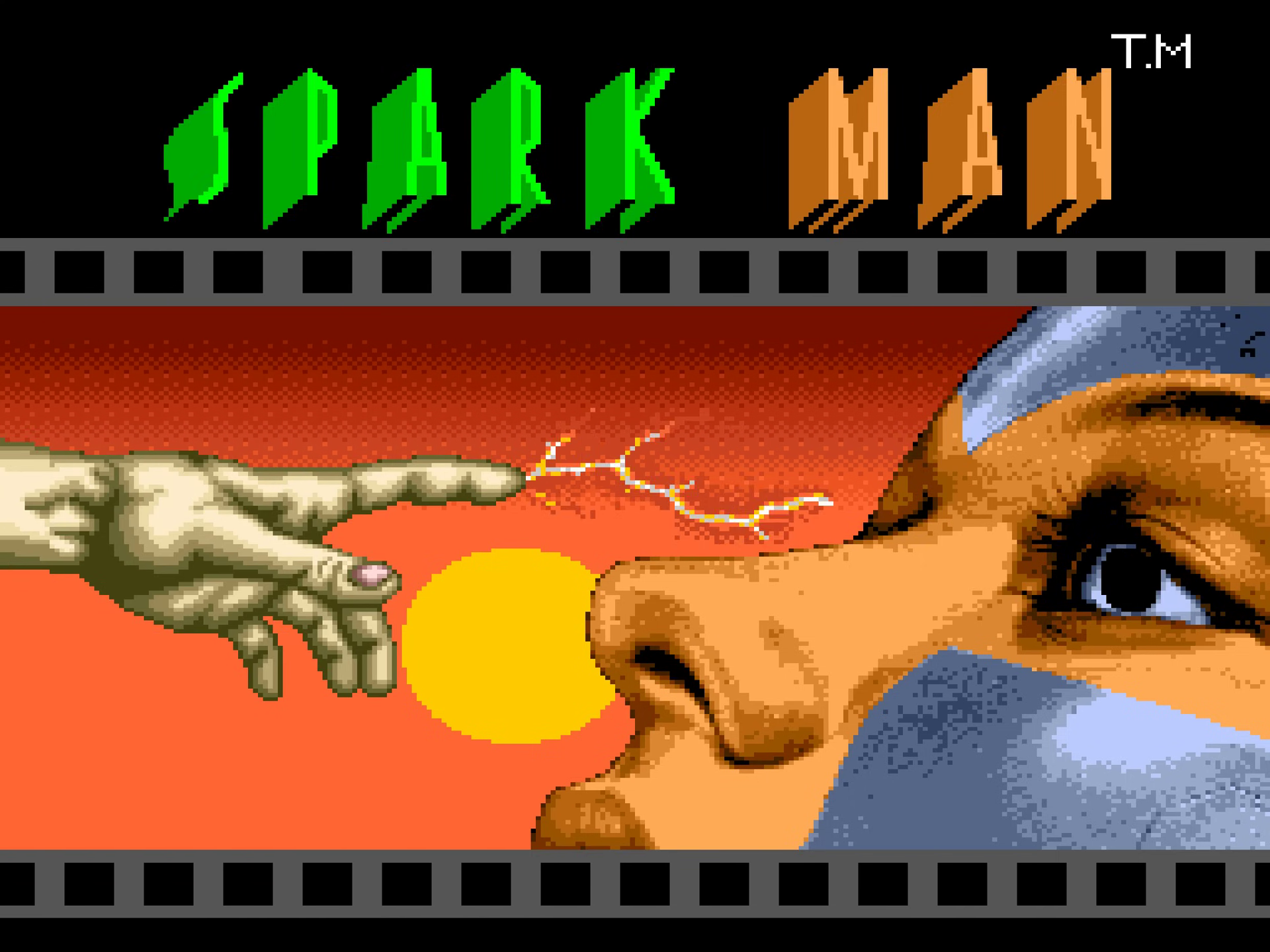
🎮 Game Information
Title: SPARK MAN
Year: 1989
Platform: Arcade
Genre: Action Platformer
Developer / Publisher: SunA Electronics (South Korea)
Format: PCB Arcade Board
Players: 1–2 (Alternating)
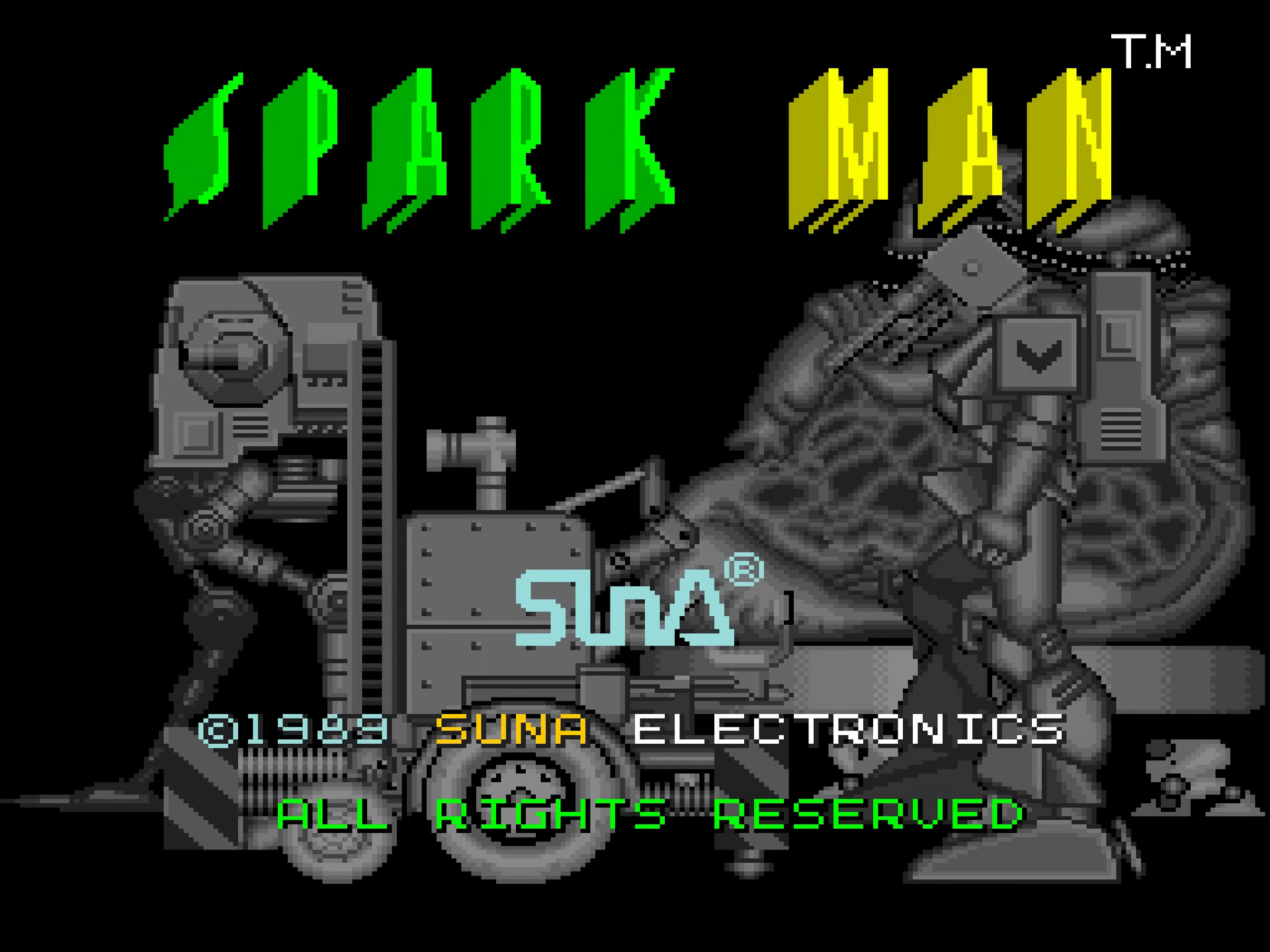
🖼️ Exhibit I – Stage Design & Electric Flow
- ⚡ Multi-phase stages: aerial combat, vertical climbs, boss arenas
- 🧩 Each phase introduces new spatial logic and enemy behavior
- 🔁 Stage rhythm alternates between chaos and precision
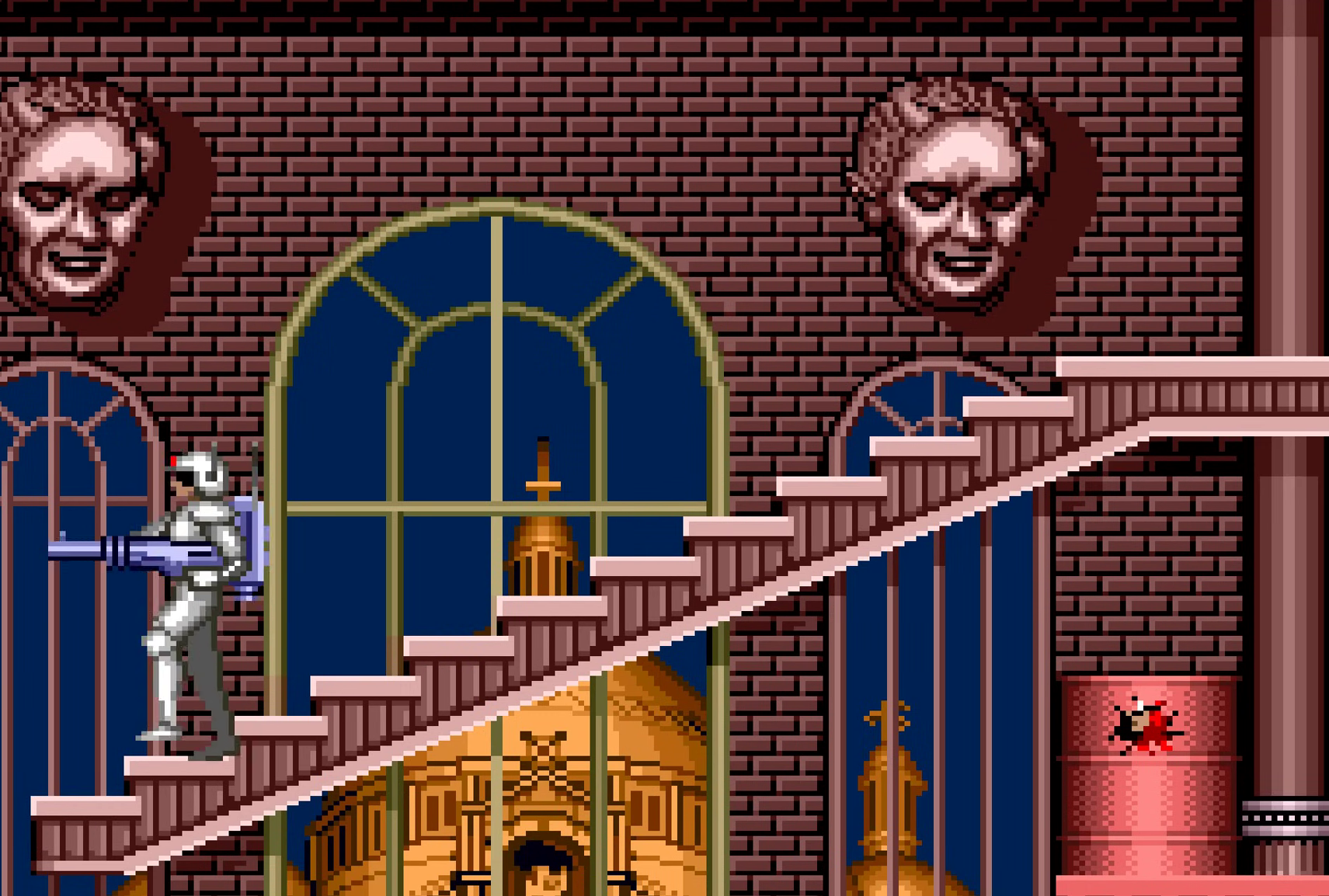
SPARK MAN unfolds like a fragmented circuit—each stage a broken wire sparking with new energy. Players leap across floating lifts, ascend eerie staircases, and confront grotesque bosses in confined arenas. The game’s rhythm is erratic by design: aerial battles shift into claustrophobic climbs, and mechanical beasts emerge from unexpected corners.
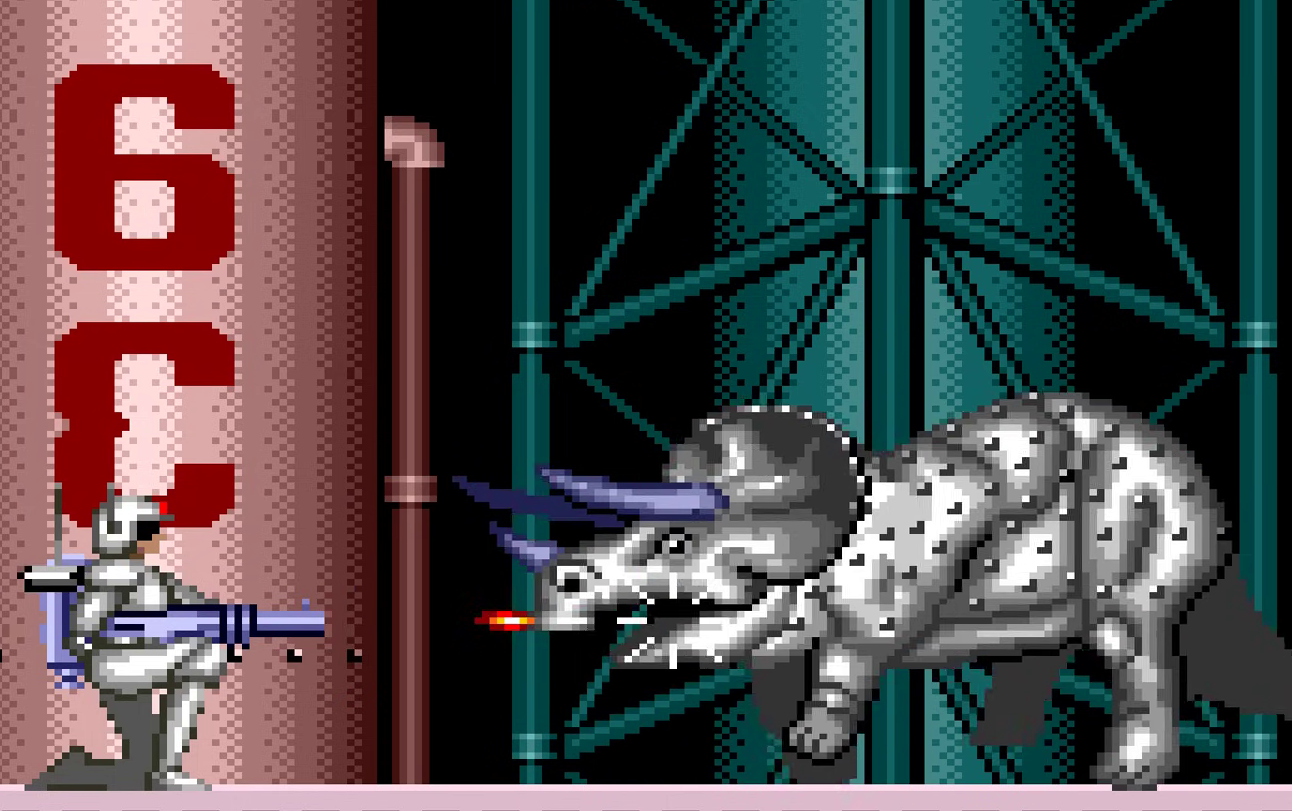
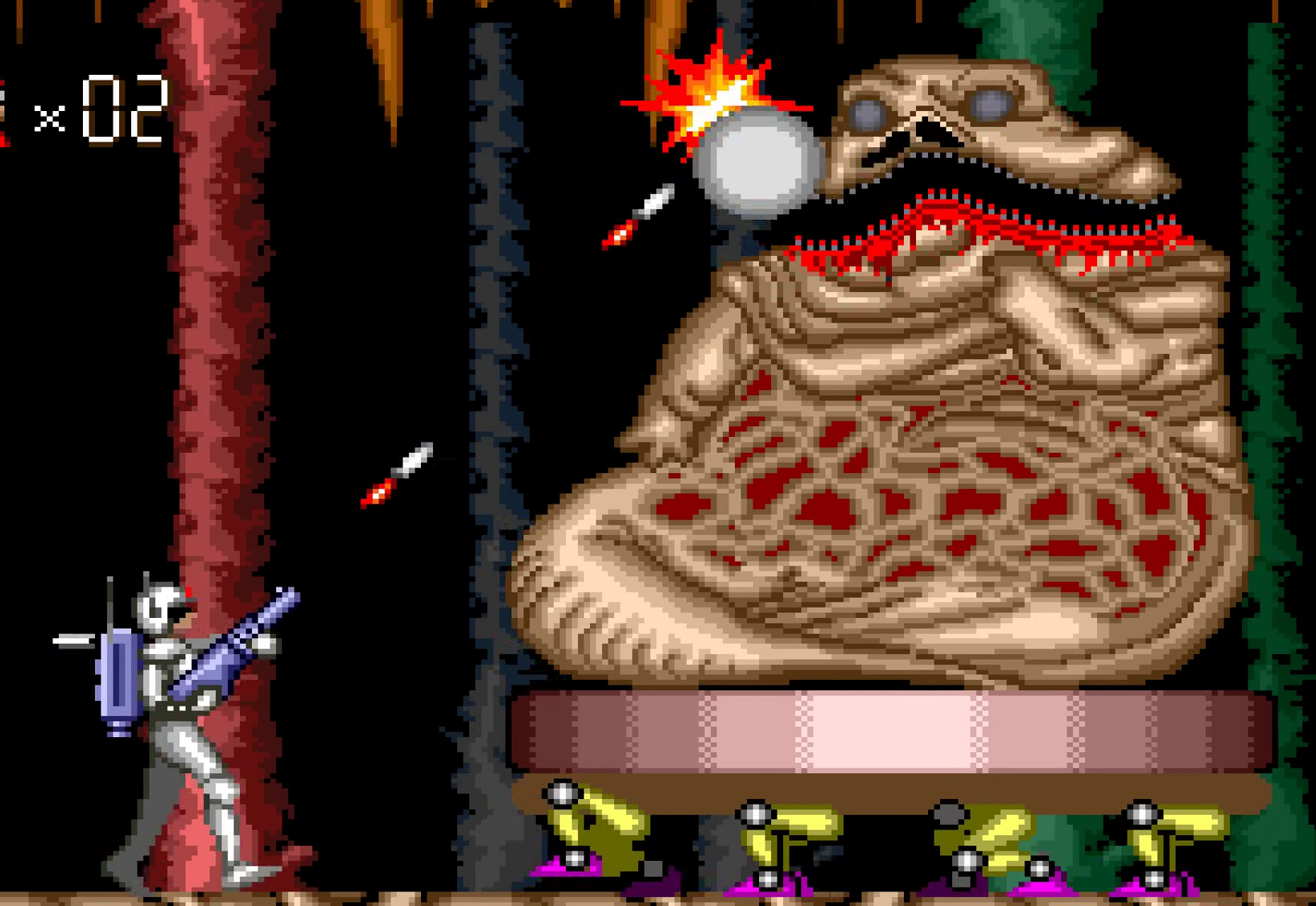
Rather than guiding the player through a linear journey, SPARK MAN throws them into disjointed environments that demand adaptation. The lift stage emphasizes aerial control and timing, while the staircase level introduces psychological tension through surreal wall sculptures. Boss fights—like the robotic triceratops or slug-like overlords—require pattern recognition and split-second reactions.
This chaotic sequencing reflects a design philosophy rooted in surprise and escalation. SPARK MAN doesn’t teach—it tests.
⚙️ Exhibit II – Control, Collision & Challenge
- 🕹️ Basic controls: directional movement and projectile attack
- 🚁 Combat shifts between horizontal and vertical planes
- 💥 Bosses demand memorization and reflex under pressure
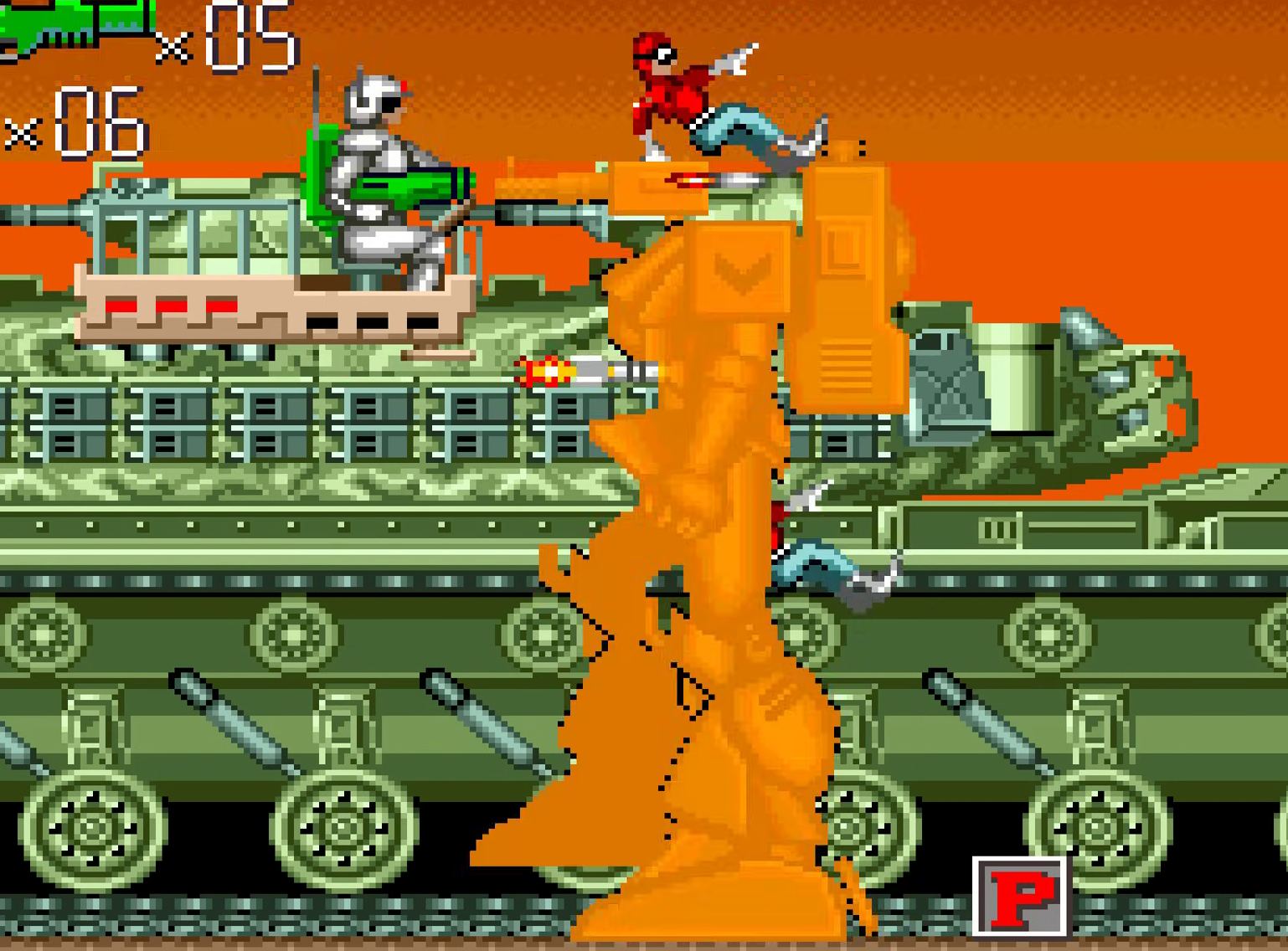
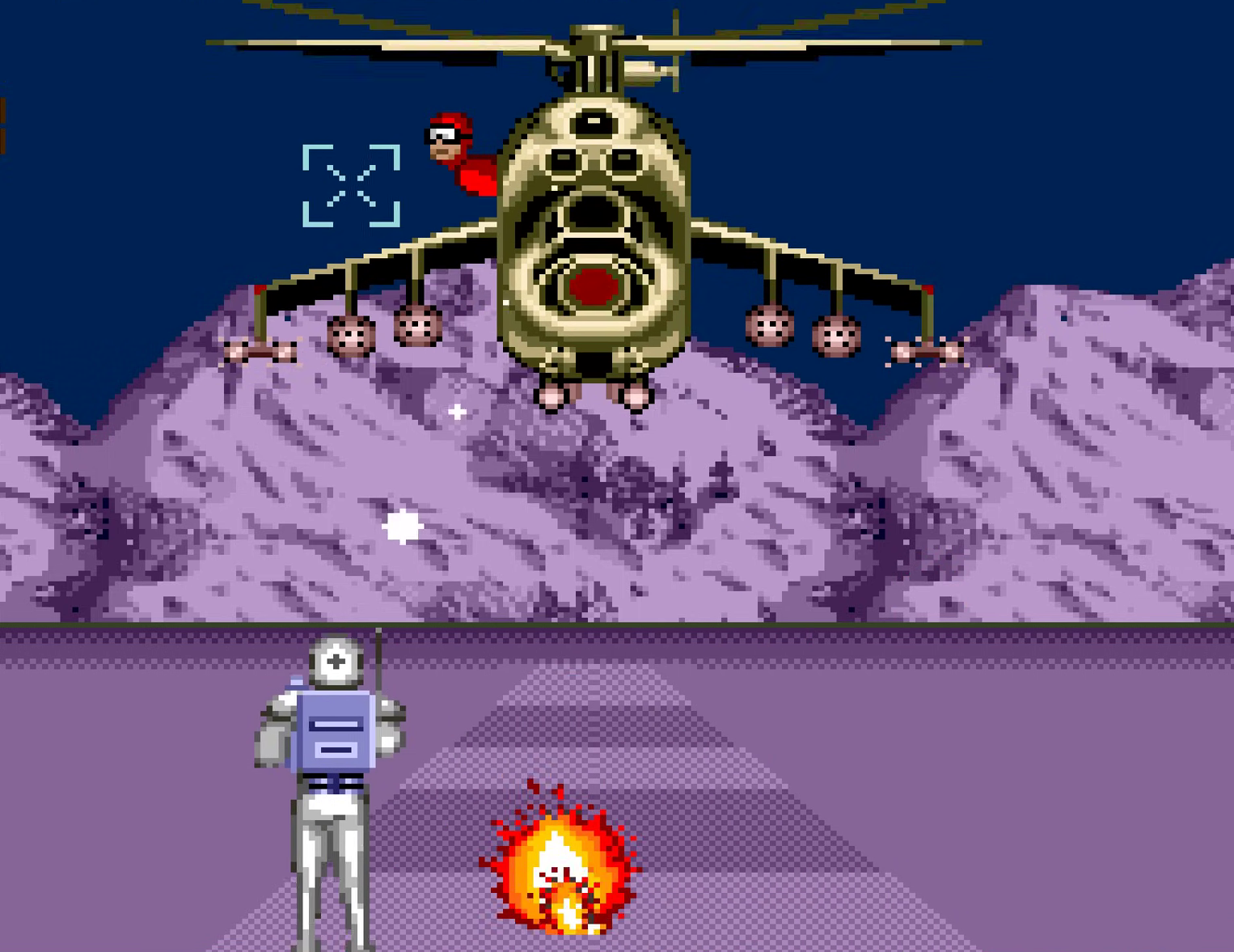
SPARK MAN operates on minimal inputs—yet its challenge is maximal. The player moves and fires, but the game constantly redefines what those actions mean. In one stage, Spark Man faces a helicopter head-on, dodging bullets while aiming at a red enemy leaning from the cockpit. In another, he battles a robotic triceratops whose mouth conceals a hidden foe.
The controls remain simple, but the context shifts radically. Bosses are not just enemies—they’re puzzles. The slug-like overlord demands evasive maneuvers and precise timing, while the triceratops tests spatial awareness and projectile control.
This tension between simplicity and complexity is the game’s core. SPARK MAN doesn’t overwhelm with mechanics—it overwhelms with unpredictability.
🎼 Exhibit III – Sound, Texture & Atmosphere
- 🔊 Distinct sound cues for stage transitions and boss encounters
- 🎵 Electric pulses and mechanical hums define the game’s sonic identity
- 🖼️ Visual motifs echo industrial decay and surreal menace
SPARK MAN speaks in voltage. Its soundscape is built from electric pulses, synthetic hums, and abrupt tonal shifts that mirror the game’s unpredictable pacing. Stage transitions are marked by sharp audio stabs, while boss battles erupt with distorted alarms and rhythmic blasts.
Visually, the game leans into industrial surrealism. Backgrounds are sparse but symbolic—walls adorned with eerie faces, platforms suspended in voids, and enemies that resemble mutated machines. The use of grayscale and flickering effects evokes a sense of decay, as if the world itself is short-circuiting.
This audiovisual synergy creates immersion not through realism, but through abstraction. SPARK MAN doesn’t simulate a world—it generates a mood.
🧪 Exhibit IV – Technical Roots & Cultural Context
- 🖥️ Korean arcade hardware adapted for sprite-heavy, multi-phase gameplay
- 🌐 Cultural echoes of 1980s robot fascination and cinematic surrealism
- 🎮 Influence on regional arcade design and boss-centric structure
Technically, SPARK MAN was ambitious for its origin. Developed in South Korea during a time when Japanese arcade dominance was near-total, SunA’s game pushed local hardware to deliver multi-phase combat, sprite layering, and dynamic boss encounters.
Culturally, the game reflects a hybrid of influences: the robotic fascination of 1980s cinema, the surreal menace of underground comics, and the urgency of Cold War-era aesthetics. Bosses resemble mutated dinosaurs, grotesque overlords, and faceless machines—symbols of control and resistance.
Though SPARK MAN never achieved global fame, its design echoes in later Korean titles that emphasize boss variety, stage fragmentation, and visual abstraction. It stands as a testament to regional creativity under constraint.
🏛️ Epilogue – Sparks That Still Flicker
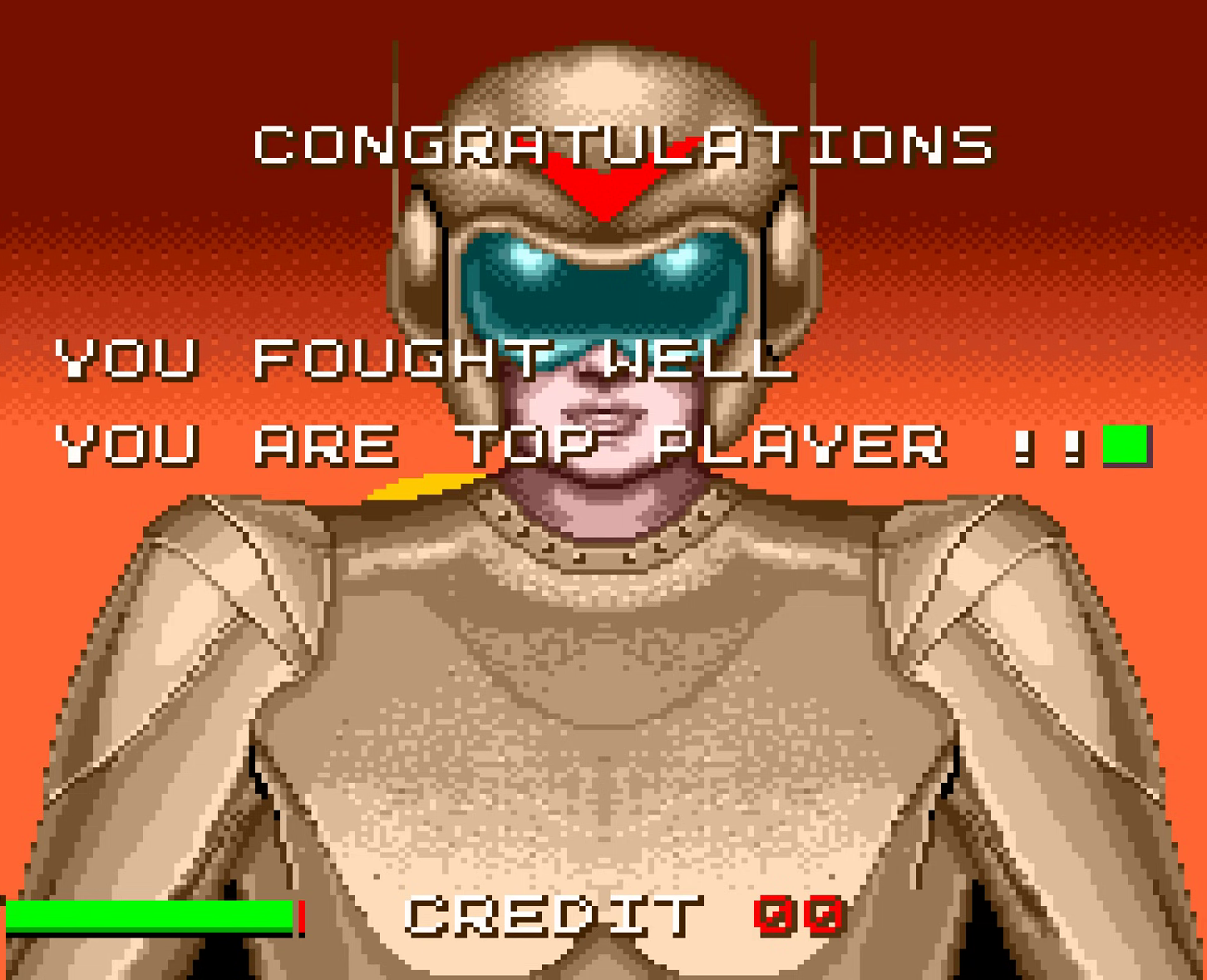
The final screen fades in: Spark Man stands tall, electricity still crackling from his core. The words “CONGRATULATIONS – YOU FOUGHT WELL – YOU ARE TOP PLAYER” appear in bold. It is a simple ending, yet charged with meaning.
In the arcade jungle of 1989, SPARK MAN was not just a game—it was a signal. A pulse from South Korea’s emerging creative circuit, defying expectations with surreal bosses and fragmented rhythm. For players who encountered it, the memory lingers like static: unpredictable, haunting, and strangely beautiful.
Decades later, the sparks still flicker. In the hum of retro cabinets, in the glitch of forgotten sprites, SPARK MAN reminds us that even the obscure can electrify. The jungle of pixels holds many secrets—and some of them speak Korean.
🎥 Video Exhibit – SPARK MAN (1989, Arcade)
© 2025 Japanstyle-RetroPlay
Screenshots © SunA Electronics 1989
This article is intended for personal documentation and cultural appreciation.
All rights to game footage, music, and characters belong to their respective copyright holders.
🔗 Home | About Us | Site Policy


Comments
Post a Comment