Super Mario Kart (1992) Super Famicom / SNES
🧭 Prologue – Echoes of the Circuit
In 1992, Nintendo released Super Mario Kart, a groundbreaking kart racing game for the Super Famicom. It transformed the racing genre by blending iconic characters, inventive track design, and playful chaos. What began as a simple experiment in Mode 7 graphics became a cultural phenomenon, inspiring decades of sequels and competitive play. Today, Super Mario Kart (1992, Super Famicom) is remembered not only as Nintendo’s innovation but also as a milestone in multiplayer design, where rivalry and laughter merged into one unforgettable experience.
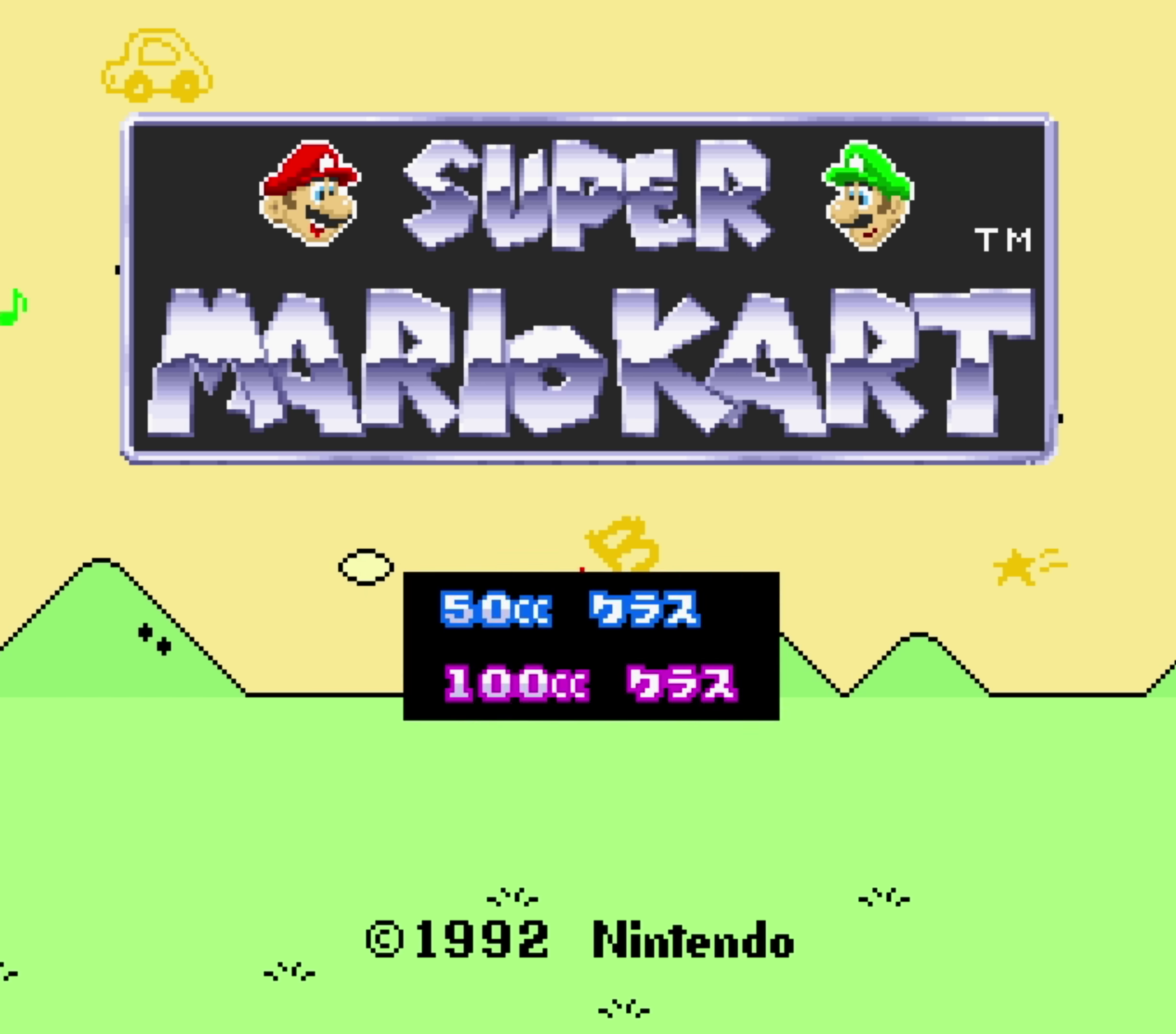
🎮 Game Information
Title: Super Mario Kart
Year: 1992
Platform: Super Famicom (SNES)
Genre: Kart Racing
Developer / Publisher: Nintendo
Format: Cartridge
Players: 1–2 (Split-Screen)
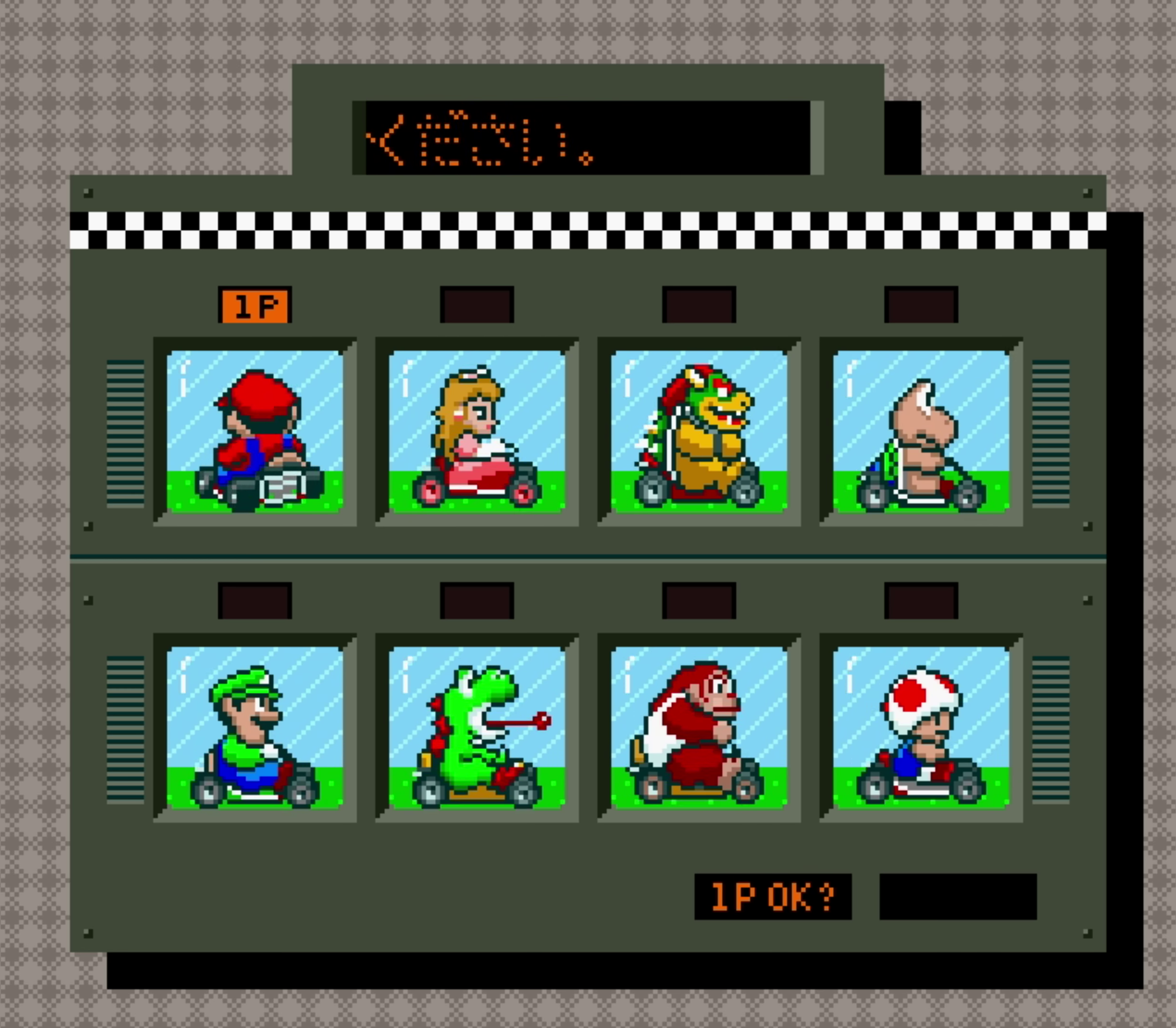
🖼️ Exhibit I – Track Design & Rhythm
- 🏁 Multiple cups: Mushroom, Flower, Star, and Special
- 🎯 Each track introduces hazards, shortcuts, and unique pacing
- ⏳ Rhythm alternates between speed bursts and tactical item use
The brilliance of Super Mario Kart lies in its track rhythm.
Courses are not merely circuits but living arenas filled with hazards and surprises.
Split-screen presentation allowed players to race while tracking rivals in real time,
creating tension between immediate reflexes and long-term strategy.
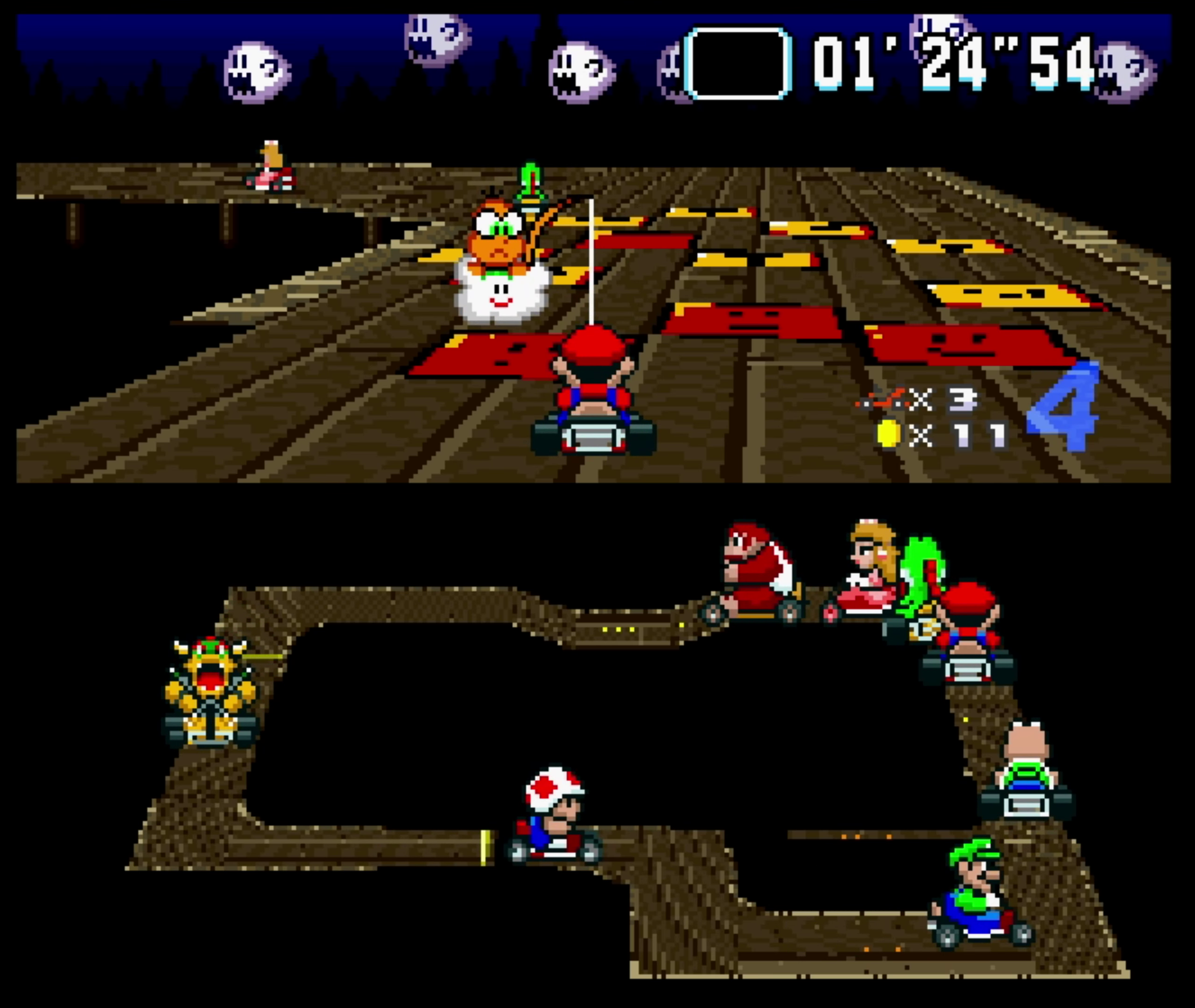
From the grassy plains of Mario Circuit to the fiery chaos of Bowser’s Castle,
each track demanded adaptation. Some emphasized tight cornering, others survival against falling obstacles.
This deliberate alternation of mechanics ensured that every race felt fresh,
turning the game into a journey through escalating tempos of rivalry and triumph.
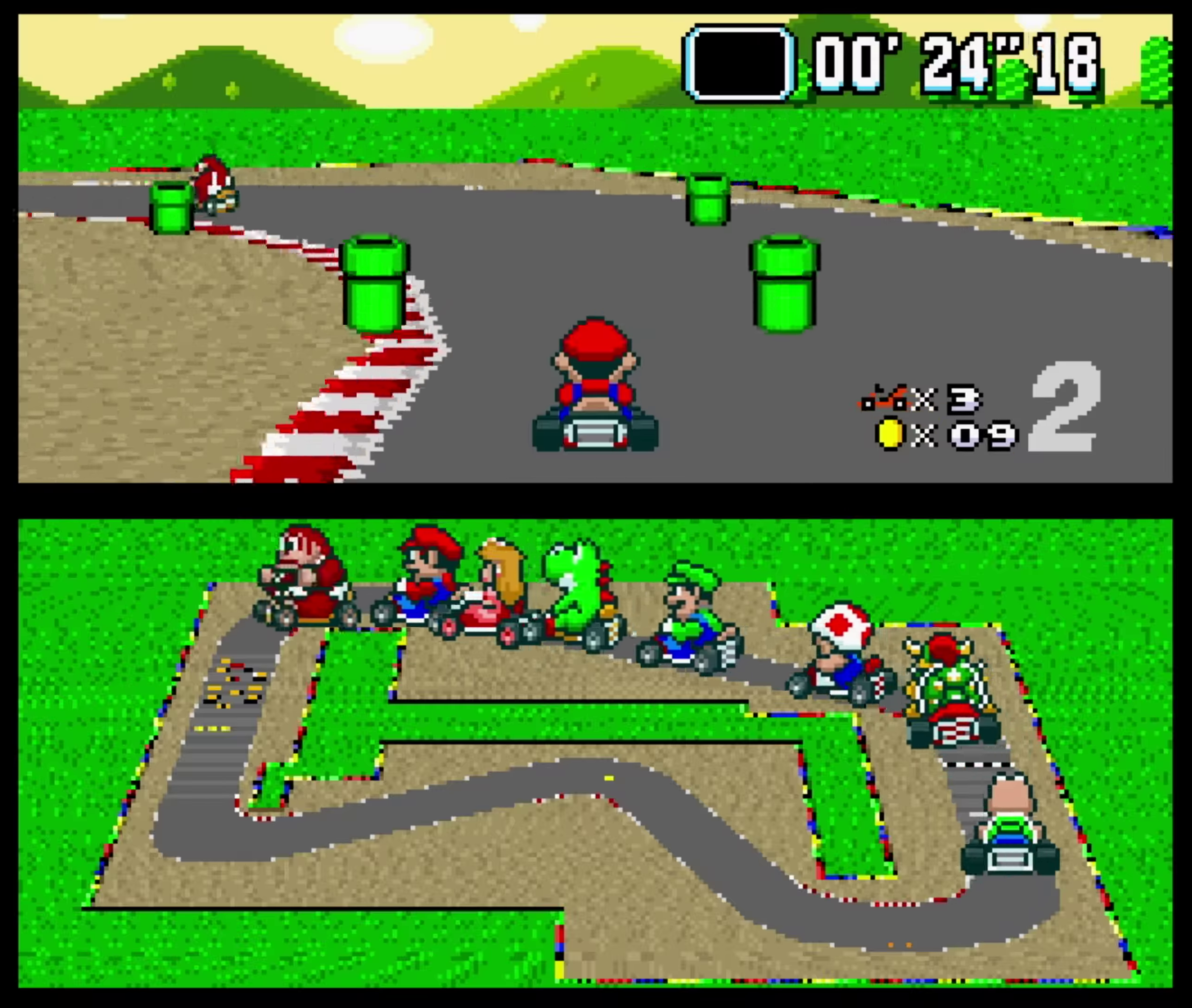
⚙️ Exhibit II – Character Control & Challenge
- 🕹️ Simple controls: accelerate, brake, steer, and item use
- 🍌 Items redefine the challenge through context-specific effects
- 🔥 Split-second timing determines victory or defeat
Super Mario Kart thrives on simplicity.
The player’s toolkit is limited, yet the game transforms these minimal inputs into diverse challenges.
Banana peels, shells, and lightning bolts all shift the balance of power instantly.
Every mistake is punished, but every clever item use feels exhilarating.
This design philosophy highlights how minimal mechanics can yield maximum tension.
The difficulty curve is steep yet fair, rewarding persistence and mastery.
By stripping gameplay down to its essentials, Nintendo created a title where focus is sharpened,
and every decision carries weight. The challenge is not in complexity, but in execution,
making Super Mario Kart a timeless study in multiplayer design.
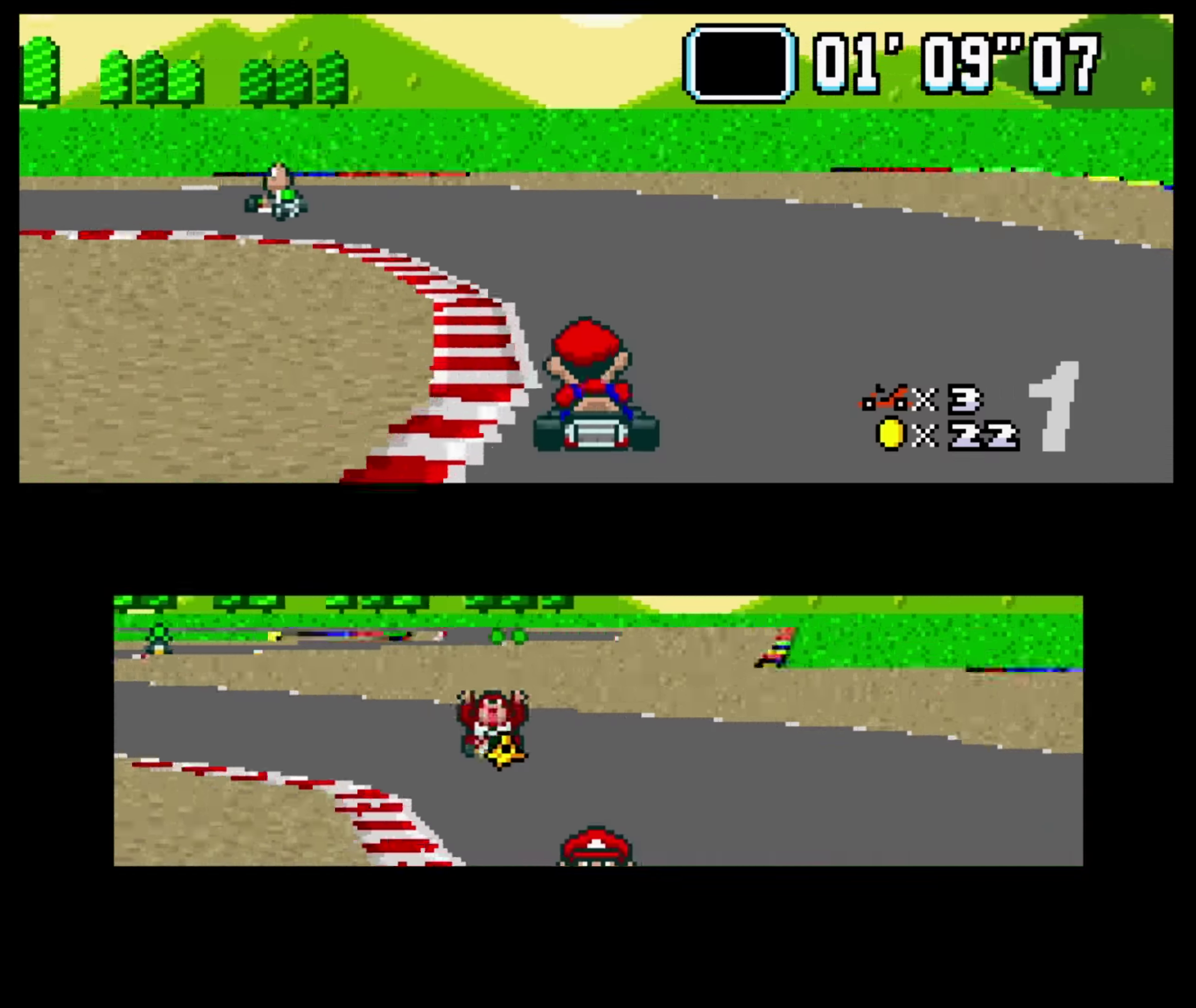
🎼 Exhibit III – Sound & Presentation
- 🔊 Distinct audio cues for each track
- 🎶 Item use and crowd effects heighten atmosphere
- 🌌 Mode 7 visuals create depth and immersion
Sound and presentation in Super Mario Kart are inseparable from its identity.
The cheerful jingles of cup introductions, the tension of countdown beeps, and the chaos of item impacts
all contribute to a layered soundscape. Each track carries its own audio personality:
Bowser’s Castle echoes with ominous tones, while Rainbow Road dazzles with bright melodies.
Visually, Nintendo employed Mode 7 graphics to simulate 3D track rotation,
a technical marvel for the Super Famicom era. Split-screen racing, character animations,
and environmental hazards combined to immerse players in a playful yet competitive world.
This synergy between sound and sight ensured that players were not only reacting to rivals
but also absorbed in the spectacle of kart racing.
🧪 Exhibit IV – Technical Background & Cultural Impact
- 🖥️ Mode 7 hardware pushed to simulate dynamic tracks
- 🌍 Cultural echoes of rivalry and playful chaos
- 🎮 Influence on later kart racers and party games
Technically, Super Mario Kart was ambitious for its time.
The Super Famicom’s Mode 7 chip allowed track scaling and rotation,
delivering a pseudo-3D racing experience without loading breaks.
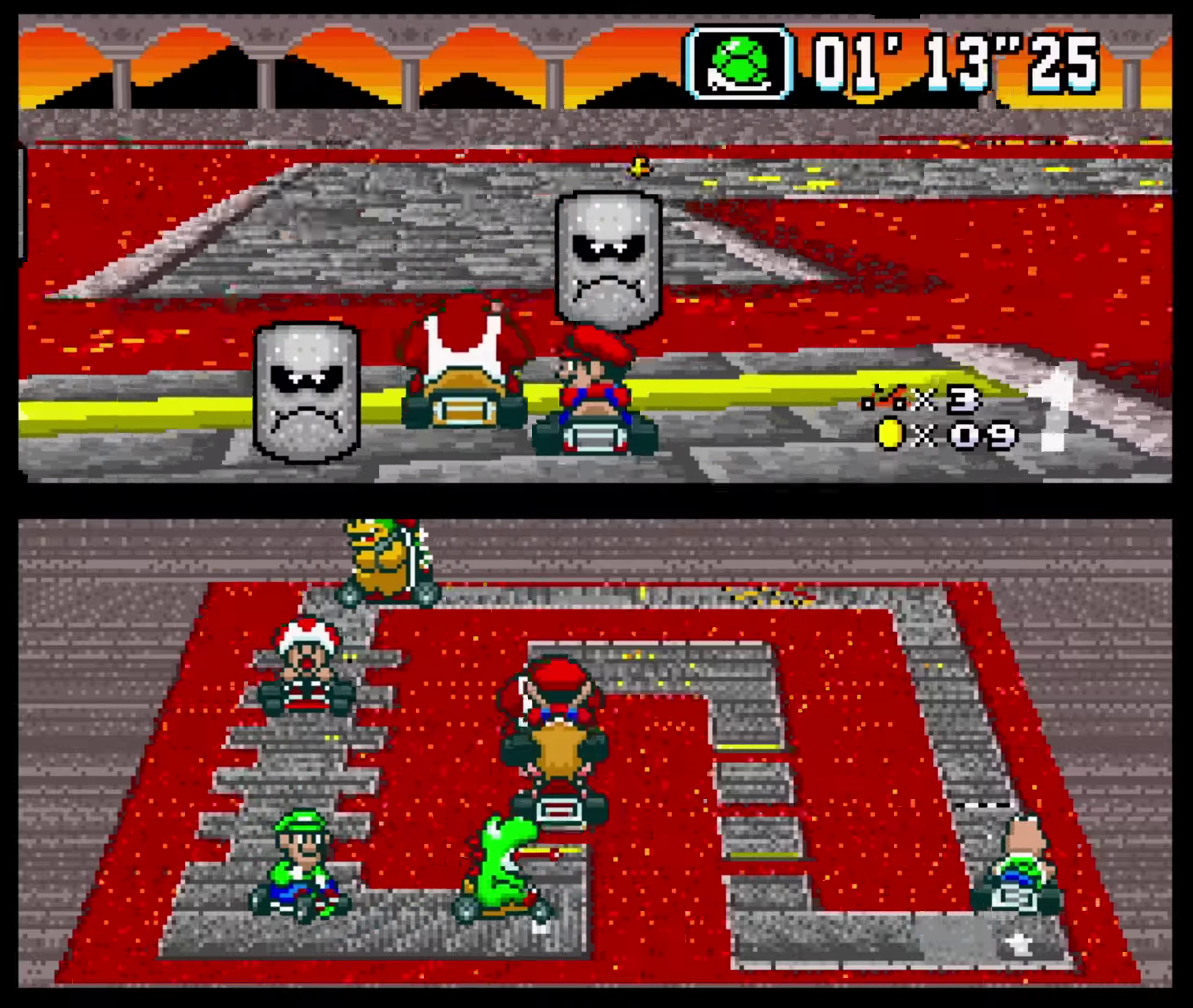
Hazards like Thwomps, lava pits, and slippery surfaces were integrated seamlessly,
maintaining immersion.
Culturally, the game redefined multiplayer competition.
It transformed racing into a social event, where laughter and rivalry coexisted.
The imagery of podium ceremonies and playful item battles reflected Nintendo’s philosophy of accessible fun.
Later discussions have noted how Super Mario Kart established the blueprint for party games,
where mechanics encouraged both skill and mischief.
Its influence is undeniable: countless kart racers and battle modes owe their existence
to the foundations laid in 1992. Super Mario Kart stands as both a technical showcase
and a cultural artifact, illustrating how design can entertain and connect players across generations.
🏛️ Epilogue – Memories on the Circuit
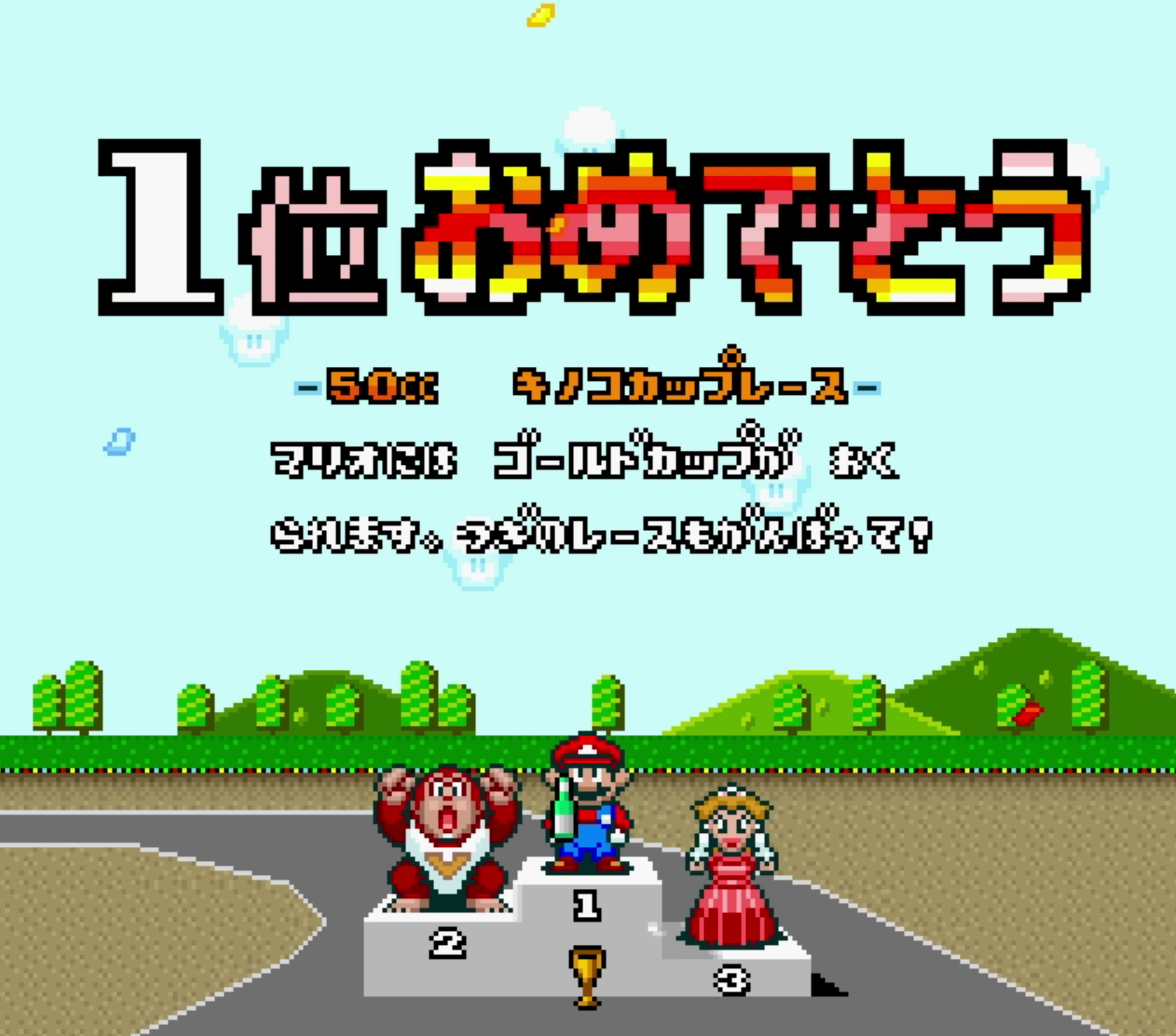
As the final cup concludes, the podium ceremony crowns the victors,
and the words “CONGRATULATIONS!” appear on screen.
It is a simple ending, yet profoundly symbolic of the console era:
victory is not measured in narrative depth, but in rivalry and triumph.
For players in 1992, Super Mario Kart was more than a game—it was a test of reflexes,
patience, and playful cunning. The circuit became a metaphor for the living room itself:
unpredictable, competitive, but rewarding for those who dared to master it.
Decades later, the memory of drifting corners, throwing shells, and podium celebrations
continues to echo in retro gaming culture. Super Mario Kart reminds us that even the simplest mechanics
can create timeless experiences, and that the circuit of pixels still holds its secrets
for those willing to return.
🎥 Video Exhibit – Super Mario Kart (1992, Super Famicom)
© 2025 Japanstyle-RetroPlay
Screenshots © Nintendo 1992
This article is intended for personal documentation and cultural appreciation.
All rights to game footage, music, and characters belong to their respective copyright holders.
🔗 Home | About Us | Site Policy


Comments
Post a Comment