TwinBee (1985) Arcade
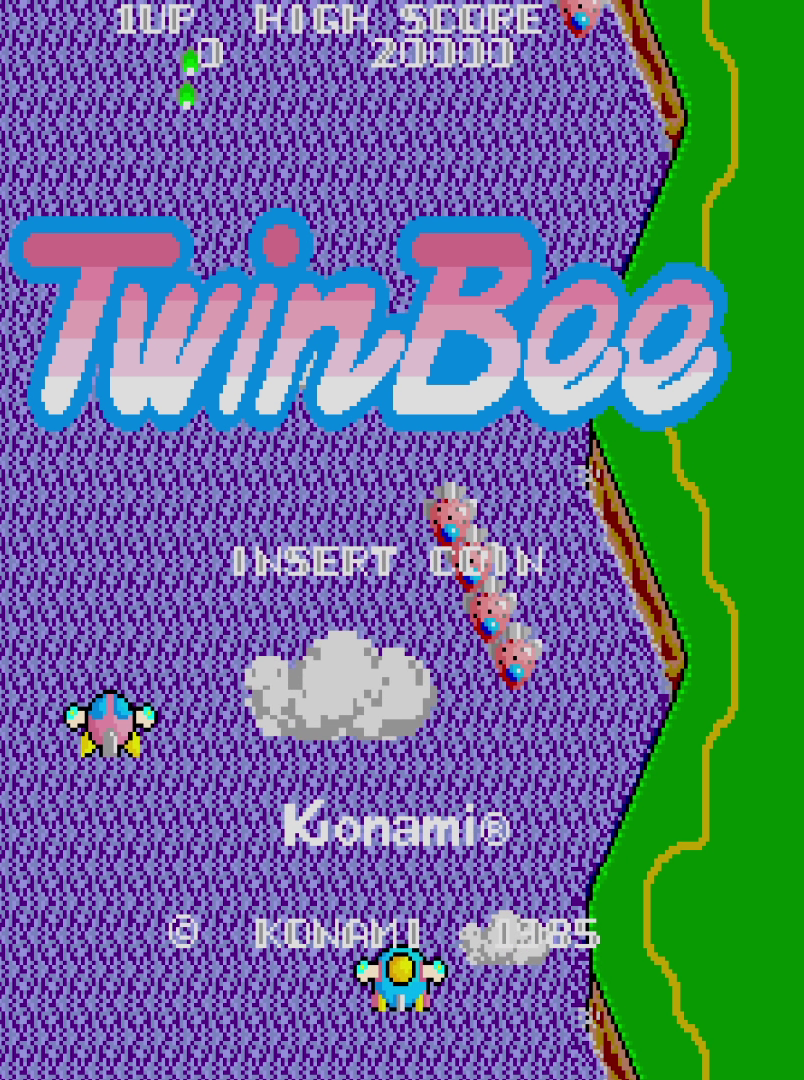
Released in 1985 by Konami, TwinBee launched the “cute shooter” genre with its bell-based power-ups, cooperative play, and whimsical design. This article explores its arcade legacy, rhythmic gameplay, and playful mechanics.
From its pastel logo to its layered upgrade system and expressive damage states, TwinBee redefined vertical shooters with charm and precision.
🎮 Game Information
Title: TwinBee
Year: 1985
Platform: Arcade (Konami GX400)
Genre: Vertical Scrolling Shooter / Cute 'em Up
Developer / Publisher: Konami
Format: JAMMA PCB
Players: 1–2 (Simultaneous)
🧭 Prologue – Bells in the Sky
The clouds drift gently, but the bells fall fast. In 1985, Konami released TwinBee, a shooter that traded steel for smiles. Players pilot anthropomorphic ships through candy-colored skies, chasing airborne bells that shimmer with promise.
This is not a war—it’s a dance. Each bell juggled mid-air becomes a decision: power, speed, protection. And when two players fly side by side, their shots echo like laughter. TwinBee doesn’t just scroll upward—it lifts the genre into a new emotional register.
🖼️ Exhibit I – Damage States & Recovery Design
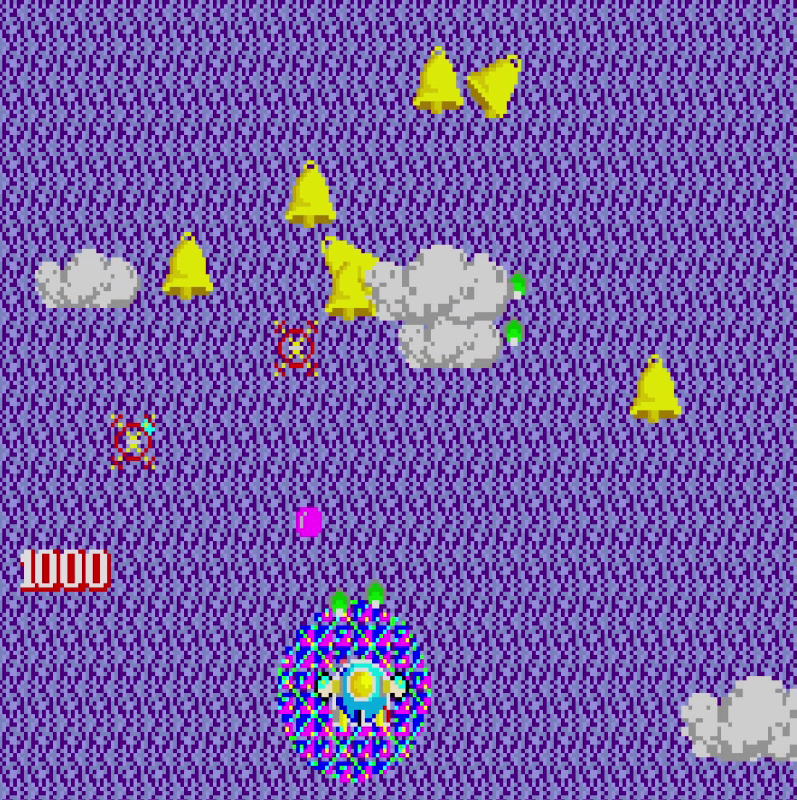
- 🩺 Losing both arms disables ground attack, triggering ambulance rescue
- 🚑 Recovery animation adds emotional feedback and mechanical reset
- 🎮 Damage is visualized through expressive sprite changes
TwinBee’s damage system is more than hit points—it’s personality. When players lose both arms, they can no longer shoot ground targets. But instead of a silent penalty, the game sends an ambulance. It’s a moment of vulnerability, dramatized with charm.
This mechanic turns failure into narrative. The rescue sequence resets the player’s form, but also reinforces their bond with the ship. You’re not just piloting TwinBee—you’re caring for it.
⚙️ Exhibit II – Multipliers & Formation Mechanics
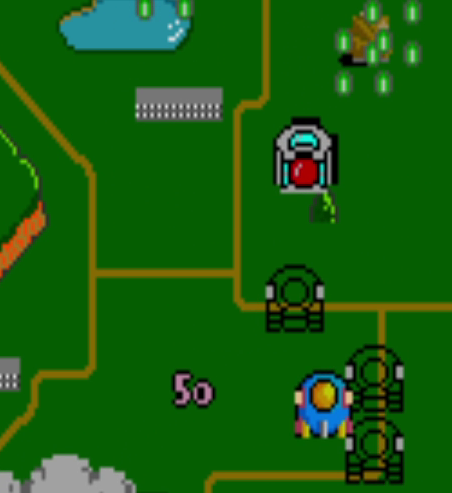
- 🔵 Blue bells grant speed boosts, enabling tighter dodging and bell control
- 👥 Triple clones amplify firepower and visual impact
- 🎮 Formation shifts dynamically with movement, creating rhythmic attack patterns
Power-ups in TwinBee aren’t just upgrades—they’re choreography. When players collect blue bells, their speed increases, allowing for more precise bell juggling. Add three clones, and the screen becomes a ballet of bullets.
These formations aren’t static. They sway with the player’s motion, creating arcs of fire that feel organic. TwinBee’s upgrade system rewards rhythm, not just reflex.
🧱 Exhibit III – Bell Strategy & Risk Management
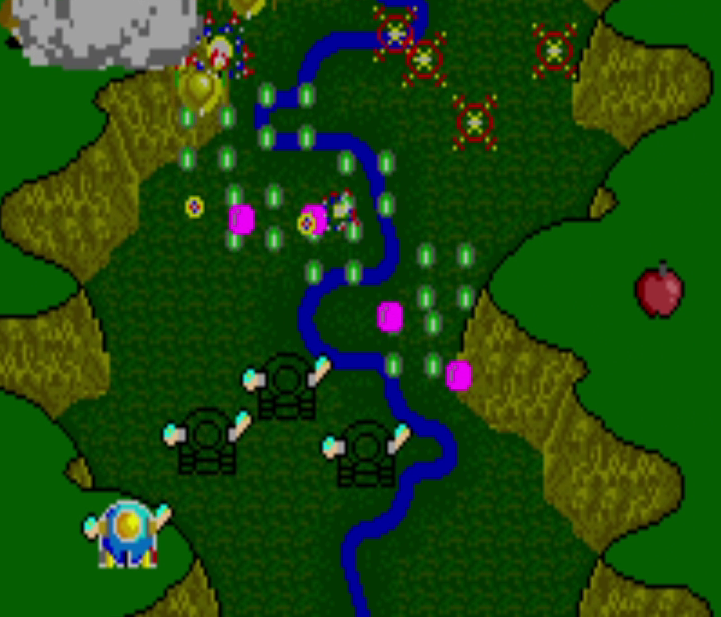
- 🔔 Bell juggling introduces timing-based upgrades and score optimization
- ⚠️ Silver bells offer high points but require precise control
- 🎮 Bell color cycling adds tension and tactical depth
TwinBee’s bell system is deceptively simple: shoot a bell to change its color, then catch it. But the timing is everything. A mistimed shot turns a red bell into blue, or worse, drops it off-screen. Silver bells offer massive points, but demand restraint.
This mechanic creates a constant push-pull between greed and survival. Do you chase the upgrade or dodge the bullet? TwinBee turns every bell into a micro-decision, and every miss into a lesson.
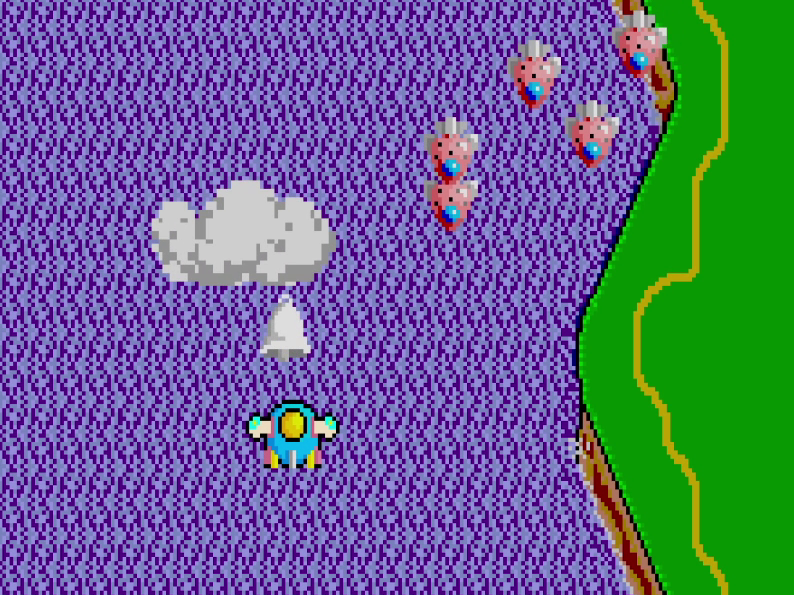
🧨 Exhibit IV – Weapon Synergy & Environmental Play
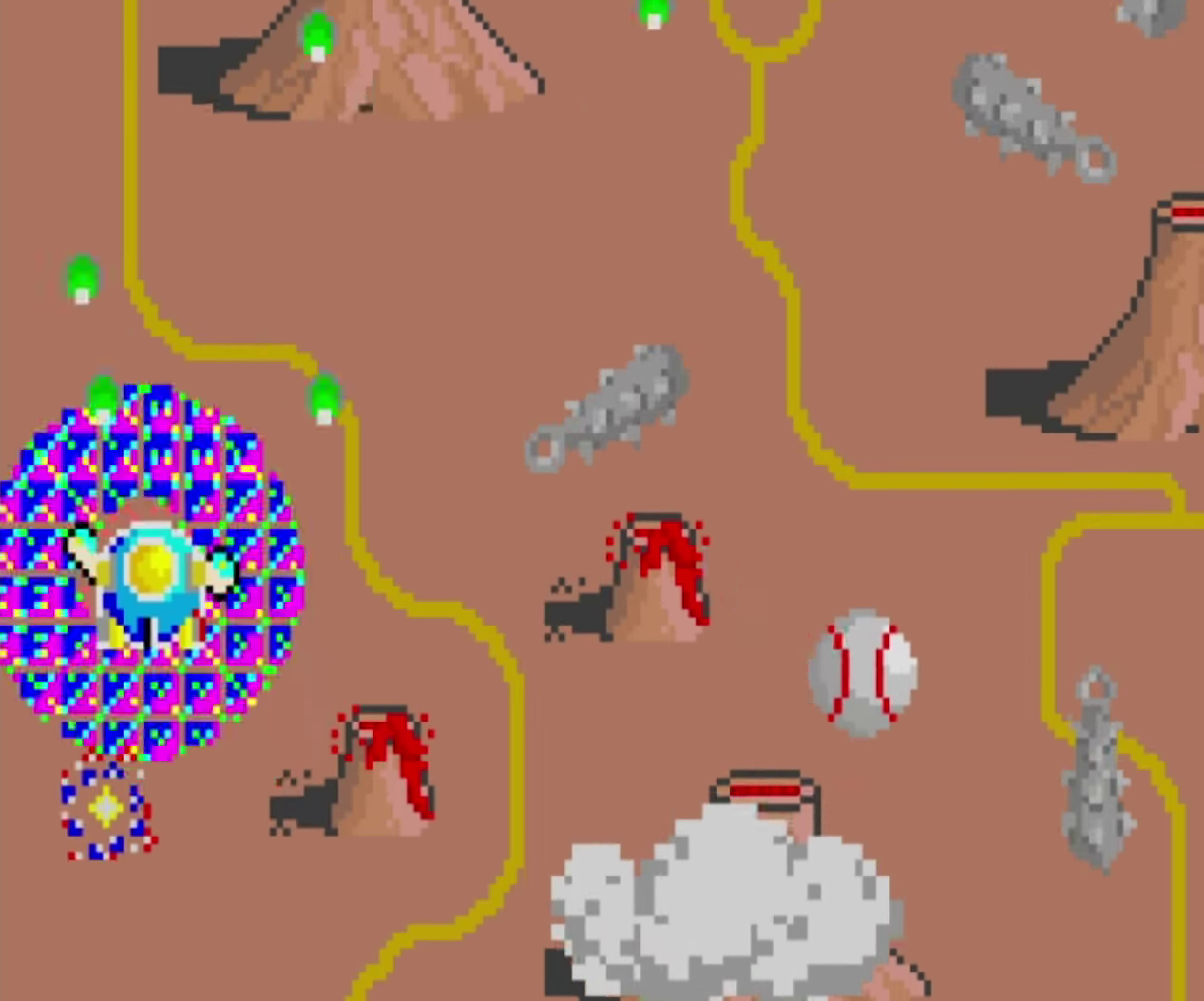
- 💥 3-Way Shot and barrier combo enables aggressive crowd control
- ⚾ Spiked clubs and ball-like enemies create unpredictable terrain
- 🎮 Power-ups interact with enemy formations and stage hazards
TwinBee’s weapons aren’t just stronger—they’re smarter. The 3-Way Shot spreads across the screen, while the barrier absorbs hits and lets players charge forward. But the terrain fights back: spiked clubs swing across paths, and strange ball-shaped foes roll unpredictably.
This interplay between weapon and environment forces adaptation. Players must read the screen like a puzzle, not just a battlefield. TwinBee rewards those who think in patterns, not just reflexes.
🚨 Exhibit V – Boss Design & Swarm Dynamics
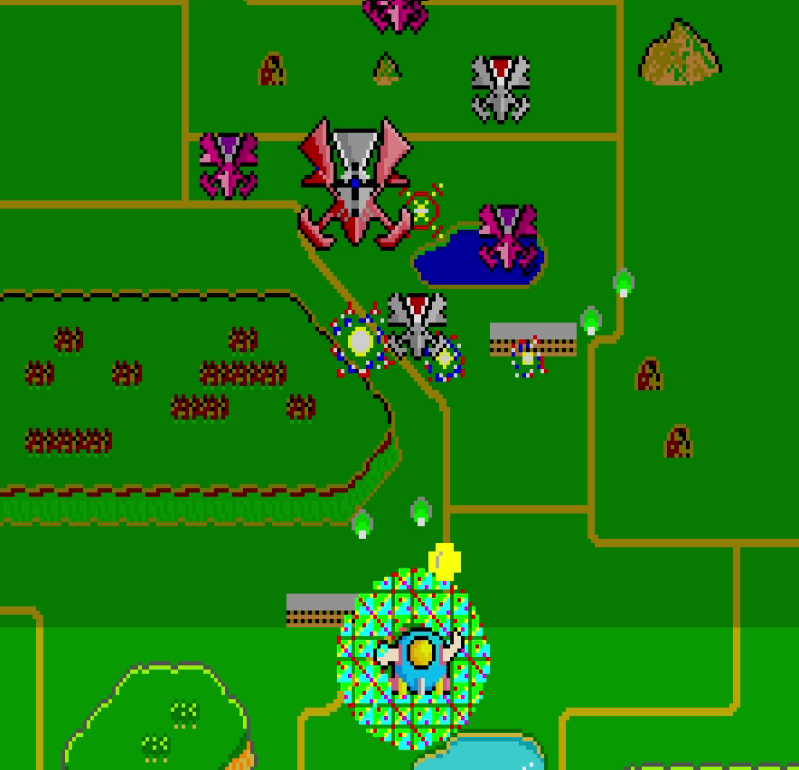
- 🌀 Bosses use rotating shields and clone swarms to block direct attacks
- 🎮 Players must break formations before targeting core
- 💣 Bullet patterns and clone movement create layered challenge
Bosses in TwinBee aren’t just big—they’re protected. One standout encounter features a red core surrounded by dozens of mini-clones, orbiting like satellites. Players must first break the ring before striking the heart.
These fights emphasize positioning and patience. The screen fills with movement, but the path to victory is precise. TwinBee’s bosses teach restraint, then reward aggression.
🧪 Exhibit VI – Feedback Loops & Player Expression
- 🎨 Visual upgrades reflect player progress and identity
- 🔁 Bell juggling creates rhythmic feedback and self-expression
- 🎮 Cooperative play enhances strategic diversity and emotional connection
TwinBee isn’t just a shooter—it’s a mirror. The way players juggle bells, choose upgrades, and move across the screen becomes a kind of expression. The game responds with color, sound, and animation, creating a feedback loop that feels alive.
In co-op mode, this expression multiplies. Two players weave patterns together, cover each other’s blind spots, and laugh when bells go flying. TwinBee turns mechanics into emotion, and score into story.
🏛️ Epilogue – Echoes in the Clouds
As the final bell fades into the sky, TwinBee drifts onward—arms restored, barrier shimmering, clones in tow. The battle is over, but the rhythm remains. This was never just about shooting. It was about timing, trust, and the joy of movement.
In 1985, TwinBee gave arcades a new kind of hero: one that smiled, healed, and danced through danger. Its legacy lives not in explosions, but in the gentle arc of a bell mid-air. And as the clouds part, we remember: some games don’t just challenge us—they charm us.
TwinBee is a memory of motion, of laughter in the sky, of bells that ring long after the credits roll.
🎥 Video Exhibit – TwinBee (1985, Arcade)
© 2025 Japanstyle-RetroPlay
Screenshots © Konami 1985
This article is intended for personal documentation and cultural appreciation.
All rights to game footage, music, and characters belong to their respective copyright holders.
🔗 Home | About Us | Site Policy


Comments
Post a Comment