Indiana Jones and the Temple of Doom (1985) Arcade
🧭 Prologue – Echoes Beneath the Temple
In 1985, Atari Games transformed Indiana Jones and the Temple of Doom into an
arcade experience built on the modular Atari System 1 hardware. The result was a
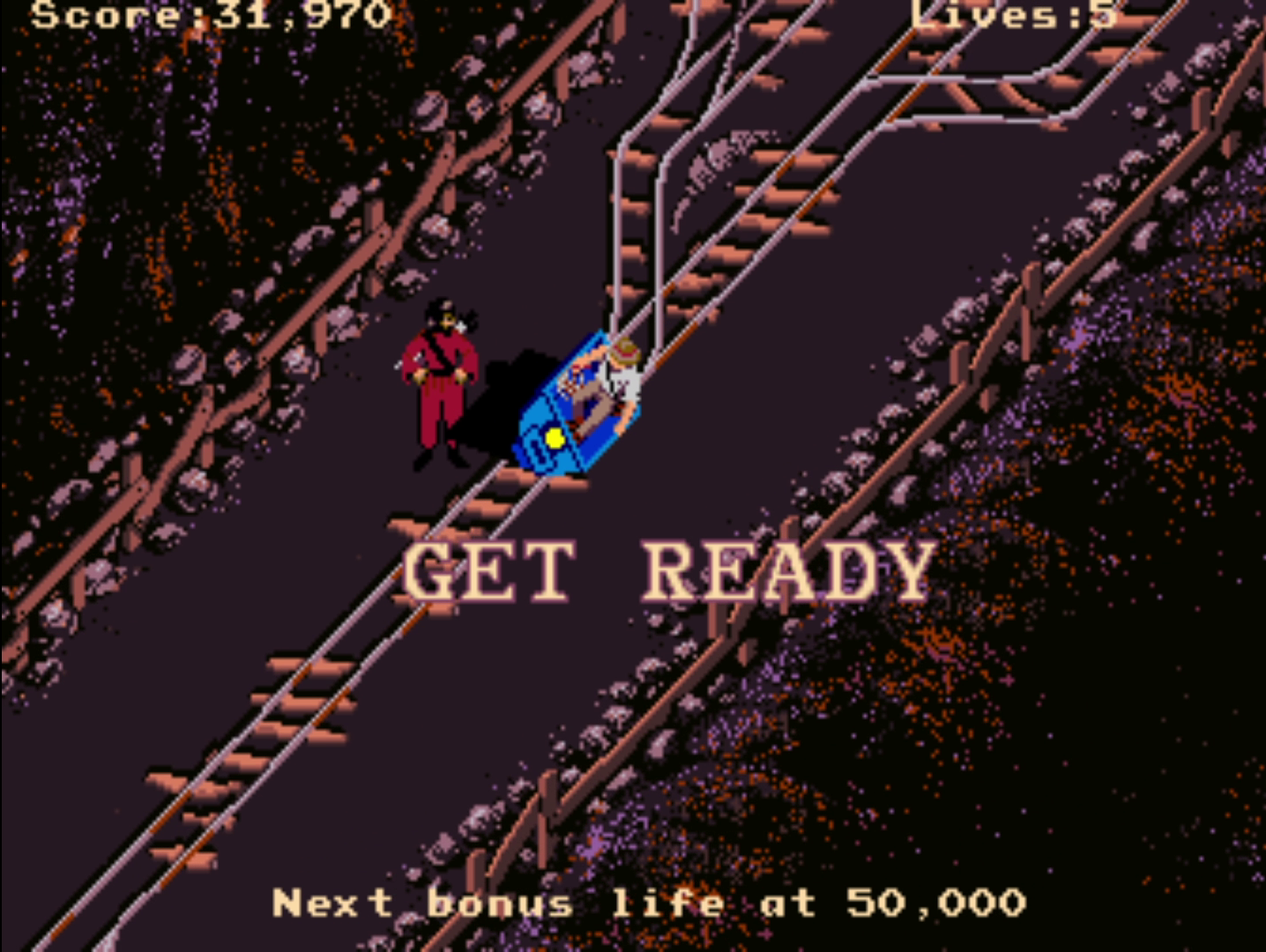
game that moved with cinematic rhythm: rescue missions, mine‑cart escapes, treasure
chambers, and collapsing bridges all unfolding in rapid succession.
For players of the era, stepping up to the cabinet felt like entering the film’s
heartbeat. The tension of narrow tunnels, the rush of rails, and the thrill of
last‑second escapes were distilled into a sequence of tightly crafted challenges.
This was not simply a movie tie‑in—it was a bold attempt to capture the pulse of
adventure within the constraints of arcade design.
Even now, the echoes of that temple linger. The clatter of wheels, the flicker of
torchlight, and the triumphant sting of a successful rescue remain etched into the
memory of arcade history.
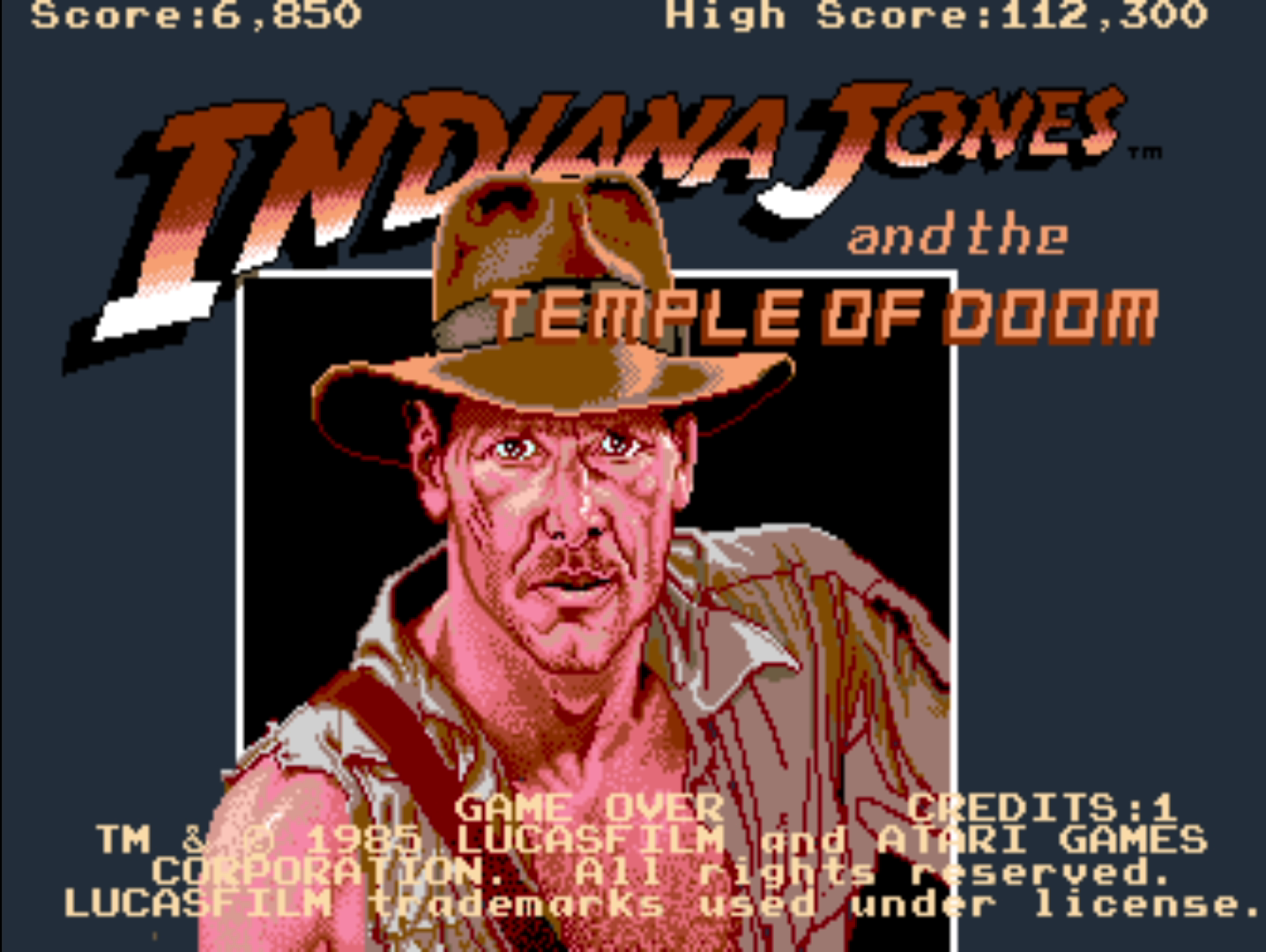
🎮 Game Information
Title: Indiana Jones and the Temple of Doom
Year: 1985
Platform: Arcade (Atari System 1)
Genre: Action / Multi‑Mode Adventure
Developer / Publisher: Atari Games
Format: PCB Arcade Board
Players: 1–2 (Alternating)
🖼️ Exhibit I – Multi‑Mode Stage Design & Pacing
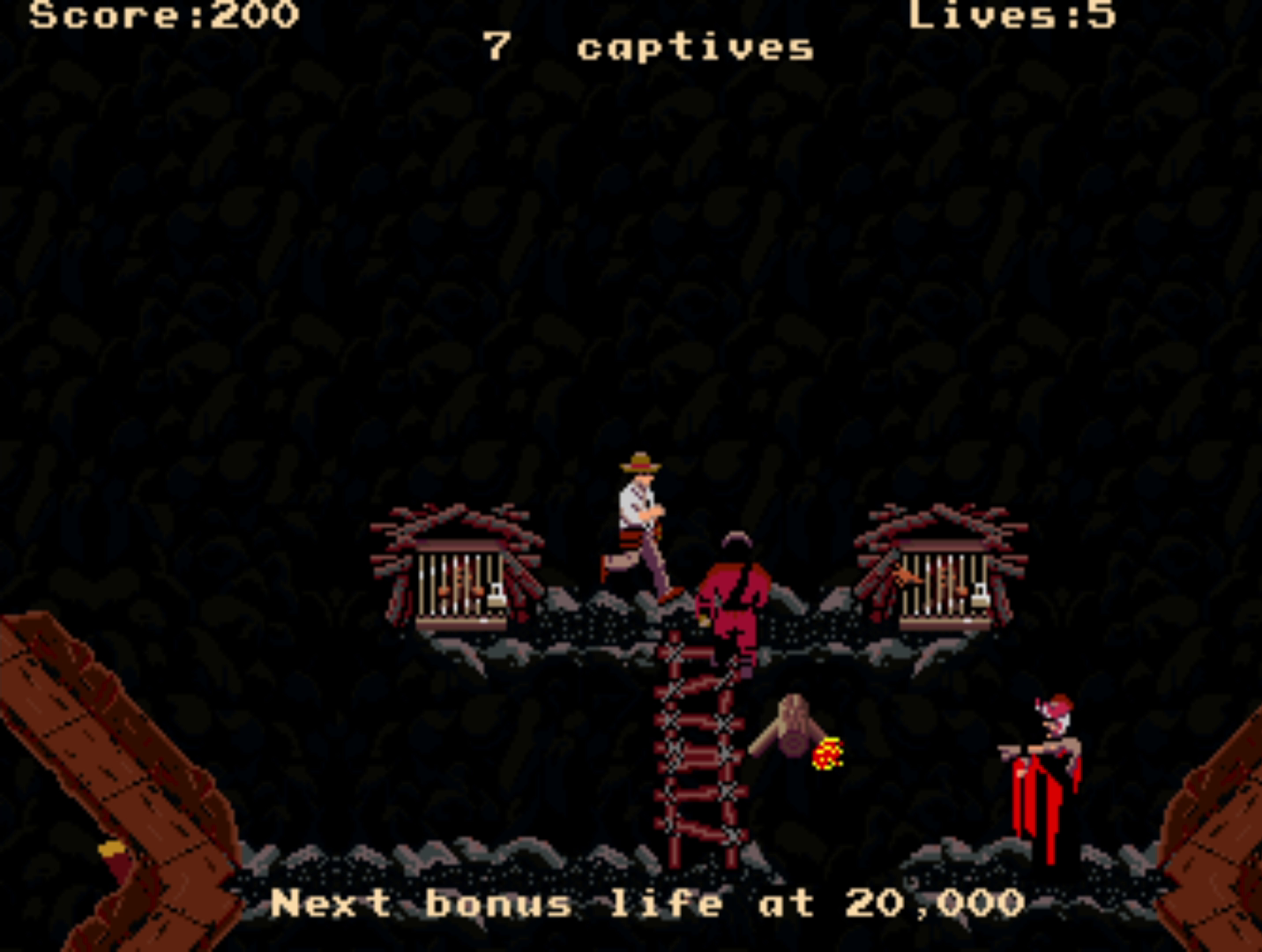
- 🧒 Rescue missions, mine‑cart runs, treasure chambers, and bridge escapes
- 🎯 Each mode shifts mechanics and pacing dramatically
- ⏳ System 1 hardware enables seamless transitions
The game’s identity is defined by its multi‑mode structure. Atari System 1’s
flexible architecture allowed the developers to switch between gameplay styles
without loading pauses, creating a sense of cinematic flow. Each stage introduces
a new rhythm—rescue, escape, precision, or endurance—ensuring that the player is
constantly adapting to fresh challenges.
Rather than repeating a single mechanic, the game unfolds like a sequence of
set pieces. This mirrors the film’s pacing, translating its shifting energy into
interactive form and keeping the experience consistently engaging.
⚙️ Exhibit II – Control, Challenge & System 1 Hardware
- 🕹️ Simple controls: movement, whip attack, and context actions
- 💡 Modular ROM architecture supports diverse gameplay modes
- 🔥 Each stage redefines the player’s role and required skills
Atari System 1 was designed for flexibility. Its interchangeable ROM modules
allowed developers to build games with varied mechanics while maintaining
consistent performance across modes. Indiana Jones and the Temple of Doom
takes full advantage of this architecture, shifting between exploration,
precision platforming, and high‑speed action without compromise.
Controls remain intentionally simple, allowing the game to focus on situational
challenge rather than mechanical complexity. Each stage reframes the player’s
abilities, ensuring that movement, timing, and the whip all take on different
meanings depending on the environment.
🎼 Exhibit III – Sound, Atmosphere & Presentation
- 🔊 Distinct audio cues for each gameplay mode
- 🎶 Tension‑building effects echo the film’s adventurous tone
- 🌌 Layered sprites and scrolling create depth within System 1 limits
Sound design plays a central role in shaping the game’s identity. Each mode carries
its own audio signature: sharp cues during rescues, rolling echoes in mine tunnels,
and ominous tones in treasure chambers. These sounds guide the player’s attention
and reinforce the pacing of each challenge.
Visually, the game uses layered sprites and scrolling backgrounds to simulate depth.
While modest by modern standards, these techniques were effective in creating a sense
of motion and urgency. Atari’s presentation choices highlight how atmosphere can
elevate even the simplest mechanics.

🧪 Exhibit IV – Technical Background & Cultural Footprint
- 🖥️ System 1 hardware enabled rapid mode switching and modular development
- 🌍 Reflects the era’s fascination with cinematic adventure
- 🎮 Influenced later multi‑mode action titles
Technically, Indiana Jones and the Temple of Doom pushed the Atari System 1
hardware in a direction that emphasized variety over raw graphical power. The board’s
modular ROM design allowed developers to experiment with multiple gameplay styles
while maintaining consistent performance.
Culturally, the game captured the 1980s appetite for cinematic adventure. Its imagery,
pacing, and structure echoed the blockbuster spirit of the era, while its arcade
format distilled that energy into a series of intense, bite‑sized challenges.
The game’s influence can be seen in later titles that embraced multi‑phase design,
blending exploration, speed, and precision into cohesive experiences.
🏛️ Epilogue – The Temple’s Last Echo
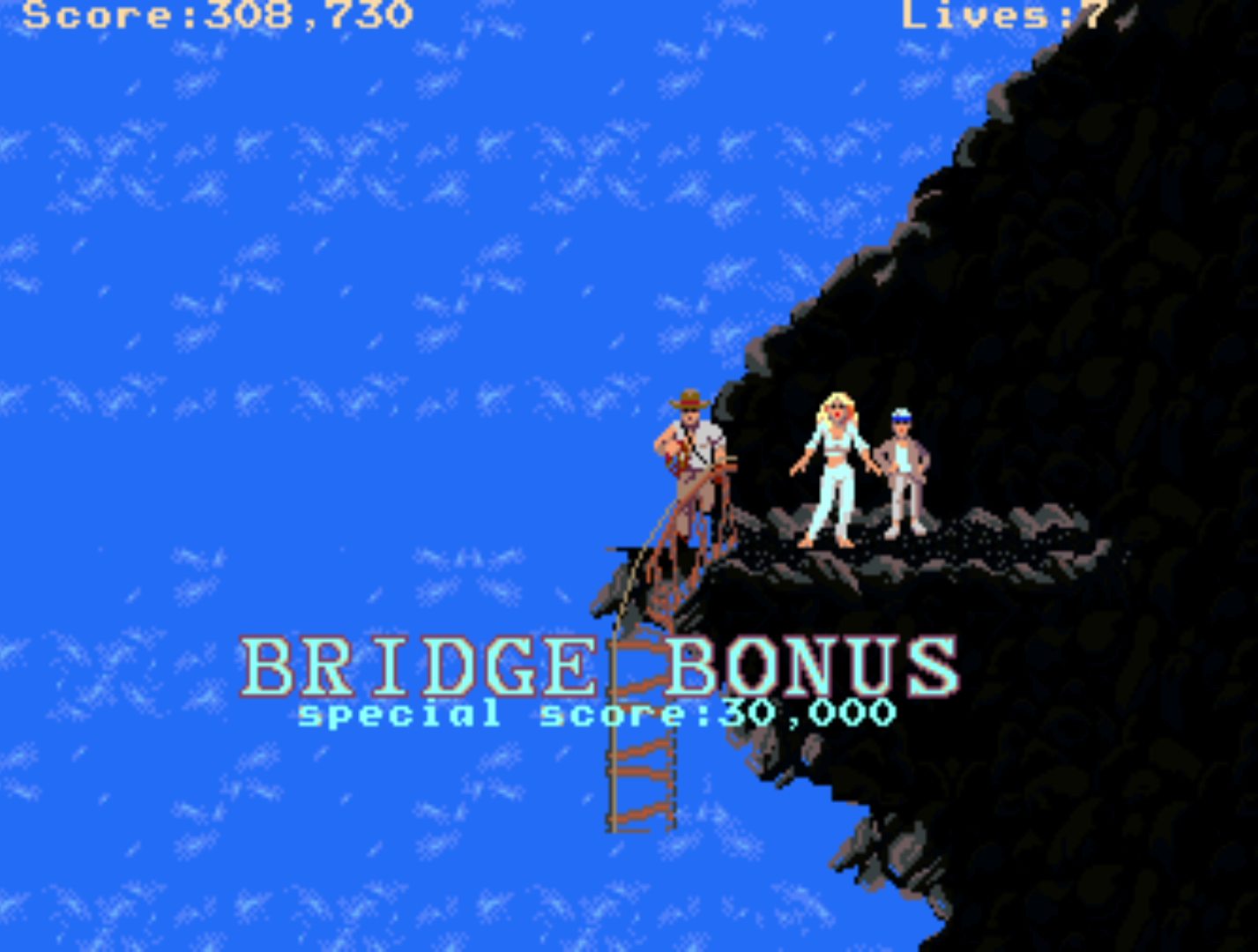
As the final bridge collapses behind him and the rescued children gather in safety,
the adventure reaches its quiet conclusion. There is no lengthy narrative epilogue—
only the satisfaction of survival, the echo of drums fading into silence, and the
knowledge that the temple has been conquered.
For players in 1985, this game was more than a movie tie‑in. It was a test of
instinct, timing, and courage. The arcade cabinet became a doorway into a world of
tunnels, rails, and ancient stone, where every decision carried weight and every
escape felt earned.
Today, the memory of those frantic mine‑cart descents and narrow rescues remains a
testament to the creativity of early arcade design. Indiana Jones and the Temple
of Doom endures not only as a relic of its time, but as a reminder of how games
once invited us to step into adventure—one coin, one heartbeat, one daring leap at a
time.
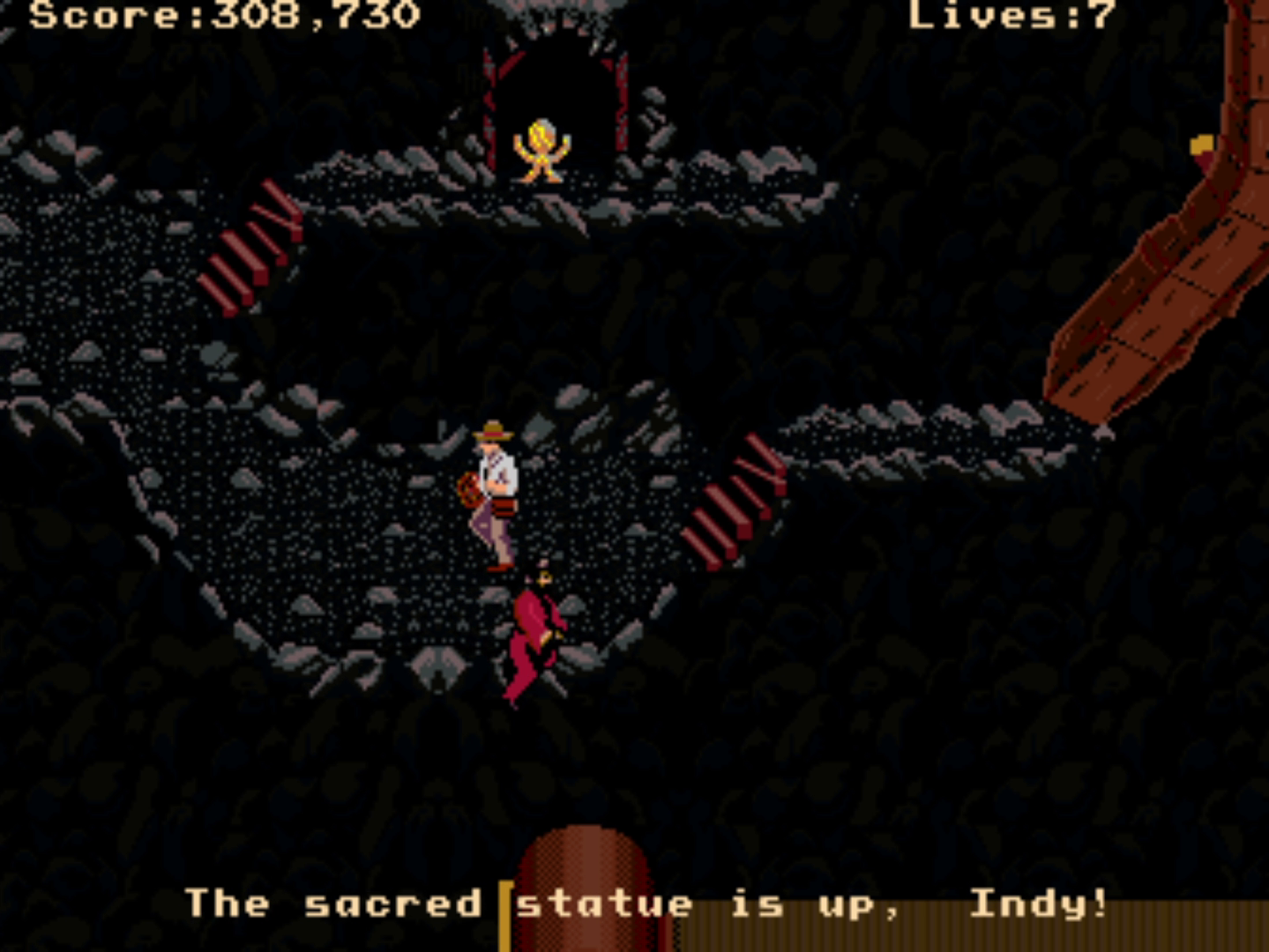
🎥 Video Exhibit – Indiana Jones and the Temple of Doom (1985, Arcade)
© 2025 Japanstyle-RetroPlay
Screenshots © Atari Games 1985
This article is intended for personal documentation and cultural appreciation.
All rights to game footage, music, and characters belong to their respective copyright holders.
🔗 Home | About Us | Site Policy


Comments
Post a Comment