Masked Riders Club: Battle Race (1993) Arcade
🧭 Prologue – Riders in the Arcade Storm
In 1993, Banpresto released Masked Riders Club: Battle Race, an arcade title that fused the speed of racing with the spectacle of tokusatsu hero battles. Emerging at a time when arcade culture was shifting toward competitive play, the game invited players to embody legendary Kamen Riders and race across hazardous courses filled with obstacles, enemies, and dramatic set pieces.
Unlike traditional racing games, Masked Riders Club: Battle Race emphasized identity and rivalry. Each Rider carried unique attributes, and the act of choosing a hero became part of the strategy. The arcade cabinet echoed with the roar of engines and the clash of heroic imagery, transforming the racing genre into a theatrical duel. Today, the game is remembered as a daring experiment that merged tokusatsu mythos with arcade design, a storm of speed and spectacle preserved in retro gaming memory.
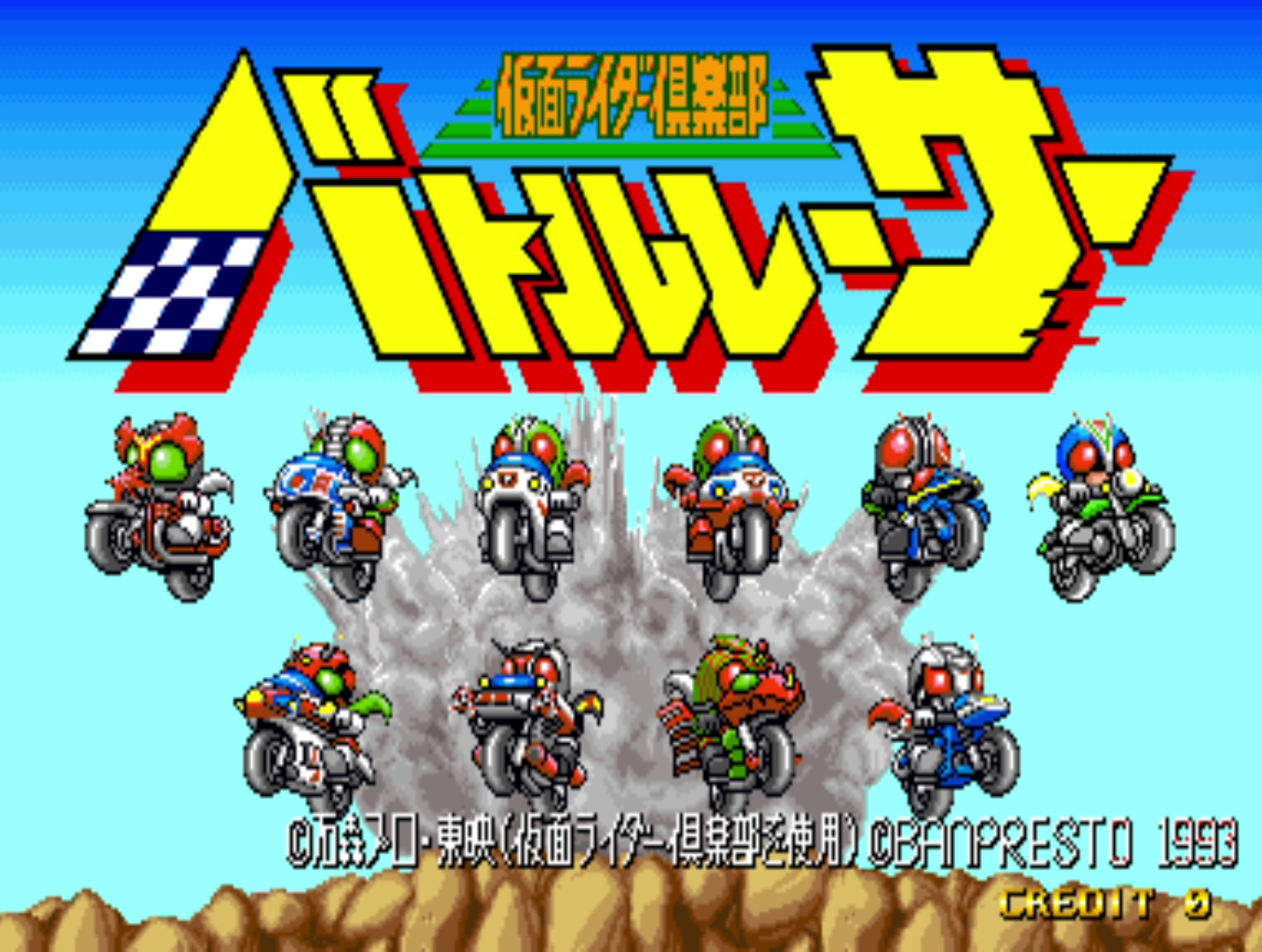
🎮 Game Information
Title: Masked Riders Club: Battle Race
Year: 1993
Platform: Arcade
Genre: Racing Action / Tokusatsu Hero Duel
Developer: Allumer
Publisher: Banpresto
Format: PCB Arcade Board
Players: 1–2 (Alternating or Simultaneous)
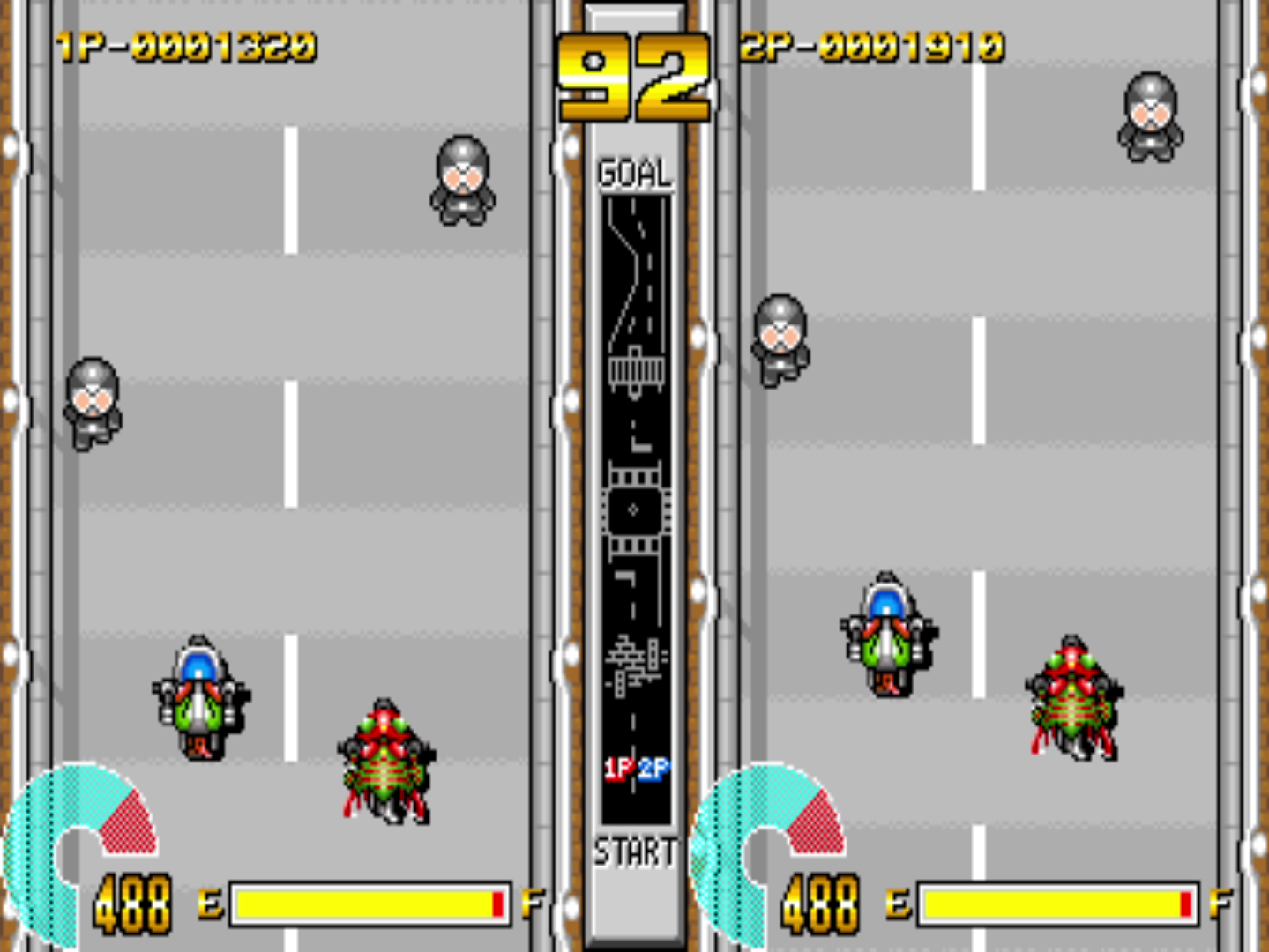
🖼️ Exhibit I – Course Design & Heroic Rhythm
- 🏁 Courses blend racing hazards with thematic obstacles
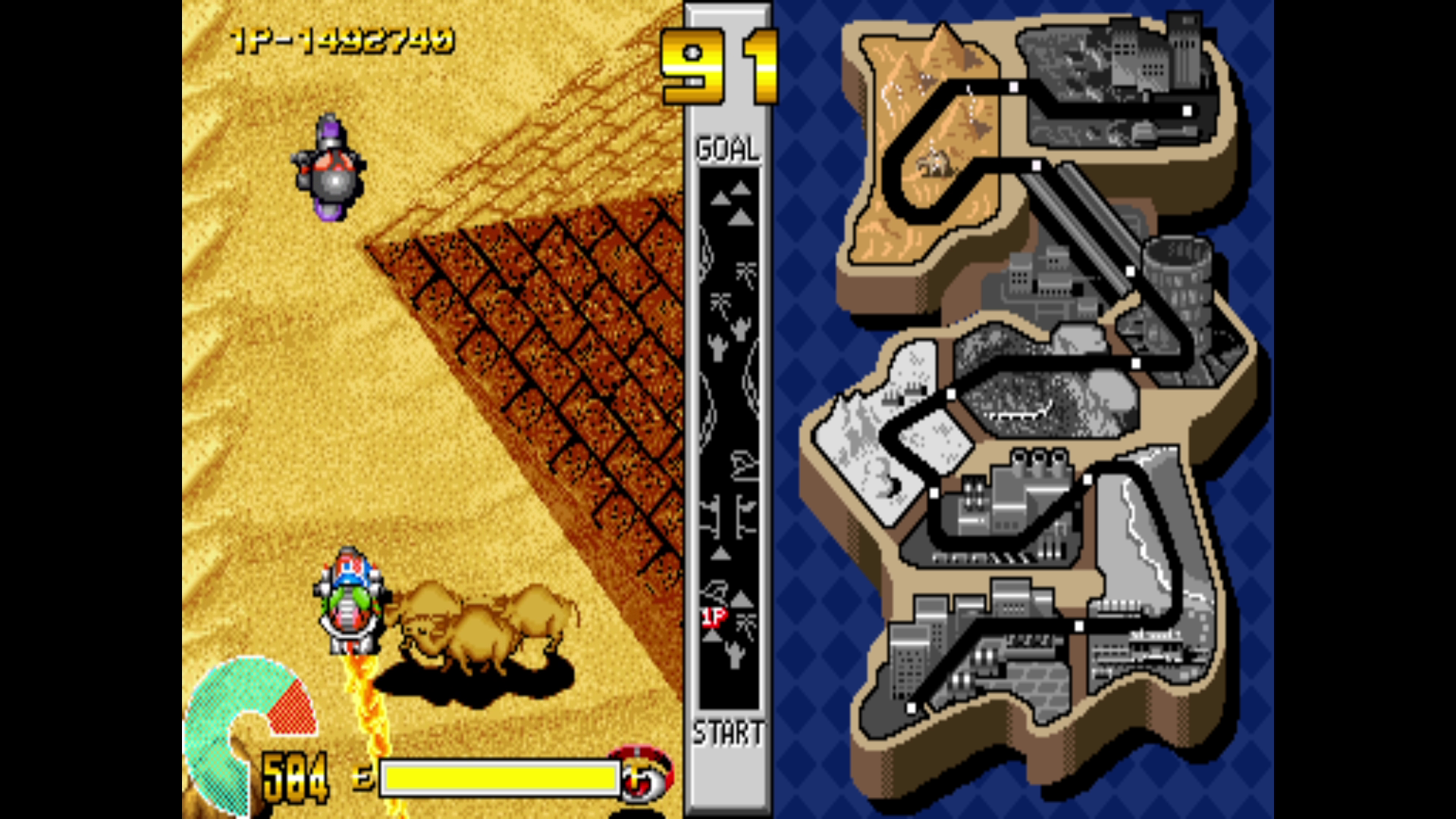
- 🌍 Stages evoke deserts, coastlines, and fantastical arenas
- 🎯 Rhythm alternates between speed bursts and obstacle evasion
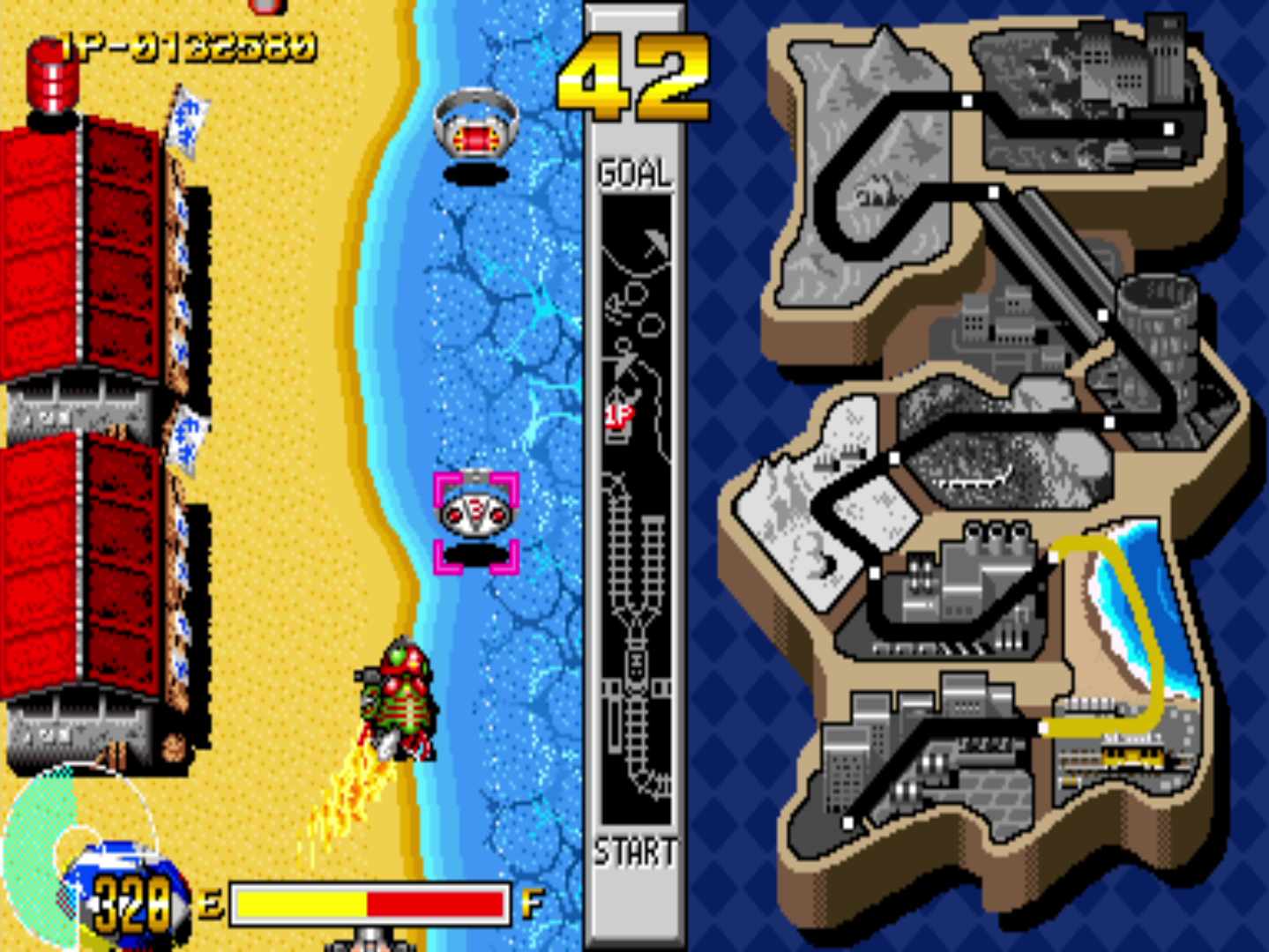
The brilliance of Masked Riders Club: Battle Race lies in its course rhythm. Each track is more than a race—it is a stage for heroism. The desert course challenges players with pyramids and camels as obstacles, while coastal tracks demand precision against waves and shifting terrain.
This deliberate alternation of environments ensures that players never settle into routine. The game constantly refreshes its tempo, forcing adaptation and rewarding mastery. Rather than a simple sprint, each race becomes a narrative of survival and triumph, echoing the episodic battles of the Riders themselves. The design philosophy emphasizes variety and escalation, making Battle Race a journey through shifting tempos of danger and spectacle.
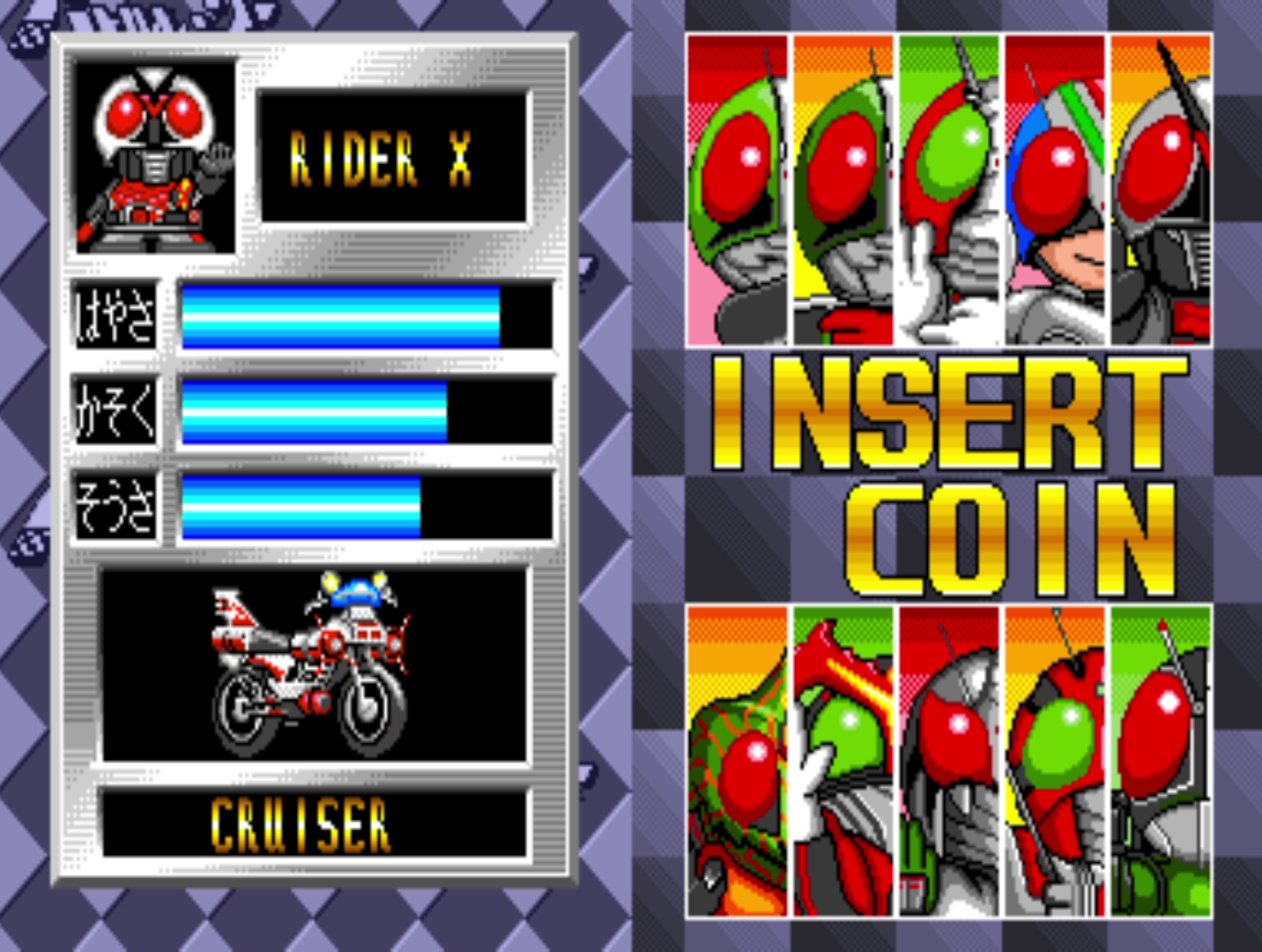
⚙️ Exhibit II – Character Selection & Identity
- 🕹️ Ten Riders available, each with unique stats
- 🚴 Choice of Rider influences speed, handling, and endurance
- 🔥 Strategy begins before the race with identity selection
Battle Race thrives on identity. Before the race begins, players select from ten iconic Riders, each with distinct motorcycles and parameters. This transforms the game from a generic racer into a contest of personas. Choosing Amazon emphasizes agility, while V3 offers balanced endurance.
The act of selection becomes part of the challenge. Players must weigh their preferred hero against the demands of the course, creating a dynamic interplay between character and environment. This design philosophy highlights how tokusatsu identity can be integrated into gameplay mechanics, ensuring that every race feels personal and every victory resonates with heroic pride.
🎼 Exhibit III – Presentation & Atmosphere
- 🔊 Distinct audio cues for starting lines and victory moments
- 🎶 Engine roars and heroic motifs heighten immersion
- 🌌 Visual layering emphasizes spectacle and identity
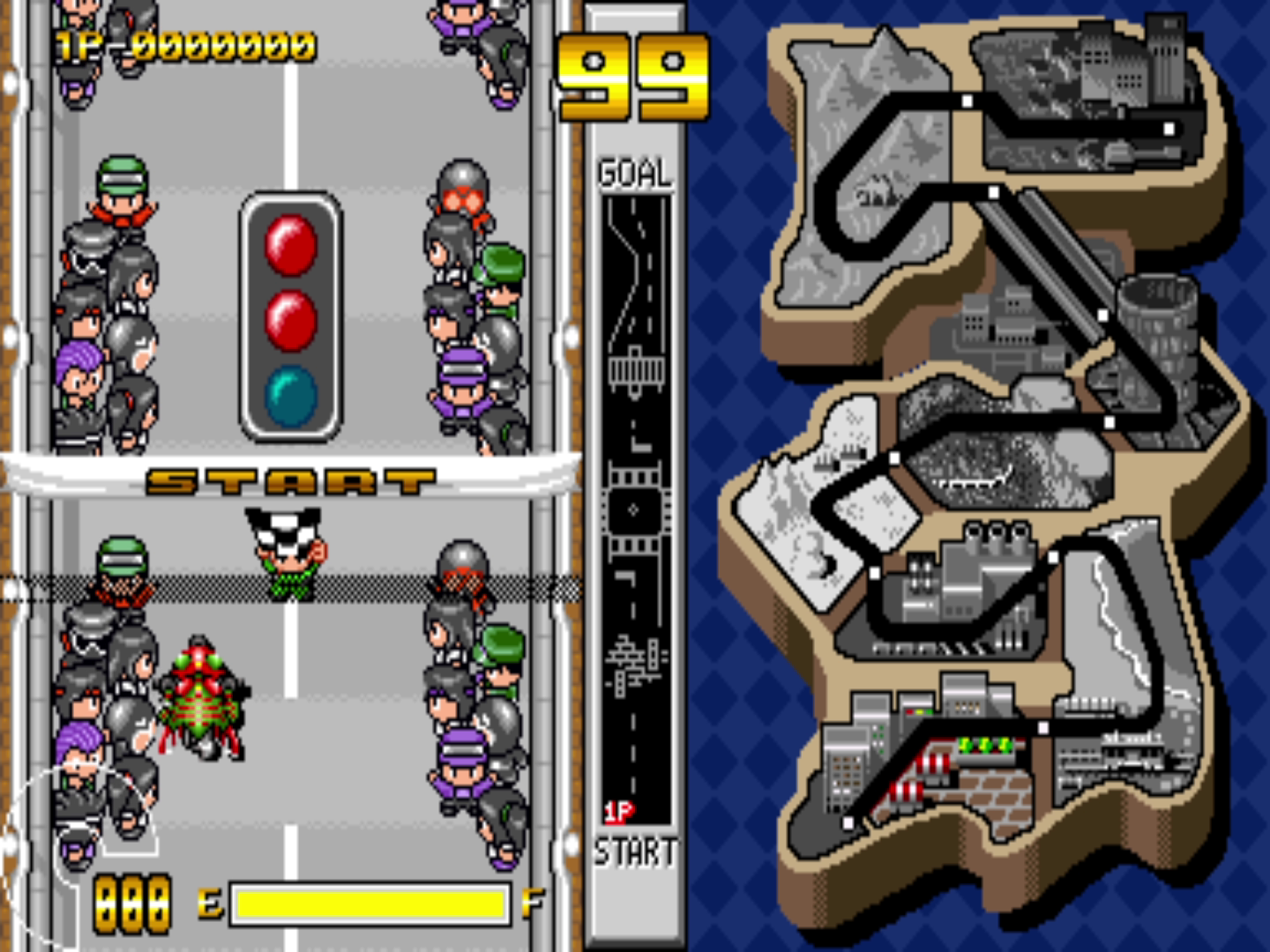
Sound and presentation in Masked Riders Club: Battle Race are inseparable from its identity. The opening screen magnifies Rider faces, echoing their legendary presence across the arcade floor. Each stage carries its own audio signature: the starting line resonates with crowd cheers, desert tracks emphasize rhythmic hazards, and coastal stages blend engine roars with crashing waves.
Visually, the game layers Rider sprites, obstacles, and course maps to simulate depth and urgency. The split-screen mode amplifies rivalry, while the ending sequence crowns victory with golden text. This synergy between sound and sight ensures that players are not only racing but also immersed in the mythos of the Riders. The presentation transforms competition into theater, a hallmark of tokusatsu arcade design.
🧪 Exhibit IV – Technical Background & Cultural Resonance
- 🖥️ Early 1990s arcade boards adapted for split-screen racing
- 🌍 Cultural echoes of tokusatsu hero rivalry and spectacle
- 🎮 Influence on later character-driven racing games
Technically, Battle Race was ambitious for its time. The arcade board managed simultaneous split-screen play, Rider-specific parameters, and dynamic obstacle rendering without loading breaks. This seamless integration maintained immersion and emphasized competition.
Culturally, the game drew directly from tokusatsu traditions. The act of racing was reframed as a heroic duel, echoing the episodic battles of television Riders. The imagery of deserts, coastlines, and cheering crowds reflected both global racing tropes and localized hero mythos.
Though niche compared to mainstream racers, the game’s influence is visible in later character-driven racing titles. By merging identity selection with racing mechanics, Battle Race anticipated trends in genre hybridization, standing as both a technical showcase and a cultural artifact of early 1990s arcade design.
🏛️ Epilogue – Riders Beyond the Finish Line
As the race concludes, golden letters proclaim “CONGRATULATION” across the screen. It is a simple ending, yet profoundly symbolic of the arcade era: victory is not measured in narrative depth, but in survival, speed, and triumph.
For players in 1993, Masked Riders Club: Battle Race was more than a game—it was a test of reflexes, identity, and persistence. The track became a metaphor for the arcade itself: unpredictable, dangerous, but rewarding for those who dared to master it.
Decades later, the memory of roaring engines, cheering crowds, and Rider duels continues to echo in retro gaming culture. Battle Race reminds us that even the fusion of simple racing mechanics with heroic mythos can create timeless experiences, and that the storm of Riders still waits for those willing to return.

🎥 Video Exhibit – Masked Riders Club: Battle Race (1993, Arcade)
© 2025 Japanstyle-RetroPlay
Screenshots © Banpresto / Allumer 1993
This article is intended for personal documentation and cultural appreciation.
All rights to game footage, music, and characters belong to their respective copyright holders.
🔗 Home | About Us | Site Policy


Comments
Post a Comment