Mr. Do! (1982) Arcade
🧭 Prologue – Echoes of the Candy Arcade
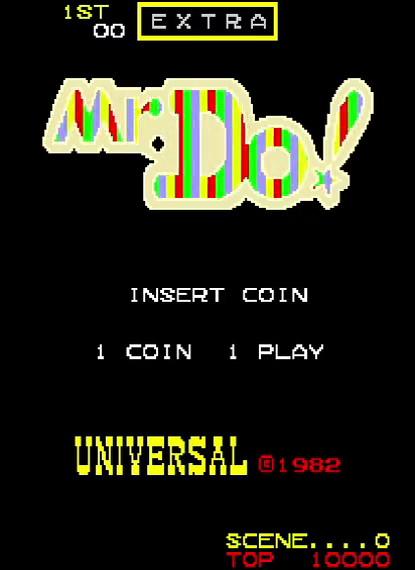
In 1982, Universal released Mr. Do!, a maze-action arcade game that quickly became a staple of candy shop arcades and game centers worldwide. Its cheerful clown protagonist, digging through colorful soil to collect cherries while evading relentless enemies, captured the imagination of players.
Unlike many contemporaries, Mr. Do! arcade 1982 blended puzzle-like collection mechanics with action tension, creating a rhythm of risk and reward. For children with only a few coins, the game offered both spectacle and strategy: every cherry harvested, every apple dropped, every letter of EXTRA collected was a step toward triumph.
The memory of Mr. Do! is inseparable from the sound of its cheerful tones and the sight of its vibrant mazes. It was more than a game—it was a ritual of patience, timing, and joy in the candy arcade jungle.
🎮 Game Information
Title: Mr. Do!
Year: 1982
Platform: Arcade
Genre: Maze Action / Digging & Collecting
Developer / Publisher: Universal
Format: PCB Arcade Board (Z80 CPU, SN76489 sound)
Players: 1–2 (Alternating)
Controls: 4-way joystick + 1 button
🖼️ Exhibit I – Stage Design & Rhythm
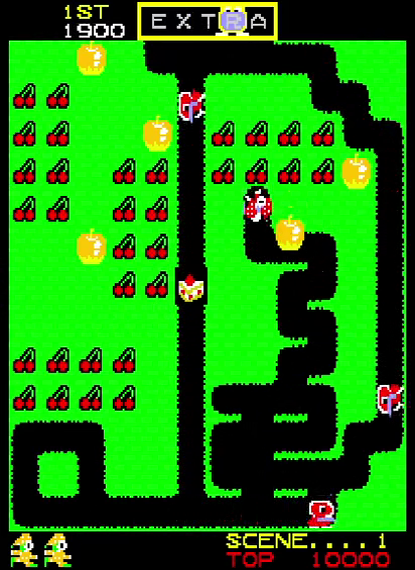
- 🍒 Core mechanic: collect cherries while digging tunnels
- 🍎 Apples act as hazards and weapons, crushing enemies
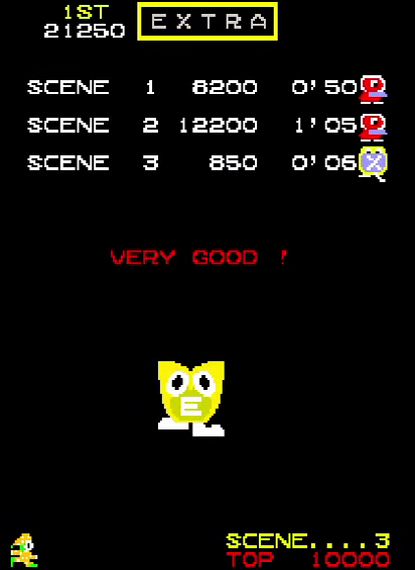
- 🔤 EXTRA letters introduce a meta-goal beyond survival
The brilliance of Mr. Do! lies in its layered rhythm. At its core, the player digs through soil to harvest cherries, but the environment constantly shifts: apples threaten to fall, enemies pursue relentlessly, and bonus letters appear to tempt risk-taking.
Unlike single-mechanic games, Mr. Do! alternates between collection, evasion, and opportunistic attack. The cherries provide steady progress, apples create sudden tactical choices, and the EXTRA letters transform the stage into a race for completion.
This dynamic rhythm ensures that no two plays feel the same. The maze becomes a living puzzle, where survival depends on balancing greed and caution.
⚙️ Exhibit II – Character Control & Challenge
- 🕹️ Simple controls: directional digging and ball attack
- ⚔️ Enemies adapt, forcing constant repositioning
- ⏱️ Timing of apple drops and ball returns is critical
Mr. Do! thrives on simplicity. The player moves the clown through soil, digs tunnels, and throws a bouncing ball to defeat enemies. Yet these minimal inputs create a surprising depth of challenge.
The ball, once thrown, takes time to return, leaving the player vulnerable. Apples can crush enemies but also the player if misjudged. Enemies grow more aggressive as the stage progresses, demanding foresight and precision.
This design philosophy demonstrates how limited mechanics can yield maximum tension. Every decision—digging direction, ball timing, apple placement—carries weight. Success feels earned, and failure is immediate. The challenge is not complexity, but execution, making Mr. Do! a timeless study in arcade design.
🎼 Exhibit III – Sound & Presentation
- 🔊 Distinct audio cues for cherries, apples, and ball attacks
- 🎶 Do-Re-Mi sequences and bonus jingles heighten atmosphere
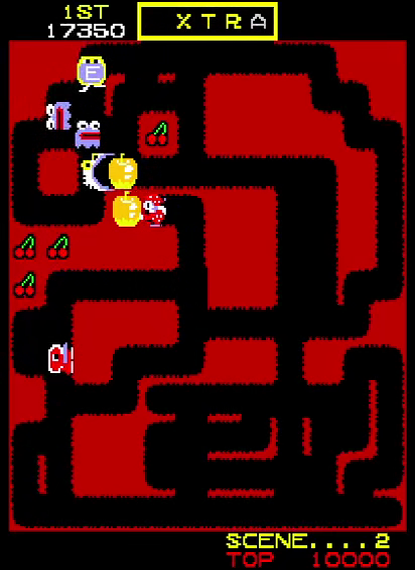
- 🌈 Bright colors and layered sprites create playful tension
Sound and presentation in Mr. Do! are inseparable from its identity. The cheerful Do-Re-Mi tones echo through the arcade, rewarding progress and creating anticipation. Each action carries its own audio signature: cherries sparkle with collection sounds, apples crash with heavy impact, and the bouncing ball resonates with rhythmic returns.
Visually, Universal employed vibrant palettes and layered sprites to simulate depth and motion. The soil shifts color between stages, enemies animate with quirky expressions, and bonus items flash to draw attention. This synergy between sound and sight immerses players in a candy-colored battlefield, where every cue signals both danger and opportunity.
🧪 Exhibit IV – Technical Background & Cultural Impact
- 🖥️ Z80 CPU and SN76489 sound chip powered dynamic mazes
- 🌍 Candy shop arcades made Mr. Do! a familiar childhood ritual
- 🎮 Rivalry with Dig Dug defined early 1980s digging games
Technically, Mr. Do! was ambitious for its time. Universal’s arcade board combined a Z80 CPU with SN76489 sound hardware, enabling smooth digging mechanics, responsive enemy AI, and cheerful audio effects. The game’s design allowed multiple gameplay modes—collection, combat, and bonus hunting—without loading breaks, maintaining immersion.
Culturally, Mr. Do! became a fixture in candy shop arcades, where children played for a few coins. Its rivalry with Namco’s Dig Dug sparked debates: was Dig Dug copying Mr. Do!, or vice versa? Regardless, both titles defined the era’s fascination with digging mechanics and survival puzzles.
Mr. Do! also carried quirks, such as the famous 255-life bug on early boards, reminding us of the limitations and charm of 8-bit logic. These imperfections became part of its legend, cementing its place in retro gaming history.
🏛️ Epilogue – Memories in the Candy Maze
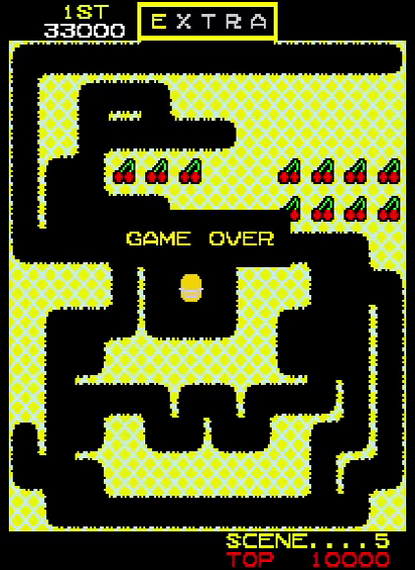
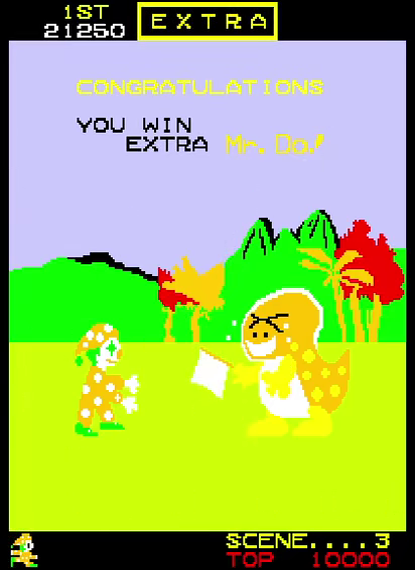
As the final cherries are harvested and the last enemy defeated, the words “CONGRATULATIONS” or “GAME OVER” appear, simple yet profound symbols of the arcade era. Victory is not measured in narrative depth, but in persistence and mastery.
For players in 1982, Mr. Do! was more than a game—it was a test of reflexes, patience, and courage. The candy maze became a metaphor for the arcade itself: colorful, unpredictable, and rewarding for those who dared to master it.
Decades later, the memory of digging tunnels, dropping apples, and completing EXTRA continues to echo in retro gaming culture. Mr. Do! reminds us that even the simplest mechanics can create timeless experiences, and that the candy-colored maze still holds its secrets for those willing to return.
🎥 Video Exhibit – Mr. Do! (1982, Arcade)
© 2025 Japanstyle-RetroPlay
Screenshots © Universal 1982
This article is intended for personal documentation and cultural appreciation.
All rights to game footage, music, and characters belong to their respective copyright holders.
🔗 Home | About Us | Site Policy


Comments
Post a Comment