Qix (1981) Arcade
🧭 Prologue – Echoes of the Abstract Arcade
In 1981, Taito America released Qix, a puzzle arcade game unlike any other of its time.
Rather than lush jungles or heroic quests, Qix arcade 1981 presented players with an abstract battlefield:
a dark void, shifting lines, and unpredictable enemies. The challenge was not to defeat foes directly,
but to carve territory out of chaos, transforming empty space into controlled geometry.
This was a new kind of arcade poetry—minimalist yet intense, cerebral yet visceral.
Every move carried risk, every line drawn was a gamble.
The player’s triumph was not measured in narrative depth, but in the mastery of rhythm, timing, and nerve.
🎮 Game Information
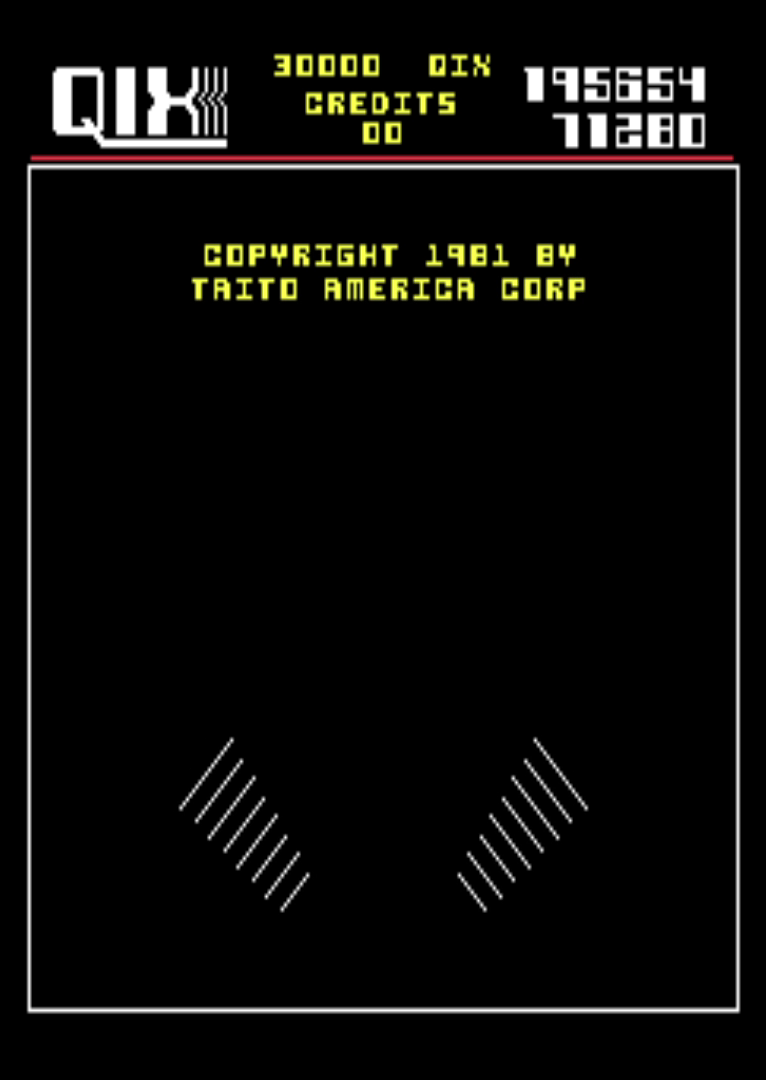
Title: Qix
Year: 1981
Platform: Arcade
Genre: Puzzle / Territory Capture
Developer / Publisher: Taito America / Taito
Format: PCB Arcade Board
Players: 1–2 (Alternating)
🖼️ Exhibit I – Stage Design & Rhythm
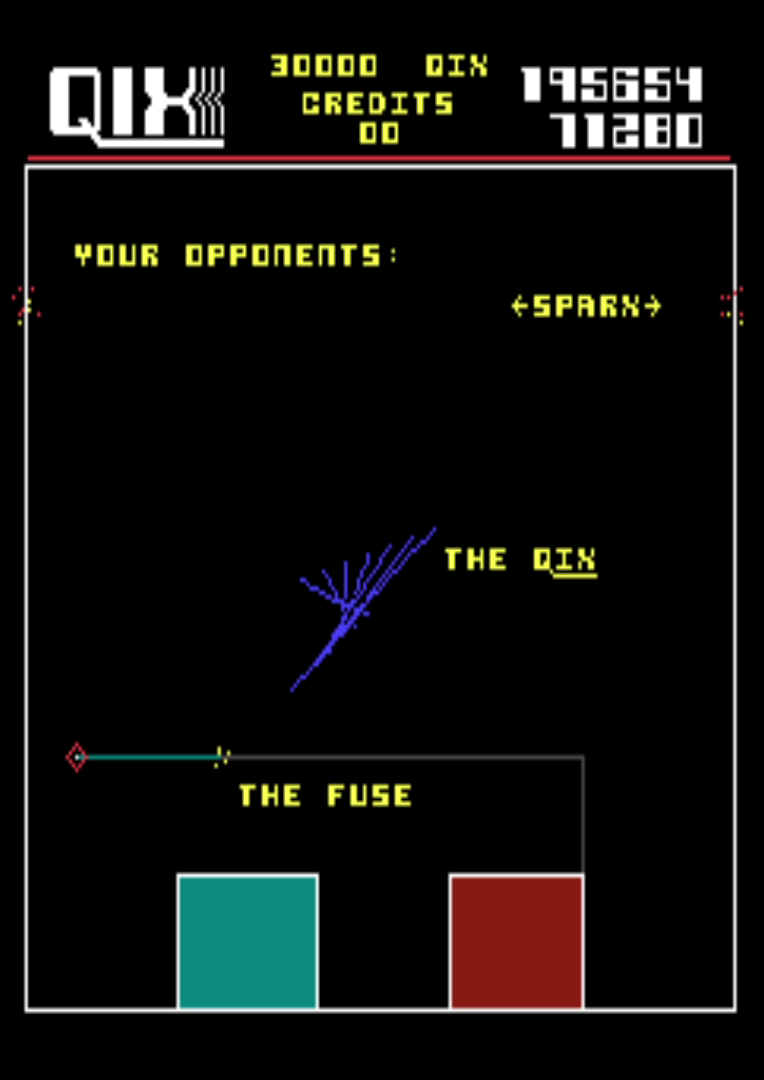
- 🌀 Abstract battlefield: black void, shifting lines, unpredictable enemies
- 🎯 Goal: claim 75% of the field to clear the stage
- ⏳ Risk-reward: slower enclosure yields higher points
The brilliance of Qix lies in its rhythm.
Unlike traditional platformers, the game unfolds in a single abstract arena,
where the player must balance caution with daring.
The Qix itself moves unpredictably, a restless line that resists capture.
Meanwhile, Sparx patrol the borders, punishing hesitation.
This design ensures that every attempt feels tense and fresh.
The alternation between slow, high-scoring enclosures and fast, safer moves
creates a dynamic rhythm of risk and reward.
Qix is not just about reflexes—it is about nerve, patience, and the art of timing.
⚙️ Exhibit II – Player Control & Challenge
- 🕹️ Controls: 4-way joystick for movement, button for speed toggle
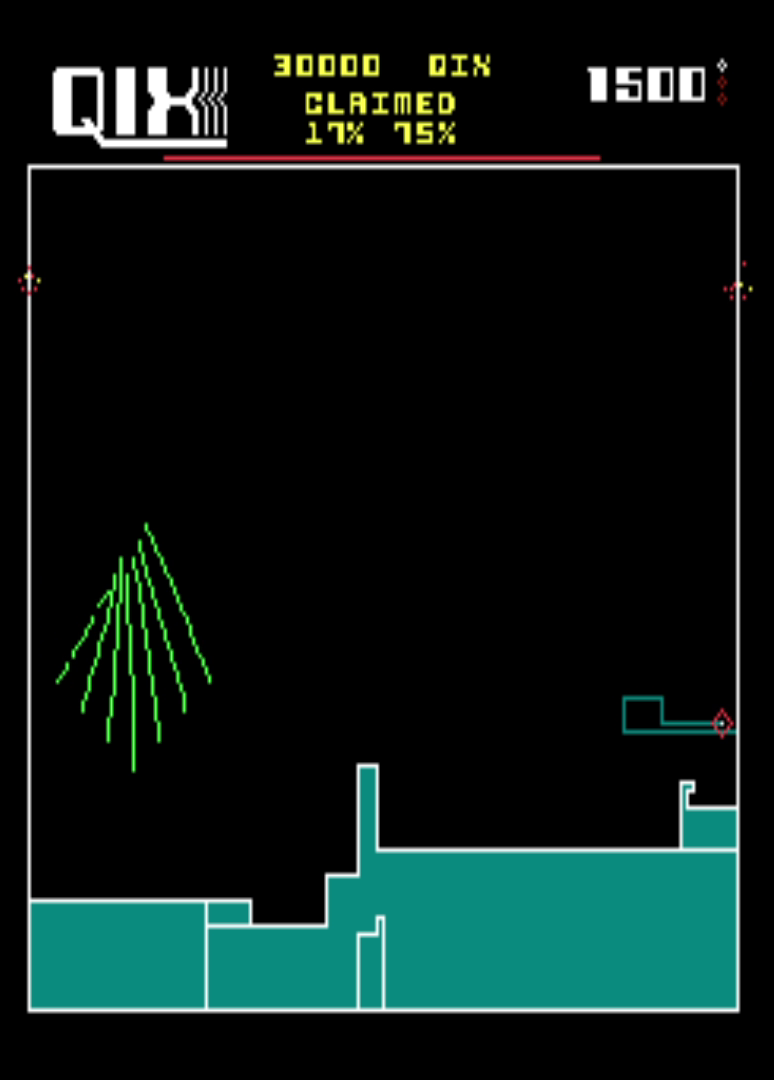
- ⚡ Drawing lines exposes the player to danger
- 🔥 Contact with Qix or Sparx means instant failure
Qix thrives on simplicity.
The player’s toolkit is minimal—movement and speed control—yet the game transforms these into
a crucible of tension. Drawing lines is both creative and perilous:
while claiming territory, the player is vulnerable to sudden enemy strikes.
This design philosophy highlights how minimal mechanics can yield maximum suspense.
Every mistake is punished instantly, but every success feels exhilarating.
The PCB hardware of 1981 allowed abstract vector-like motion,
turning geometry itself into an adversary.
Qix distilled arcade challenge into its purest form:
risk, timing, and the relentless pursuit of control.
🎼 Exhibit III – Sound & Presentation
- 🔊 Distinct audio cues for each action
- 🎶 Simple electronic tones heighten tension
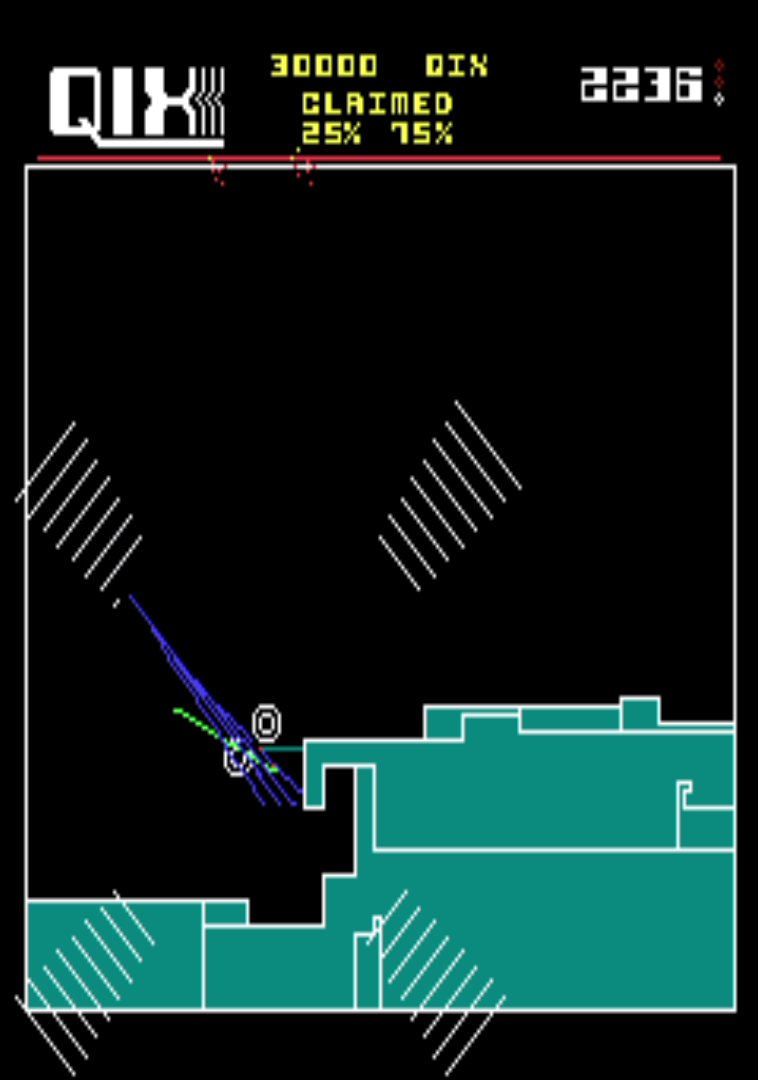
- 🌌 Abstract visuals emphasize geometry over characters
Sound and presentation in Qix are inseparable from its identity.
The miss sound, sharp yet oddly pleasant, became iconic among players.
Every drawn line carried its own audio feedback, reinforcing the sense of risk.
Visually, Qix embraced abstraction.
Rather than detailed sprites, the game relied on geometric motion:
lines that twist, enemies that patrol, and territory that fills with color.
This minimalist design sharpened focus, ensuring that players were immersed
not in narrative spectacle, but in the raw tension of survival and control.
🧪 Exhibit IV – Technical Background & Cultural Impact
- 🖥️ 1981 arcade PCB hardware enabled abstract vector-like motion
- 🌍 First official tournament in Japan, marking competitive puzzle gaming
- 🎮 Inspired sequels and territory-capture mechanics in later titles
Technically, Qix was ambitious for its time.
The arcade board had limited memory and processing power,
yet it generated unpredictable enemy motion and seamless gameplay.
The abstract field was not a limitation—it was a deliberate design choice,
turning geometry into the arena itself.
Culturally, Qix holds a special place in arcade history.
It is remembered as the first game to host an official tournament in Japan,
cementing its role in competitive gaming.
Its influence spread across sequels like Super Qix
and numerous home console adaptations,
establishing the territory-capture genre as a lasting legacy.
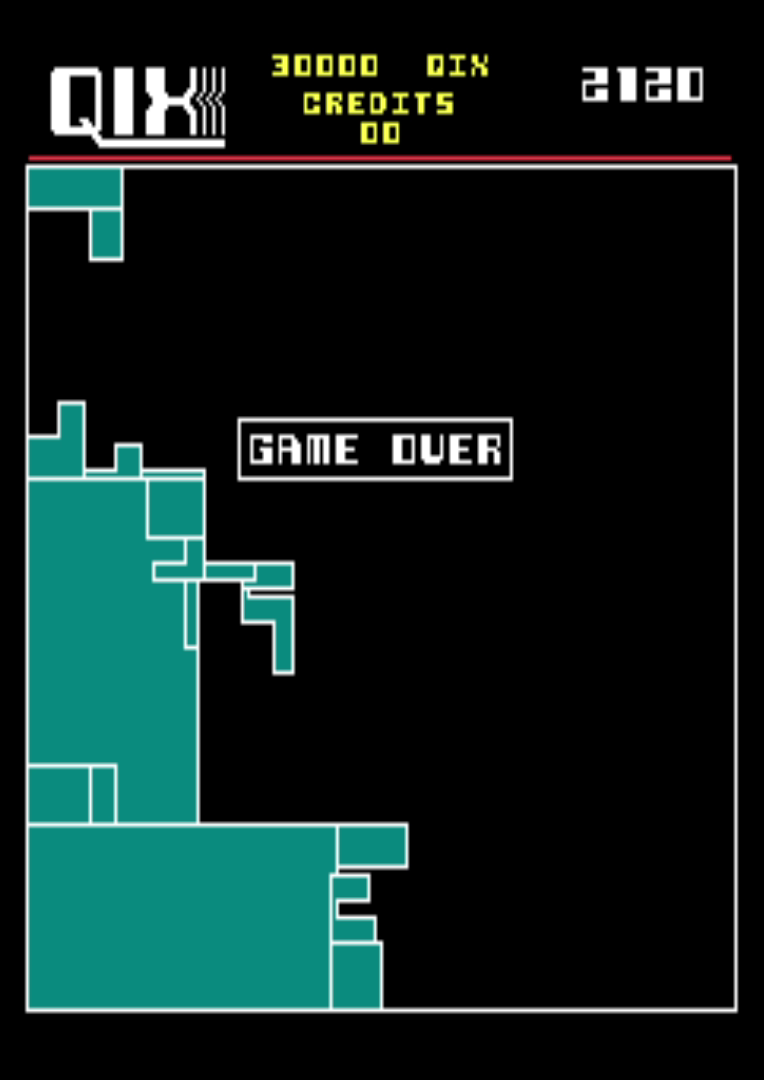
🏛️ Epilogue – Memories in the Abstract Field
As the final line is drawn and the field claimed,
the words “GAME OVER” or victory percentages appear,
marking the end of a tense struggle.
It is a simple ending, yet profoundly symbolic of the arcade era:
triumph is measured not in narrative, but in survival and mastery.
For players in 1981, Qix was more than a puzzle—it was a test of nerve,
patience, and precision. The abstract battlefield became a metaphor for the arcade itself:
unpredictable, unforgiving, yet rewarding for those who dared to master it.
Decades later, the memory of jagged lines, sudden failures, and the thrill of enclosure
continues to echo in retro gaming culture.
Qix reminds us that even the simplest mechanics can create timeless experiences,
and that the abstract jungle of pixels still holds its secrets
for those willing to return.
🎥 Video Exhibit – Qix (1981, Arcade)
© 2025 Japanstyle-RetroPlay
Screenshots © Taito America 1981
This article is intended for personal documentation and cultural appreciation.
All rights to game footage, music, and characters belong to their respective copyright holders.
🔗 Home | About Us | Site Policy


Comments
Post a Comment