DACHOLER (1983) Arcade
🧭 Prologue – Echoes of the Wild Circuit
In 1983, at a time when arcade designers were exploring bold ideas and playful worlds, DACHOLER emerged as one of the era’s most curious creations.
Rather than relying on realism or conventional action tropes, the game embraced a surreal savannah where animals behaved like elastic toys and physics bent toward comedic exaggeration.
It was a world defined not by narrative, but by motion—swift, unpredictable, and delightfully strange.
At the center of this digital wilderness stands an ostrich, the player’s avatar and the heart of the experience.
Its long strides, rapid acceleration, and expressive animations give the game a distinctive rhythm.
Targets scatter across the landscape—rabbits, crabs, and other creatures that defy biological logic—each moving with its own tempo and personality.
The result is a chase game that feels both whimsical and mechanically sharp.
DACHOLER captures the spirit of early arcade experimentation: simple controls, fast feedback, and a visual identity that lingers in memory.
It is a reminder of a time when developers were unafraid to mix humor with challenge, crafting games that were instantly readable yet endlessly replayable.
The savannah may be abstract, but the thrill of pursuit is unmistakably real.
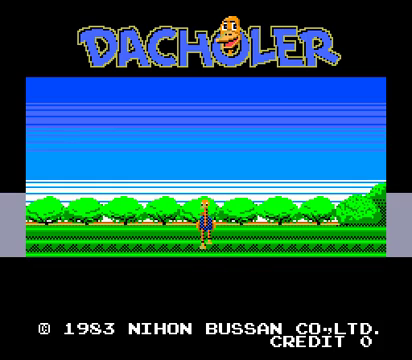
🎮 Game Information
Title: DACHOLER
Year: 1983
Platform: Arcade
Genre: Action / Chase Game
Developer / Publisher: Nichibutsu (Nihon Bussan)
Format: PCB Arcade Board
Players: 1–2 (Alternating)
🖼️ Exhibit I – Stage Design & Rhythm
- 🌾 Fast-paced stages built around pursuit and reaction
- 🎯 Each target species introduces unique movement patterns
- ⏳ Short, energetic gameplay loops typical of early arcades
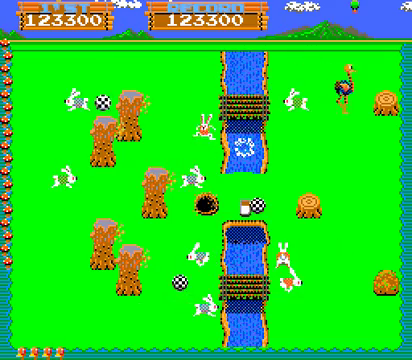
DACHOLER’s stage design is built on a simple but compelling loop: identify the target, read its movement, and close the distance before it escapes.
Each stage features a different creature, and each behaves according to its own rhythm.
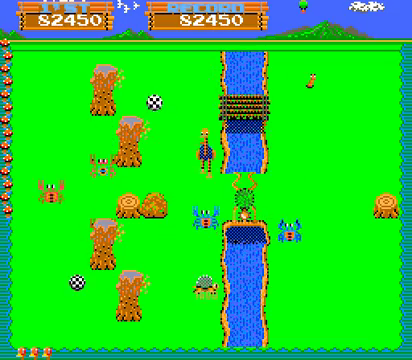
Rabbits dart unpredictably, crabs shift with sharp lateral timing, and stranger targets morph into shapes that challenge the player’s expectations.
The pacing is intentionally brisk. Stages are short, transitions are immediate, and the game maintains a constant sense of motion.
This rapid cycling of tension and release keeps players engaged and encourages repeated attempts.
The savannah backdrop functions as a neutral stage, allowing the movement of each target to stand out clearly.
This clarity is essential in a game where reaction time is the core mechanic.
Despite its comedic tone, the structure is tightly engineered to support fast, readable gameplay.
⚙️ Exhibit II – Character Control & Challenge
- 🕹️ Simple directional controls with emphasis on acceleration
- 🐦 Ostrich movement defined by momentum and turning arcs
- 🔥 Enemies use exaggerated transformations to signal behavior
DACHOLER’s control scheme is minimalistic—directional input and a single action button—but the game extracts surprising depth from this simplicity.
The ostrich accelerates quickly, and its momentum becomes a central part of the challenge.
Overshooting a target or misjudging a turn can cost precious seconds, making precision essential.
Enemy behavior is communicated through bold, readable animations.
Some creatures curl into ball-like shapes, others flatten or stretch, and these transformations serve as visual cues that help players anticipate movement.
This approach reflects a broader arcade philosophy: prioritize clarity over realism.
As stages progress, targets become faster and more erratic.
Mastery requires reading patterns, adjusting speed, and committing to decisive movements.
The responsiveness of the arcade hardware enhances this experience, delivering immediate feedback that reinforces the game’s kinetic feel.
🎼 Exhibit III – Sound & Presentation
- 🔊 Distinct sound cues that reinforce target behavior
- 🎶 Comedic audio effects shaping the game’s playful identity
- 🌅 Bright color palettes and expressive sprite animation
DACHOLER’s audiovisual design embraces the charm of early arcade aesthetics.
The soundscape is intentionally light and rhythmic, using short, punchy effects to emphasize hits, escapes, and transformations.
Each target creature produces its own audio signature, allowing players to react instinctively even before the animation fully plays out.
Visually, the game leans into bold colors and exaggerated motion.
The ostrich moves with a spring-like cadence, while enemies stretch, squash, and morph in ways that defy realism but enhance clarity.
This readability is essential in a game built around rapid reactions, and it reflects a design philosophy where animation serves both style and function.
The result is a presentation that feels lively and unmistakably arcade.
Even today, the game’s expressive sprites and crisp sound cues remain a defining part of its identity.
🧪 Exhibit IV – Technical Background & Cultural Impact
- 🖥️ Efficient sprite handling enabling fast-paced chase mechanics
- 🌍 A comedic reinterpretation of animal-themed arcade action
- 🎮 Influence on later reaction-based and pursuit-driven titles
From a technical standpoint, DACHOLER demonstrates how early 1980s arcade hardware could be pushed to deliver smooth, high-speed character movement.
The PCB’s sprite engine handles multiple targets, transformations, and rapid direction changes without slowdown, ensuring that the game’s core chase mechanics remain fluid.
Culturally, the game reflects a period when arcades embraced humor and experimentation.
Rather than presenting animals realistically, DACHOLER exaggerates their behavior, turning them into playful caricatures.
This approach made the game approachable for a wide audience and contributed to its memorability.
While not as widely known as some mainstream arcade hits, DACHOLER influenced later titles that relied on quick reactions, target pursuit, and comedic animation.
Its design philosophy—simple rules, fast feedback, and expressive visuals—remains a blueprint for many action games that followed.
🏛️ Epilogue – Footprints Across the Digital Savannah
As the final target is captured and the savannah quiets, the ostrich stands alone beneath a fading digital sky.
There is no elaborate ending sequence, no cinematic flourish—only the soft glow of the arcade screen and the lingering pulse of the chase.
It is a moment that captures the essence of early arcade design: victory measured not in story, but in mastery.
DACHOLER thrives on instinct.
Each sprint, each near miss, each sudden transformation becomes part of a personal rhythm shared between player and machine.
The savannah is more than a backdrop; it is a metaphor for the arcade itself—wide, unpredictable, and filled with fleeting moments of triumph.
Decades later, the game’s playful energy still resonates.
Its bright colors, strange enemies, and fast-paced chases remain a reminder of how creativity flourished under the constraints of early hardware.
For those who return to it, DACHOLER offers not just nostalgia, but a glimpse into the raw imagination that shaped the golden age of arcades.
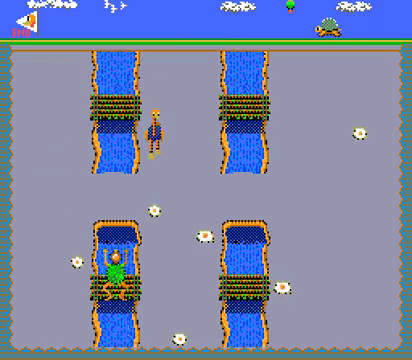
🎥 Video Exhibit – DACHOLER (Arcade)
© 2025 Japanstyle-RetroPlay
Screenshots © Original Arcade Manufacturer
This article is intended for personal documentation and cultural appreciation.
All rights to game footage, music, and characters belong to their respective copyright holders.
🔗 Home | About Us | Site Policy


Comments
Post a Comment